漢德百科全書 | 汉德百科全书
 IT-Times


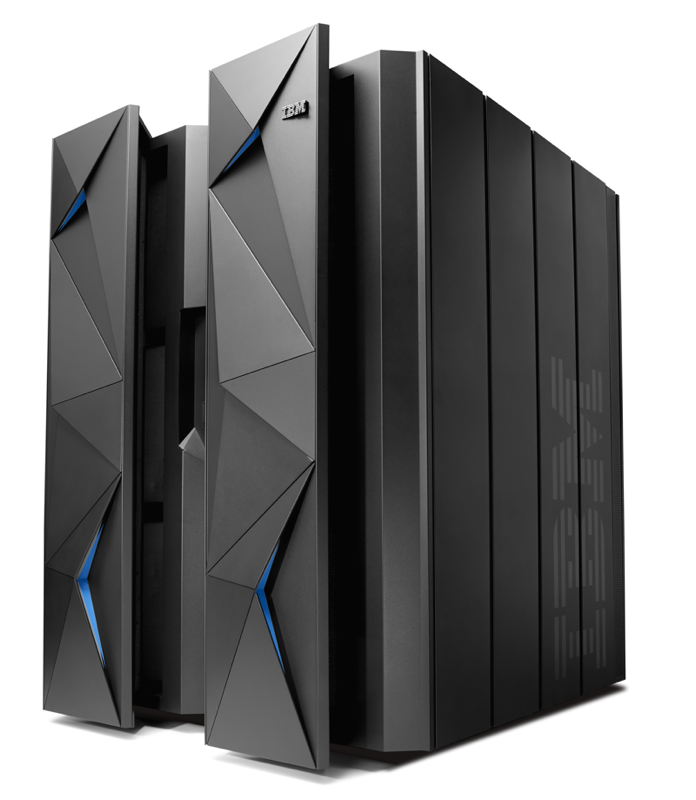
IBM System/360(S/360)是美国IBM公司于1964年推出的大型机。
System/360的问世代表着世界上的电脑有了一种共同的交互方式,它们都共享代号为OS/360的操作系统,而并非每种产品都用量身订做的操作系统。让单一操作系统适用于整个系列的产品是System/360成功的关键,且实际上IBM目前的大型系统便是此系统的后裔。
System/360的开发过程被视为计算机发展史上最大的一次豪赌,为了研发System/360这台大型机,IBM决定征召六万多名新员工,建立五座新工厂,而当时出货的时间不断的顺延。吉恩·阿姆达尔是系统主架构师,当时的项目经理佛瑞德·布鲁克斯(Frederick P. Brooks, Jr.)事后根据这项计划的开发经验,写作《人月神话:软件项目管理之道》(The Mythical Man-Month: Essays on Software Engineering)记述人类工程史上一项里程碑式的大型复杂软件系统开发经验。
System/360 oder kurz S/360 bezeichnet eine Großrechnerarchitektur der Firma IBM aus dem Jahre 1964. Zuvor wurden von IBM die 700/7000 series gebaut. Dem System/360 folgte das im Jahr 1970 angekündigte System/370.
Anfang der 1960er Jahre beherrschte IBM zwar den Computermarkt, die Systeme waren aber meist untereinander inkompatibel und nicht aus einer einheitlichen Linie, so dass sich ein großer Aufwand für den Support der unterschiedlichen Produktfamilien aufbaute. Dem sollte mit dem System/360 abgeholfen werden, mit dem IBM 1964 ein einziges einheitliches und leicht erweiterbares System auf dem Mainframe-Markt vorstellte. Mit den Entwicklungskosten von insgesamt 5 Milliarden Dollar für das Projekt (das zweifache des jährlichen Erlöses von IBM 1962)[1] riskierte IBM-Chef Thomas J. Watson Jr. den Bestand der Firma, das System beherrschte aber bald nach Einführung den Markt der Mainframes. In den 1970er Jahren waren über 70 Prozent der Mainframes von IBM und damit Abkömmlinge der 360-Produktfamilie. Der Umsatz von IBM stieg hauptsächlich ihretwegen von 3,6 Milliarden Dollar 1965 auf 8,3 Milliarden 1971, noch 1982 machten sie über die Hälfte des Umsatzes der Firma aus.[2] Es war eines der bisher erfolgreichsten Computersysteme. Die von IBM veröffentlichten Spezifikationen erlaubten es außerdem auch anderen Anbietern, Peripheriegeräte für das System/360 anzubieten, häufig kostengünstiger. Umgekehrt begannen andere Firmen wie Amdahl und Univac zum 360-System kompatible Computer zu entwickeln. Ebenso wie die Hardware wurde mit dem System/360 auch die Software vereinheitlicht und kompatibel gemacht.
Die Hauptarchitekten waren Frederick P. Brooks, Gerrit Blaauw, Gene Amdahl.[3] Die Gesamtleitung hatte Bob O. Evans. Beteiligt war auch u. a. Erich Bloch. Brooks, Bloch und Evans erhielten dafür 1985 die National Medal of Technology and Innovation.


System/370 (auch S/370) war eine Großrechner-Architektur der Firma IBM.
Das System/370 war eine evolutionäre Weiterentwicklung des System/360 und wurde im Sommer 1970 von IBM angekündigt. Dem System/370 folgte das System/390, welches zur aktuellen System-z-Großrechnerarchitektur weiterentwickelt wurde.
Wichtigste Neuerung war die Dynamic Address Translation. Als Betriebssystem konnten neben dem OS/360 der S/360 auch die ersten Betriebssysteme mit Virtualisierung OS/VS1 VM/370, OS/VS2 SVS, OS/VS2 MVS und DOS/VS verwendet werden.
Als Speichermedien gelangten Magnetbänder und Festplatten zum Einsatz, wobei die verbreitetsten zunächst der Wechselfestplatten-Typ 3330 mit ca. 100 MB, danach der Typ 3350 mit 317 MB und schließlich der Typ 3380 mit etwa 600 MB (Modelle A, B, D, E und J) bis 1,8 GB (Modell K) waren. Ab 1974 wurde auch das Massenspeichersubsystem IBM 3850 unterstützt.
System/370(也称 S/370)是 IBM 的一种大型计算机架构。
System/370 是 System/360 的升级版,由 IBM 于 1970 年夏季发布。System/370 之后又推出了 System/390,并进一步发展成为当前的 System z 大型机架构。
最重要的创新是动态地址转换。除 S/360 的 OS/360 外,首批虚拟化操作系统 OS/VS1 VM/370、OS/VS2 SVS、OS/VS2 MVS 和 DOS/VS 也可用作操作系统。
IBM
IT-Times
IT-Times
 Verarbeitungseinheiten - CPU, GPU, NPU, APU, TPU, VPU, FPGA, QPU, IPU, PIC
IT-Times
IC
Verarbeitungseinheiten - CPU, GPU, NPU, APU, TPU, VPU, FPGA, QPU, IPU, PIC
IT-Times
IC

 Geschichte
 Rueckblick
 Wissenschaft und Technik


 Medizin, Pharma, Rehabilitation

IBM Watson Health was an ambitious initiative using IBM's Watson AI to transform healthcare by analyzing complex data for better diagnoses, treatment plans (like Watson for Oncology), and operations, but faced significant challenges, leading IBM to sell off much of its health data assets by 2022, shifting focus to integrating AI (watsonx) and data platforms across the broader healthcare industry. The original vision aimed to create a smarter, connected system for providers, researchers, and patients, but the sheer complexity of healthcare data and integration proved difficult, resulting in a pivot towards more focused AI and cloud solutions.


IBM Explorer for z/OS Aqua
- [1] See here for products with extended support for Aqua 3.1.
- [2] For more information on how to update the IBM Developer for z/OS client to a new release, see here for the V15.0.x client and here for the V16.0.x client.
- [3] RTC is renamed to EWM (Engineering Workflow Management) starting from v7.0. See this tech note for details / installation steps for older versions of RTC
- [4] This IBM Developer for z/OS extension provides the capability that allows Engineering Workflow Management to enable Remote project and User Build support for z/OS developers.
- [5] See here for shell-share compatibility
- [6] Please follow the IBM Documentation instruction to deploy IBM Wazi for Dev Spaces.
- [7] There is a known issue with the current version of IMS Explorer. When updating the existing installation of IMS Explorer, the Readme file does not get updated. The workaround is to perform a fresh installation of IMS Explorer, eother by installing it into a new package group, or by uninstalling any existing versions of IMS Explorer first.
- [8] Note: the current version of IBM Rational Programming Patterns is only compatible with IBM Engineering Workflow Management 7.0.3 or later. Check here to download IBM Rational Programming Patterns 9.7.3 which is compatible with IBM Engineering Workflow Management 7.0.2.
- [9] Note: IBM Developer for z/OS V15.0.x, IBM Fault Analyzer for z/OS V14.1.x and IBM File Manager for z/OS V14.1.x have reached the end of service on April 30th 2024.
- [10] Note: IBM IMS Configuration Manager for z/OS Eclipse Plugin V2.3.0 has reached the end of service on August 31st 2024. See here for more information.
Zowe Integration
| Product Name | Version | Download | Trial | Documentation |
|---|---|---|---|---|
| IBM Z Distribution for Zowe V1 [1] | 1.x | Server [2] Explorer CLI | ||
| IBM Z Distribution for Zowe V2 [1] | 2.x | Server Explorer CLI Containers | ||
| IBM Z JCL Expert | 1.x |
Unavailable |
||
| IBM z/OS Workload Interaction Navigator | 1.1 | |||
| IBM Db2 DevOps Experience for z/OS | 1.1.0 |
Unavailable |
||
| IBM OMEGAMON for Storage for z/OS | 5.5.0 |
Unavailable |
||
| IBM Service Management Unite | 1.1.8 | |||
| IBM Z NetView | 6.3.0 |
Unavailable |
||
| IBM z/OS Connect EE - Zowe CLI Plugin | — |
Unavailable |
||
| IBM Z Development and Test Environment | 12 |
Unavailable |
Unavailable |
|
| IBM Z Service Automation Suite | 1.3 |
Unavailable |
||
| IBM Z Workload Scheduler | 9.5 |
Unavailable |
||
| IBM Advanced Storage Management Suite | — |
Unavailable |
- [1] See Zowe Support page https://www.ibm.com/support/pages/node/6416751 for additional information.
- [2] Once installed, you can apply these PTFs to upgrade your release.
IBM Wazi Components
| Component Name | Version | Download Client | Download Server | Trial | Documentation |
|---|---|---|---|---|---|
| IBM Z Open Editor |
Unavailable |
Unavailable |
Unavailable |
||
| IBM Wazi Code (Wazi for VS Code) | 4.5.1 (09/30/2024) | RSE API Server |
Unavailable |
||
| IBM Wazi Code (Wazi for Dev Spaces) [1] | 4.0.0 (03/15/2024) | RSE API Server |
Unavailable |
- [1] Please follow the IBM Documentation instruction to deploy IBM Wazi for Dev Spaces.
IBM Enterprise DevOps
IBM Compilers and Toolkits
- [1] Available at no cost