
漢德百科全書 | 汉德百科全书
 土耳其
土耳其
 地理
地理
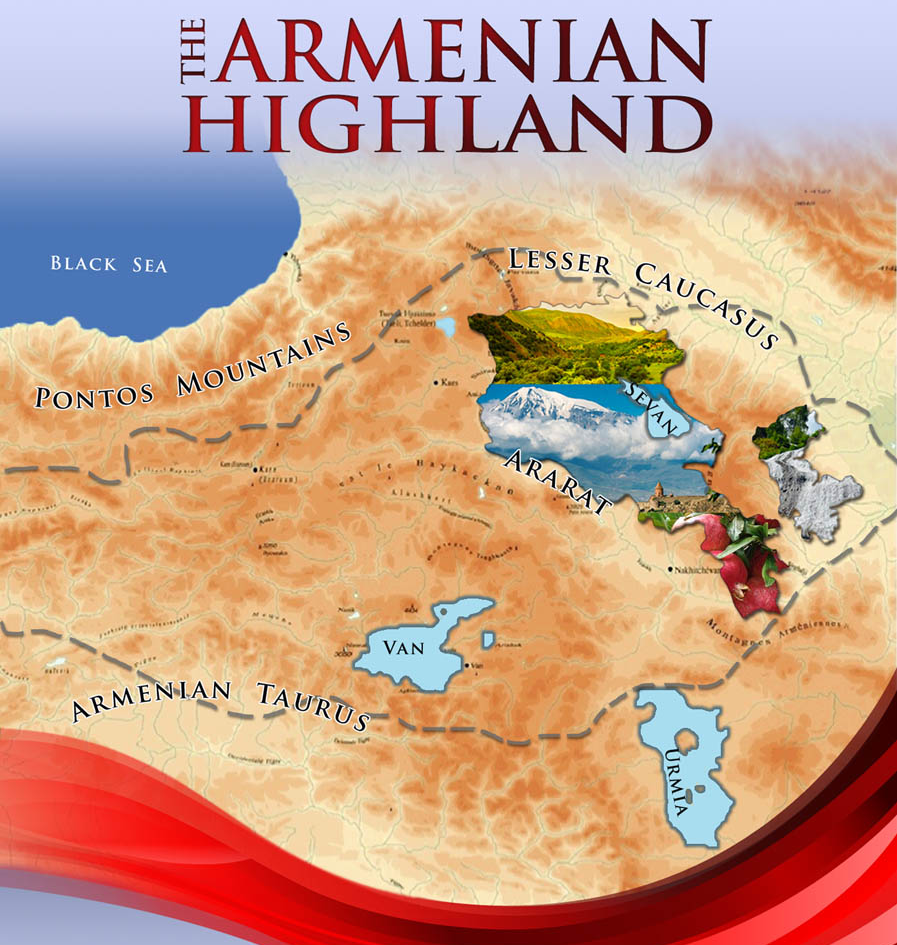
Das Armenische Hochland (armenisch Հայկական լեռնաշխարհ oder Բարձր Հայք / Bardsr Hajk[1]), im Deutschen auch Armenisches Gebirge[2] oder Ararathochland genannt, bildet den zentralen Teil des nordanatolisch-nordiranischen Kettengebirges und umfasst im breiten Sinne auch den Kleinkaukasus.[3]
Je nach Definition ist das Armenische Hochland 300.000 bis 400.000 Quadratkilometer groß[4] und umfasst Gebiete der Türkei (vor allem die ehemaligen armenischen Provinzen des Osmanischen Reiches), des Iran, Georgiens, Aserbaidschans und fast vollständig die heutige Republik Armenien.
Viele Gebirge im Armenischen Hochland stellen eine Aneinanderreihung von Vulkanen dar. Zu diesen zählen das Dschawacheti-Gebirge, das Arsiani-Gebirge (Yalnızçam Dağları), das Geghamgebirge und der Haykakan Par (Ağri Dağları).[3] Die höchste Erhebung ist der 5137 m hohe Ararat, ein erloschener Vulkan. Große Seen sind der Vansee (Salzsee) und der Sewansee (Süßwassersee).
亚美尼亚高原(Armenian Highlands,亚美尼亚语:Հայկական լեռնաշխարհ,罗马化:Haykakan leṙnašxarh,英文名称另有Armenian Upland, Armenian plateau,或是Armenian tableland,[1])是组成西亚北部的三个高原中,位居中央,高度最高的一座。[1]亚美尼亚高原从西方,顺着时钟方向,受安纳托利亚高原、高加索、库拉-阿拉斯低地、伊朗高原、美索不达米亚所包围。亚美尼亚高原受到亚拉拉特平原(其中有亚拉拉特山)所分隔,而分成东西两个区域。所谓西亚美尼亚就是今日所称的东部安那托利亚地区,而所谓的东亚美尼亚即为今日的小高加索山脉,也称Caucasus Minor,或是古代所称的Anti-Caucasus,[2][3]即“在高加索对面”的意思。
 阿富汗
亚美尼亚
阿塞拜疆
亚洲开发银行
亚洲开发银行
阿富汗
亚美尼亚
阿塞拜疆
亚洲开发银行
亚洲开发银行
 黑田东彦
亚洲开发银行
垂水公正
亚洲开发银行
藤冈真佐夫
亚洲开发银行
浅川雅嗣
亚洲开发银行
佐藤光夫
亚洲开发银行
井上四郎
亚洲开发银行
千野忠男
亚洲开发银行
中尾武彥
亚洲开发银行
渡边武
亚洲开发银行
吉田太郎一
澳大利亚
孟加拉国
不丹
文莱
中国
丹麦
联邦德国
黑田东彦
亚洲开发银行
垂水公正
亚洲开发银行
藤冈真佐夫
亚洲开发银行
浅川雅嗣
亚洲开发银行
佐藤光夫
亚洲开发银行
井上四郎
亚洲开发银行
千野忠男
亚洲开发银行
中尾武彥
亚洲开发银行
渡边武
亚洲开发银行
吉田太郎一
澳大利亚
孟加拉国
不丹
文莱
中国
丹麦
联邦德国
 欧洲联盟
欧洲联盟
 财政金融
国际银行合作
芬兰
法国
格鲁吉亚
香港特别行政区-港
印度
印度尼西亚
爱尔兰
意大利
日本
柬埔寨
加拿大
哈萨克斯坦
吉尔吉斯斯坦
老挝
卢森堡
马来西亚
财政金融
国际银行合作
芬兰
法国
格鲁吉亚
香港特别行政区-港
印度
印度尼西亚
爱尔兰
意大利
日本
柬埔寨
加拿大
哈萨克斯坦
吉尔吉斯斯坦
老挝
卢森堡
马来西亚
 蒙古
缅甸
尼泊尔
新西兰
荷兰
奥地利
巴基斯坦
巴布亚新几内亚
菲律宾
葡萄牙
韩国
所罗门群岛
瑞典
新加坡
斯里兰卡
台湾省-台
中尾武彦
泰国
汤加
土耳其
土库曼斯坦
乌兹别克斯坦
美国
英国
越南
蒙古
缅甸
尼泊尔
新西兰
荷兰
奥地利
巴基斯坦
巴布亚新几内亚
菲律宾
葡萄牙
韩国
所罗门群岛
瑞典
新加坡
斯里兰卡
台湾省-台
中尾武彦
泰国
汤加
土耳其
土库曼斯坦
乌兹别克斯坦
美国
英国
越南
 重要的国际组织
 经济和贸易
经济与政治研究
经济和贸易
经济与政治研究
亚洲开发银行(英语:Asian Development Bank,缩写:ADB,简称亚银、亚行、亚开行),香港旧译亚洲发展银行,属于亚太地区的政府之间金融机构,其目的是为了促进亚洲经济与社会的发展。1966年12月19日成立,有31个创始会员国,目前有68个成员体,其中亚太有49个。总部设置于菲律宾马尼拉并在世界各地拥有31个办事处。亚洲开发银行仿照世界银行的股权制度,依照成员体的资本比例,得到相应比例的投票权。2014年以来,亚洲开发银行发布亚太创意生产指数年度报告。[3][4]亚洲开发银行为联合国观察员。
The Asian Development Bank (ADB) is a regional development bank established on 19 December 1966,[4] which is headquartered in the Ortigas Center located in the city of Mandaluyong, Metro Manila, Philippines. The company also maintains 31 field offices around the world[5] to promote social and economic development in Asia. The bank admits the members of the United Nations Economic and Social Commission for Asia and the Pacific (UNESCAP, formerly the Economic Commission for Asia and the Far East or ECAFE) and non-regional developed countries.[6] From 31 members at its establishment, ADB now has 68 members.
The ADB was modeled closely on the World Bank, and has a similar weighted voting system where votes are distributed in proportion with members' capital subscriptions. ADB releases an annual report that summarizes its operations, budget and other materials for review by the public.[7] The ADB-Japan Scholarship Program (ADB-JSP) enrolls about 300 students annually in academic institutions located in 10 countries within the Region. Upon completion of their study programs, scholars are expected to contribute to the economic and social development of their home countries.[8] ADB is an official United Nations Observer.[9]
El Banco Asiático de Desarrollo (BAsD) es una organización financiera para el desarrollo económico de Asia y el Pacífico. Su objetivo principal es la erradicación de la pobreza y facilitar ayudas para mejorar el nivel de vida de la población de la región a través de préstamos y colaboración técnica.
Creado en 1966 por 31 países. Hoy cuenta con 67 miembros (48 regionales y 19 no regionales). Estados Unidos y Japón son sus principales accionistas, con el 15,6% del capital cada uno.
El Banco tiene como su principal objetivo la lucha contra la pobreza. Para ello busca promover el crecimiento económico y la cooperación en la región de Asia-Pacífico, y acelerar el proceso de desarrollo económico de sus países miembros. Las dos terceras partes de personas pobres del mundo (aquellos que viven con menos de dos dólares diarios por persona), cerca de 1.800 millones de pobres, viven en esta región. El BAsD aprobó una nueva Estrategia a Largo Plazo (2008-2020) centrada en un crecimiento económico, medioambientalmente sostenible e integración regional.
Азиа́тский банк разви́тия (англ. Asian Development Bank) — банк, основанный в 1966 году, его главной задачей является стимулировать рост экономики в Азии и на Дальнем Востоке, направляя в эти регионы прямые займы и оказывая техническое содействие.
Штаб-квартира в Маниле (Филиппины). Президентом АБР с 28 апреля 2013 года является японец Такэхико Накао. 17 января 2020 года президентом станет Масацугу Асакава, избранный 2 декабря 2019 года[1].
 手拉手
阿富汗
埃及
阿尔巴尼亚
阿尔及利亚
阿塞拜疆
巴林
孟加拉国
贝宁
文莱
布基纳法索
科特迪瓦
吉布提
加蓬
冈比亚
几内亚
几内亚比绍
圭亚那
印度尼西亚
伊拉克
伊朗
也门
约旦
喀麦隆
哈萨克斯坦
卡塔尔
吉尔吉斯斯坦
科摩罗
科威特
黎巴嫩
利比亚
马来西亚
马尔代夫
马里
摩洛哥
毛里塔尼亚
莫桑比克
尼日尔
尼日利亚
阿曼
伊斯兰合作组织
巴基斯坦
巴勒斯坦
苏丹共和国
沙特阿拉伯
塞内加尔
塞拉利昂
索马里
苏里南
叙利亚
塔吉克斯坦
多哥
乍得
突尼斯
土耳其
土库曼斯坦
乌干达
乌兹别克斯坦
阿拉伯联合酋长国
重要的国际组织
手拉手
阿富汗
埃及
阿尔巴尼亚
阿尔及利亚
阿塞拜疆
巴林
孟加拉国
贝宁
文莱
布基纳法索
科特迪瓦
吉布提
加蓬
冈比亚
几内亚
几内亚比绍
圭亚那
印度尼西亚
伊拉克
伊朗
也门
约旦
喀麦隆
哈萨克斯坦
卡塔尔
吉尔吉斯斯坦
科摩罗
科威特
黎巴嫩
利比亚
马来西亚
马尔代夫
马里
摩洛哥
毛里塔尼亚
莫桑比克
尼日尔
尼日利亚
阿曼
伊斯兰合作组织
巴基斯坦
巴勒斯坦
苏丹共和国
沙特阿拉伯
塞内加尔
塞拉利昂
索马里
苏里南
叙利亚
塔吉克斯坦
多哥
乍得
突尼斯
土耳其
土库曼斯坦
乌干达
乌兹别克斯坦
阿拉伯联合酋长国
重要的国际组织
伊斯兰合作组织(阿拉伯语:منظمة التعاون الإسلامي;英语:Organisation of Islamic Cooperation;法语:Organisation de la coopération islamique)原名伊斯兰会议组织,是一个伊斯兰世界的政府间国际组织,为联合国大会观察员;该组织由遍及西亚(中东)、中亚、西非、北非、印度次大陆和东南亚的57个国家组成,覆盖的人口约为16亿。秘书处设在沙特阿拉伯王国的吉达市;现任秘书长是原沙特社会事务大臣Yousef Al-Othaimeen(从2016年开始)。
组织的宗旨是促进各成员国之间在经济、社会、文化和科学等方面的合作;努力消除种族隔离和种族歧视,反对一切形式的殖民主义;支持巴勒斯坦人民恢复民族权利和重返家园的斗争;支持穆斯林保障其尊严、独立和民族权利的斗争。
但要注意的是并非每个成员国是伊斯兰国家,如圭亚那、苏里南、莫桑比克、喀麦隆、乌干达和加蓬等国,伊斯兰反而是极少数人的信仰,阿尔巴尼亚则是唯一加入该组织的欧洲大陆的主权国家和联合国会员国,2011年脱离苏丹独立的南苏丹也在独立后脱离该组织的势力范围。
イスラム協力機構(イスラムきょうりょくきこう、アラビア語: منظمة التعاون الاسلامي、略称OIC; 英語: Organisation of Islamic Cooperation、略称OCI; フランス語: Organisation de la coopération Islamique)は、イスラム諸国をメンバーとして構成され、国際連合に対する常任代表を有する国際機構。公用語はアラビア語、英語、フランス語。かつてはイスラム諸国会議機構(منظمة المؤتمر الإسلامي、英語: Organisation of the Islamic Conference、フランス語: Organisation de la Conférence Islamique)という名称であったが、2011年6月にカザフスタンのアスタナでの会議で「イスラム協力機構」への変更と紋章が決定された[1]。
イスラム諸国の政治的協力、連帯を強化すること、イスラム諸国に対する抑圧に反対し、解放運動を支援することを目的とする。
加盟国はムスリム(イスラム教徒)が国民の多数を占める西アジア、北アフリカ、西アフリカ、東アフリカ、中央アジア、南アジア、東南アジアなどの57か国、オブザーバーが5ヵ国・8組織(国連など)からなり、世界13億人のムスリムの大部分を代表する。
加盟条件としては、国内でムスリムが大多数を占めることを必ずしも条件としているわけではなく、南アメリカのいくつかの国のようにマイノリティとしてある程度のムスリム人口を抱えているだけであっても、外相会議における審査で承認されればイスラム諸国のひとつとして機構に加盟することができる。イスラム教徒が多数派を占める国はほとんど参加しているが、イスラム教徒比率の高い国のうちエチオピア(30~50%)とタンザニア(約30%)が加盟していない。イスラム教徒人口の多い国で言えばインド(約1億5000万人)や中国(約2000万人)も加盟していない。逆にイスラム教徒比率の低い国ではガボン、ウガンダ、スリナム、ガイアナなどが加盟している(それぞれ10%未満)。
The Organisation of Islamic Cooperation (OIC; Arabic: منظمة التعاون الإسلامي; French: Organisation de la coopération islamique), formerly the Organisation of the Islamic Conference, is an international organization founded in 1969, consisting of 57 member states, with a collective population of over 1.8 billion as of 2015 with 53 countries being Muslim-majority countries. The organisation states that it is "the collective voice of the Muslim world" and works to "safeguard and protect the interests of the Muslim world in the spirit of promoting international peace and harmony".[1]
The OIC has permanent delegations to the United Nations and the European Union. The official languages of the OIC are Arabic, English, and French.
L’Organisation de la coopération islamique (OCI), en arabe : منظمة التعاون الإسلامي (Munaẓẓamat at-Taʿāwun al-islāmī), en anglais : Organisation of Islamic Cooperation (OIC), appelée jusqu'en 2011 Organisation de la conférence islamique (en arabe : منظمة المؤتمر الإسلامي, en anglais : Organisation of the Islamic Conference), est une organisation intergouvernementale créée le 25 septembre 1969. Son siège se situe à Djeddah en Arabie saoudite et elle possède une délégation permanente aux Nations unies.
Regroupant 57 États membres, sa vocation est de promouvoir la coopération dans les domaines économiques, sociaux, culturels et scientifiques (grâce notamment à la Banque islamique de développement), mais aussi la sauvegarde des lieux saints de l'islam ou encore le soutien au peuple palestinien. À l'échelle mondiale, il n'existe pas d'autre organisation confessionnelle dont les membres signataires soient des États.
Ses trois langues officielles sont l'arabe, l'anglais et le français2.
L'Organizzazione della cooperazione islamica (in arabo: منظمة التعاون الإسلامي, Munaẓẓamat al-taʿāwun al-islāmī; in inglese: Organization of the Islamic Cooperation, OIC; in francese: Organisation de la coopération islamique, OCI) è un'organizzazione internazionale con una delegazione permanente presso le Nazioni Unite. Rappresenta 56 Stati dell'Europa, Vicino Oriente, Medio Oriente, America meridionale, Africa, Asia centrale e del Subcontinente indiano.[1]
L'organizzazione, fondata a Rabat, in Marocco, il 25 settembre 1969 con il nome Organisation of the Islamic Conference, in arabo: منظمة المؤتمر الإسلامي, Munaẓẓamat al-muʾtamar al-islāmī; (FR) Organisation de la conférence islamique, mutato nell'attuale nel 2011.[2]
Ha come finalità la salvaguardia degli interessi e lo sviluppo delle popolazioni musulmane nel mondo.
Il 10 ottobre 1975 le è stato riconosciuto lo status di osservatore dell'Assemblea generale delle Nazioni Unite.
La Organización para la Cooperación Islámica (Árabe:منظمة التعاون الاسلامي); (Francés: Organisation de la Coopération Islamique); (Inglés: Organisation of Islamic Cooperation) es un organismo internacional que agrupa a los estados de confesión musulmana, creado en 1969 durante la Conferencia de Rabat y formalizada dos años después.
Su sede está en Yidda, ciudad costera de Arabia Saudí a orillas del Mar Rojo. Sus miembros son países con mayoría de población musulmana o con una comunidad significativa en ellos, con Estados miembros y observadores de África, Asia, Europa y América del Sur. El 28 de junio de 2011 se oficializó el cambio de nombre,1 anteriormente se llamó: Organización de la Conferencia Islámica (Árabe:منظمة المؤتمر الإسلامي); (Francés: Organisation de la Conférence Islamique); (Inglés:Organization of the Islamic Conference).
Sus acciones se circunscriben a la actividad colaborativa entre sus miembros, sobre todo en la lucha contra el imperialismo, el neocolonialismo y por la emancipación de Palestina. Históricamente se celebraron diversos congresos que contribuyeron con su desarrollo: Lahore (1974), La Meca (1981), Casablanca (1984), Kuwait (1987), Dakar (1991). Sus repercusiones son menores que las de la Liga Árabe.
Организация исламского сотрудничества (англ. Organisation of Islamic Cooperation (OIC), араб. منظمة التعاون الاسلامي) — международная организация исламских стран (до 2011 года называлась Организация Исламская конференция (ОИК).
 体育
体育


 军事、国防和装备
 北约会员国
北约会员国
 北大西洋公约组织高峰会议
 欧洲的高等院校
 历史
历史
 医疗、制药、 康复




 汽车
汽车
 展览会
展览会

 运输和交通
运输和交通


 建筑艺术
建筑艺术
 艺术
艺术
 博物馆
博物馆

Das Archäologische Museum Istanbul (türkisch İstanbul Arkeoloji Müzesi) wurde 1891 als zentrales archäologisches Museum des Osmanischen Reiches in Konstantinopel gegründet und ist heute das größte und bedeutendste archäologische Museum der Türkei.
Seine Sammlungen umfassen rund 15.000 archäologische Stücke aus Mesopotamien, aus der assyrischen, sumerischen, akkadischen, babylonischen und ägyptischen Antike, dem prähistorischen, griechischen, römischen und byzantinischen Kleinasien, sowie der vor-islamischen und islamischen arabischen Kultur.
Das Archäologische Museum Istanbul (türkisch İstanbul Arkeoloji Müzesi) wurde 1891 als zentrales archäologisches Museum des Osmanischen Reiches in Konstantinopel gegründet und ist heute das größte und bedeutendste archäologische Museum der Türkei.
Seine Sammlungen umfassen rund 15.000 archäologische Stücke aus Mesopotamien, aus der assyrischen, sumerischen, akkadischen, babylonischen und ägyptischen Antike, dem prähistorischen, griechischen, römischen und byzantinischen Kleinasien, sowie der vor-islamischen und islamischen arabischen Kultur.
伊斯坦布尔考古博物馆(土耳其語:İstanbul Arkeoloji Müzeleri)位于土耳其伊斯坦布尔的艾米諾努区,靠近居尔哈尼公园和托卡比皇宫。
伊斯坦布尔考古博物馆由三个博物馆组成。
- 考古博物馆(主楼)
- 古代东方博物馆
- 伊斯兰艺术博物馆
伊斯坦布尔考古博物馆收藏了一百多万件文物,代表了世界历史上几乎所有的时期和文明。游客20万人[1]。