
Deutsch-Chinesische Enzyklopädie, 德汉百科
 Indien
 Geschichte
 F 2000 - 1500 vor Christus
Geschichte
E 2500 - 2000 vor Christus
Geschichte
G 1500 - 1000 vor Christus
Geschichte Indiens
Indien
Pakistan
F 2000 - 1500 vor Christus
Geschichte
E 2500 - 2000 vor Christus
Geschichte
G 1500 - 1000 vor Christus
Geschichte Indiens
Indien
Pakistan
 Zivilisation

Die bronzezeitliche Indus-Kultur oder Indus-Zivilisation war eine der frühesten städtischen Zivilisationen. Sie entwickelte sich etwa in den Jahren 2800–1800 v. Chr. entlang des Indus im Nordwesten des indischen Subkontinents. Die Indus-Kultur erstreckte sich über fast das gesamte heutige Pakistan sowie Teile Indiens und Afghanistans, insgesamt umfasste sie 1.250.000 km² und damit eine größere Landfläche als das antike Ägypten und Mesopotamien zusammen. Sie war neben diesen eine der drei frühesten Zivilisationen der Welt.
Sie wird teilweise auch Harappa oder Harappa-Kultur genannt, nach Harappa, einem der Hauptausgrabungsplätze am Ravi. Eine weitere alternative Benennung dieser Kultur lautet Sindhu-Sarasvati-Zivilisation; hinter dieser Bezeichnung steht die Theorie, dass sie eine in der vedischen Literatur erwähnte Zivilisation sei. Möglicherweise ist sie auch mit dem sumerischen Meluha zu identifizieren.
Bis heute sind über 1050 Fundorte identifiziert, hauptsächlich entlang des Indus. Zusätzlich gibt es Hinweise auf einen anderen großen Fluss östlich des Indus, der heute ausgetrocknet ist und der antike Ghaggra-Hakra oder Sarasvati gewesen sein könnte. Über 140 antike Städte und Siedlungen wurden an seinem Lauf gefunden. Die beiden größten urbanen Zentren der Harappa-Kultur waren wohl Harappa und Mohenjo-Daro, daneben gab es noch große Städte bei Dholavira, Ganweriwala, Lothal und Rakhigarhi. Zu ihrer Blütezeit zählte die Indus-Kultur vermutlich über fünf Millionen Menschen.
Diese frühe indische Kultur kannte bereits Architektur und eine regelmäßige Städteplanung einschließlich gepflasterter Straßen mit Straßenablauf (Gullys). Sie entwickelte zum ersten Mal in der Geschichte der Menschheit den gebrannten Ziegel mit den perfekten, noch heute gebräuchlichen Proportionen 1:2:4, der als Einhandziegel in allen Richtungen beliebig addierbar ist.
Möglicherweise besaß sie auch eine Schrift; ob aber die sogenannte Indus-Schrift tatsächlich eine Schrift ist, wird in Fachkreisen bisher kontrovers diskutiert.
印度河流域文明(IVC) ,也称哈拉帕文明(harappa)、印度河谷文明(英语:Indus Valley Civilization),是一个南亚青铜时代约公元前3300年至前1300年之时期的古代文明,鼎盛于公元前2600到公元前1900间[1][a]。因起源于印度河和萨拉斯瓦蒂河流域,有时也称之为文明摇篮之一的古印度印萨两河文明[2][b]。
因印度河古文明兴盛于印度河沿岸盆地,故虽名古印度文明,但地理上大致主要是包括在今天的巴基斯坦的整个纵深长度;不过,印度西北和巴基斯坦东部的一部分季风性季节性河流沿岸也包含在内[1][3]。印度河谷文明最著名的特点是其独特的城市规划、烧制砖建房屋、供水系统、成群的大型非住宅建筑、进步的手工艺制造和冶金(铜、青铜、铅、锡)工艺[4]。摩亨佐-达罗和哈拉帕非常有可能一度发展到独自容纳30000至60000名居民的规模[5][c],而在其鼎盛时期整个文明可能包含了1至5百万人口[6][d]。
公元前3世纪逐渐严重的全新世干旱化[7]导致了印度河谷的土壤退化;这首先加快了该文明人口的城镇化,但最终减少的季风性降水使得印度河流域文明陷入困境,其人口不得不向东、南方向的地区迁徙[8][9]。
印度河流域文明发源晚于两河流域文明、尼罗河流域文明,但早于商朝。 考古专家在印度河、萨拉斯瓦蒂河流域发现摩亨佐-达罗和哈拉帕两个古代城市遗址,发现了大量石器、青铜器、印章和农作物遗迹,估计城市人口都在4万以上。
两个城市的中心都有一个人工堆成的土墩,作用未知,考古学家猜测这可能是城市的中心。城市建筑以卫城为中心呈网格状分布,有市政建筑、市场、作坊、储存区、民居和神庙。每座民居都围着一个院子建成,有几个房间、一间厕所和一口水井。建筑用基本材料是从烧木头的窑里制出的土砖。在摩亨佐-达罗的卫城上建造了一个浴池,有私人浴池、会所等。
印度河流域的农民种植大麦、小麦、棉花、瓜和椰枣。他们还驯养大象和水牛在田里工作。这一地区有许多手艺精湛的制陶人,他们也用陶轮制作陶器,这是产生于两河流域苏美尔人的技术。哈拉帕人使用石器,并用青铜制作刀、武器、碗和雕像。他们建立了发达的废物处理系统,包括有盖板的排水系统和倒垃圾的斜槽。
遗址中有许多天秤和砝码,说明他们有一套度量衡制度好配合其繁荣的商业贸易。而印度河流域文明更证明与两河流域文明,阿富汗,缅甸甚至和古中国都有商业往来。
印度河文明持续了800年,目前尚不得知其结束的原因,但是有几种假说:外族入侵、地震、气候变化导致的干旱或是人为的生态灾难,这些假说都可能解释一部分导致其经济和文明秩序崩溃的原因。
インダス文明(インダスぶんめい、Indus Valley civilization)は、インド・パキスタン・アフガニスタンのインダス川および並行して流れていたとされるガッガル・ハークラー川周辺に栄えた文明である。これら各国の先史文明でもある(インドの歴史、アフガニスタンの歴史も参照)。崩壊の原因となったという説のあった川の名前にちなんでインダス文明、最初に発見された遺跡にちなんでハラッパー文明とも呼ばれる[1]。
狭義のインダス文明は、紀元前2600年から紀元前1800年の間を指す。インダス文明の遺跡は、東西1500km、南北1800kmに分布し、遺跡の数は約2600におよぶ。そのうち発掘調査が行われた遺跡は、2010年時点でインド96、パキスタン47、アフガニスタン4の合計147となっている[2]。
The Indus Valley Civilisation (IVC) was a Bronze Age civilisation in the northwestern regions of South Asia, lasting from 3300 BCE to 1300 BCE, and in mature form from 2600 BCE to 1900 BCE.[1] Along with ancient Egypt and Mesopotamia it was one of three early civilisations of the Old World, and of the three, the most widespread, extending from what today is northeast Afghanistan to Pakistan and northwest India.[2][note 1] It flourished in the basins of the Indus River, which flows through the length of Pakistan, and along a system of perennial, mostly monsoon-fed, rivers that once coursed in the vicinity of the seasonal Ghaggar-Hakra river in northwest India and eastern Pakistan.[1][3] Aridification of this region during the 3rd millennium BCE may have been the initial spur for the urbanisation associated with the civilisation, but eventually also reduced the water supply enough to cause the civilisation's demise, and to scatter its population eastward.[4][5][3][6]
The civilisation's cities were noted for their urban planning, baked brick houses, elaborate drainage systems, water supply systems, clusters of large non-residential buildings, and new techniques in handicraft (carnelian products, seal carving) and metallurgy (copper, bronze, lead, and tin). [7] Its large urban centres of Mohenjo-daro and Harappa very likely grew to containing between 30,000 and 60,000 individuals,[8][note 2] and the civilisation itself during its florescence may have contained between one and five million individuals.[9][note 3]
The Indus civilisation is also known as the Harappan Civilisation, after its type site, Harappa, the first of its sites to be excavated in the 1920s in what was then the Punjab province of British India and now is Pakistan.[10][note 4] The discovery of Harappa and soon afterwards Mohenjo-Daro was the culmination of work beginning in 1861 with the founding of the Archaeological Survey of India during the British Raj.[11] There were however also earlier and later cultures often called Early Harappan and Late Harappan in the same area; for this reason, the Harappan civilisation is sometimes called the Mature Harappan' culture to distinguish it from these cultures. By 2002, over 1,000 Mature Harappan cities and settlements had been reported, of which just under a hundred had been excavated,[12][note 5][13][14][note 6] mainly in the general region of the Indus and Ghaggar-Hakra Rivers and their tributaries; however, there are only five major urban sites at the peak of the settlement hierarchy:[15][note 7] Harappa, Mohenjo-daro (UNESCO World Heritage Site), Dholavira, Ganeriwala in Cholistan and Rakhigarhi.[16][note 8] The early Harappan cultures were preceded by local Neolithic agricultural villages, from which the river plains were populated.[17][18]
The Harappan language is not directly attested, and its affiliation is uncertain since the Indus script is still undeciphered.[19] A relationship with the Dravidian or Elamo-Dravidian language family is favoured by a section of scholars.[20][21]
La civilisation de la vallée de l'Indus (vers 2600 av. J.-C. – vers 1900 av. J.-C.), ou civilisation harappéenne, du nom de la ville antique de Harappa, est une civilisation de l'Âge du bronze, dont le territoire s'étendait autour de la vallée du fleuve Indus, dans l'ouest du sous-continent indien (le Pakistan moderne et ses alentours). Les raisons de son émergence, de sa prospérité rayonnante durant sept siècles, puis de son déclin brutal, sont mal connues et restent débattues, ainsi que son influence, probable, sur la culture hindoue antique.
Oubliée jusqu’à sa découverte dans les années 1920, la civilisation de l’Indus se classe, avec celles de la Mésopotamie et de l’Égypte antique, comme l’une des toutes premières civilisations de l'histoire, celles-ci étant définies par l'apparition de villes, puis de l’écriture.
Si la civilisation de l’Indus n’est pas considérée comme la première civilisation antique, la Mésopotamie et l’Égypte ayant développé des villes un peu plus tôt, elle est par contre celle qui connait à son époque la plus grande extension géographique. À ce jour, sur les 1 052 sites qui ont été découverts, plus de 140 se trouvent sur les rives du cours d'eau saisonnier Ghaggar-Hakra. D’après certaines hypothèses, ce système hydrographique, autrefois permanent, arrosait la principale zone de production agricole de la civilisation de l’Indus.
La plupart des autres sites se situent le long de la vallée de l’Indus et de ses affluents, mais on en trouve aussi à l’ouest, jusqu’à la frontière de l’Iran, à l’est jusqu’à Delhi, au sud jusque dans le Maharashtra, et au nord jusqu’à l’Himalaya. Parmi ces sites, on compte de nombreuses villes comme Dholavira, Ganweriwala, Mehrgarh, Harappa, Lothal, Mohenjo-daro et Rakhigarhi. À son apogée, sa population pourrait avoir dépassé cinq millions de personnes.
Malgré toutes ses réalisations, cette civilisation est très mal connue. Son existence même a été oubliée jusqu’au XXe siècle. Son écriture reste indéchiffrée et on ne sait pas si elle a un lien quelconque avec l’écriture brahmi, ce qui semble peu probable au regard des connaissances actuelles. Parmi les mystères que cette civilisation recèle, trois questions au moins sont fondamentales :
- formait-elle un État ou un ensemble de cités-états ?
- quels étaient ses moyens de subsistance ?
- quelles sont les causes de sa disparition soudaine et dramatique, à partir du XIXe siècle av. J.-C. ?
La langue utilisée par ses membres et le nom qu’ils se donnaient restent à ce jour inconnus.
La civiltà della valle dell'Indo (c. 3300–1500 a.C., fiorita 2600–1900 a.C.) fu una civiltà antica, estesa geograficamente soprattutto lungo il fiume Indo nel subcontinente indiano, ma anche lungo il Sarasvati, un fiume dell'India ormai prosciugato.
Nel mondo anglosassone viene citata come "civiltà dell'Indo-Sarasvati", in riferimento alla civiltà descritta nei Veda e che si sarebbe sviluppata lungo i due fiumi. È anche conosciuta come "civiltà di Harappa", dal primo sito conosciuto, scoperto nel 1857, ma scavato soltanto dagli anni venti del Novecento.
La cultura del valle del Indo fue una civilización de la Edad del Bronce, que se desarrolló desde c. 3300 a. C. hasta 1300 a. C. a lo largo del valle del río Indo, en Afganistán, Pakistán y el noroeste de la India. Abarcaba cerca de un centenar de asentamientos y dos ciudades importantes: Harappa y Mohenjo-Daro, ambos sitios en Pakistán. En conjunto comprendía el área más extensa de todas las civilizaciones antiguas, más de un millón de kilómetros cuadrados, y atravesó varios periodos, siendo su máximo esplendor entre el 2600 y el 1900 a. C.
Al igual que las civilizaciones de Mesopotamia y Egipto, dependía de su río. Como el Nilo, el Indo se desbordaba todos los años, inundando extensas zonas y depositando sedimentos fértiles. Este inmenso potencial agrícola fue la base sobre la cual se desarrolló el urbanismo en torno al río Indo.
Con las culturas prehistóricas del valle del Indo se prepara el primer capítulo de la historia de la India. Se trata de un largo periodo prehistórico, probado por testimonios líticos. Por otra parte, se pueden encontrar vestigios prehistóricos hasta el I milenio a. C., es decir, hasta un tiempo en que la península ya había entrado en la historia. En sentido estricto, las culturas del Indo pertenecen a la prehistoria ya que solamente han dejado restos arqueológicos sin documentos literarios, pero para apreciar la historia india hace falta tomar en consideración estas culturas urbanas prearias.
И́ндская или Хара́ппская цивилизация — третья[* 1] по времени появления древневосточная цивилизация бронзы[1], после египетской и месопотамской. Из всех трёх она занимала наибольшую площадь, превосходя в 2 раза суммарную площадь двух остальных[2][3]. Индская цивилизация относительно быстро пришла в упадок, пережив расцвет между 2600—1900 годами до нашей эры, см. Засуха 2200 года до н. э..
Хараппская цивилизация развивалась в долине реки Инд в 3300—1300 годах до нашей эры[4]. Наиболее значительные центры — Ракхигархи (350 га), Мохенджо-Даро (300 га)[5], Хараппа (150 га), Лотхал (60 га) и Дхолавира — 47 гектаров.[6]. Население в годы расцвета составляло около 5 миллионов человек и состояло из эламито-дравидов, без примеси индоевропейцев[7]. Зрелый период развития Индской цивилизации шёл с 2600 до 1900 лет до нашей эры. Простиралась на территориях нынешних Афганистана, Пакистана и Северо-Западной Индии.
В шумерских текстах хараппская цивилизация предположительно носила название «Мелухха»[8].
В течение III-го тысячелетия до нашей эры началась аридизация — постепенное истощение водных ресурсов региона, где находилось государство. Возможной причиной аридизации археологи называют возросшую урбанизацию в регионе и постепенное осушение почв и рек. В итоге это могло привести к упадку государства. При этом, после упадка, население ушло на Восток.
Первые данные о существовании доарийской цивилизации в западной Индии опубликовал в XIX веке Александр Каннингем. Окончательно существование индской цивилизации было установлено в 1921—1922 годах экспедицией во главе с Джоном Маршаллом.
На пике развития индская цивилизация имела население свыше 5 миллионов человек. Жители долины реки Инд разработали ряд новых ремёсел — обработку сердолика, обработку кости, металлургию бронзы, меди, свинца и олова. Города хараппской цивилизации отличаются чётким планированием построек. Строительный материал — обожжённый кирпич из глины. Освоены и использовались сложные дренажные системы, системы водоснабжения и целые кластеры крупных нежилых зданий.
При раскопках городов были найдены как детские игрушки, так и небольшое количество оружия, что указывает на не сильную милитаризацию государства и относительно мирные периоды существования. Ставка в развитии была сделана на торговлю с далёкими землями, дальше чем Вавилон, Шумер и южная Месопотамия. На развитую торговлю указывают многочисленные печати, украшенные животными и мифическими существами.
Названия «цивилизация Инд» и «цивилизация Хараппы» — равнозначны в археологической литературе[источник не указан 150 дней], хотя термин «Хараппа» может ввести в заблуждение, так как это обозначение дано по названию современного городка Хараппа, где располагается хронологически первая археологическая площадка, раскопанная еще в 1920-е годы. Вскоре был обнаружен и исследован Мохенджо-Даро, что привело к сенсационным открытиям. Данные памятники относятся к зрелому этапу хараппской цивилизации и отличаются от предшествующих и последующих культур, называемых ранней хараппской и поздней хараппской культурами. Ранней хараппской культуре предшествовали местные неолитические поселения сельскохозяйственного типа.
К 2008 году было найдено 1 022 города и поселения, главным образом в районе рек Инд и Гхаггар-Хакра и их притоков. Из них 406 объектов найдены на территории нынешнего Пакистана и 616 в Индии. Раскопаны и изучены — 96 объектов. Среди этих 96 объектов значатся крупные городские центры, в том числе Хараппа, Мохенджо-Даро (объект Всемирного наследия Юнеско), Дхолавира, Ганеривала[en], Ракхигархи.
Язык государства не имеет точной идентификации, его генеалогическая принадлежность пока не ясна. Связи хараппского языка и дравидийских и эламо-дравидийских языков изучены недостаточно.[9]
 Unternehmen

 IT-Times
 *Indischer Think Tank
 Finanz
*Indien-Konjunkturdaten
Finanz
*Indien-Konjunkturdaten

 Militär,Verteidigung und Ausrüstung
National Capital Territory
Militär,Verteidigung und Ausrüstung
National Capital Territory
 Parteien und Regierung
*Denkfabrik
Parteien und Regierung
*Denkfabrik
 Wirtschaft und Handel
Wirtschafts- und Politikforschung
Wirtschaft und Handel
Wirtschafts- und Politikforschung

 Fahrschule
Ägypten
Australien
Belgien
Brasilien
Dänemark
Deutschland
Finnland
Frankreich
Griechenland
Fahrschule
Ägypten
Australien
Belgien
Brasilien
Dänemark
Deutschland
Finnland
Frankreich
Griechenland
 Hand in Hand
Führerschein
Indien
Indonesien
Italien
Japan
Kanada
Kasachstan
Kroatien
Malaysia
Mexiko
Hand in Hand
Hand in Hand
Führerschein
Indien
Indonesien
Italien
Japan
Kanada
Kasachstan
Kroatien
Malaysia
Mexiko
 Mongolei
Neuseeland
Niederlande
NuetzlicheInfo
Österreich
Portugal
Republik Korea
Russland
Saudi-Arabien
Schweden
Schweiz
Singapur
Spanien
Südafrika
Thailand
Tschechien
Türkei
Ungarn
Mongolei
Neuseeland
Niederlande
NuetzlicheInfo
Österreich
Portugal
Republik Korea
Russland
Saudi-Arabien
Schweden
Schweiz
Singapur
Spanien
Südafrika
Thailand
Tschechien
Türkei
Ungarn
 Urlaub und Reisen
Vereinigte Arabische Emirate
Vereinigte Staaten
Vereinigtes Königreich
Urlaub und Reisen
Vereinigte Arabische Emirate
Vereinigte Staaten
Vereinigtes Königreich
国际驾驶执照(International Driving Permit)依照1949年日内瓦国际道路交通公约及1968年维也纳国际道路交通公约,由公约签署国政府签发,方便本国驾驶员在其他签约国驾驶私人车辆。国际驾驶执照为附加在一国驾驶执照之上的一本附加多国语言的说明,标注了驾驶人的基本信息以及允许驾驶的对应车辆种类等,解决驾驶员与其他国家的交通管理部门之间的沟通障碍。国际驾照不能独立存在,当驾驶员同时持有一国驾照与该国政府签发的国际驾照时,此国际驾照才视作有效。[1]
国际驾驶执照之内容及格式依照维也纳道路交通会议制订,但并非各国均批准该公约。
Ein Internationaler Führerschein ist ein Dokument, das von den Straßenverkehrsbehörden oder Automobilclubs[1] eines Landes aufgrund zwischenstaatlicher Verträge ausgestellt wird. Er soll vor allem der Polizei eines anderen Landes die Feststellung ermöglichen, ob ein ausländischer Kraftfahrer die Fahrerlaubnis hat, die für sein aktuelles Fahrzeug erforderlich ist.
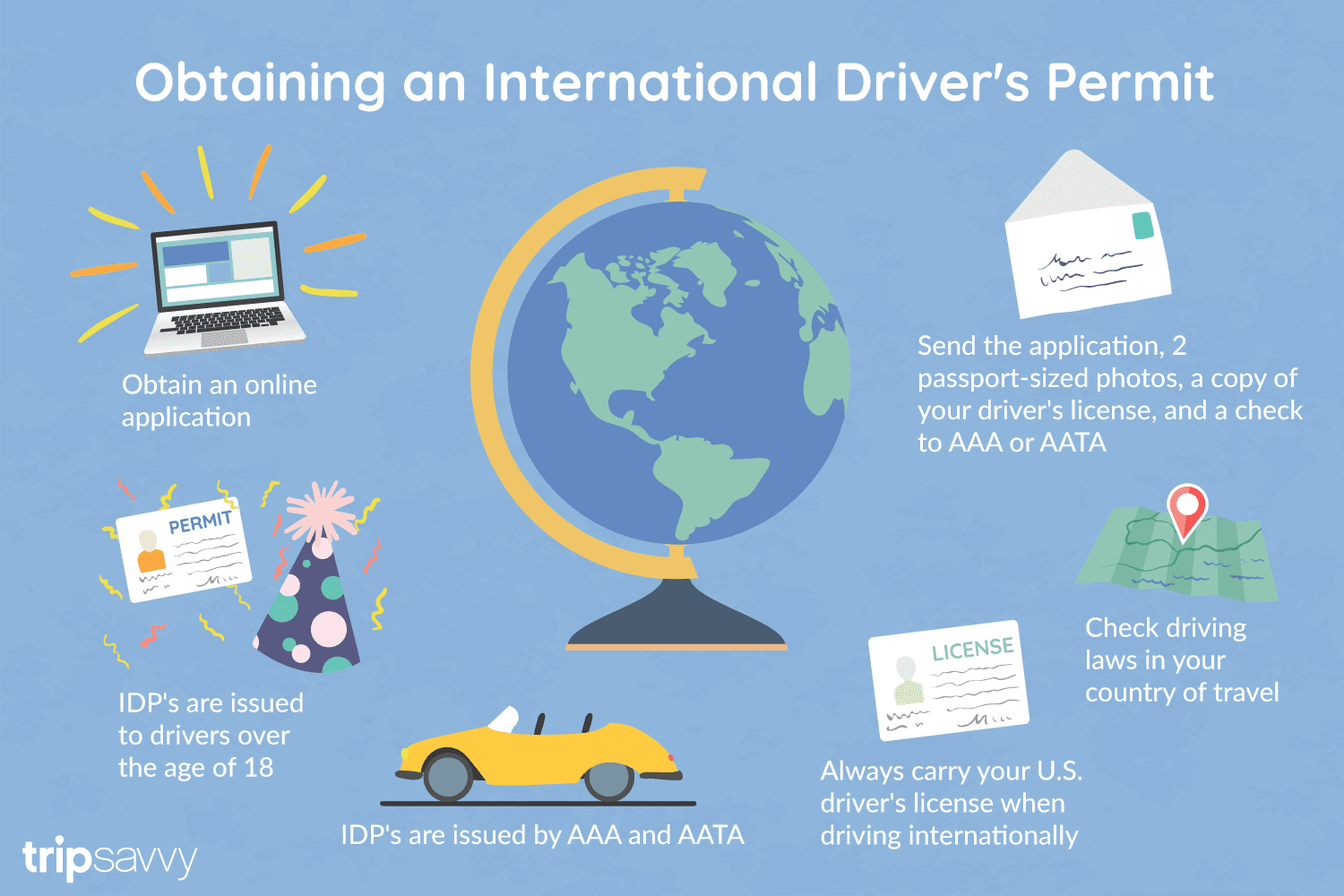
An International Driver's Permit (IDP) allows you to drive a vehicle in another country, as long as you also have a valid driver's license issued by your state. It is also recognized as a proper form of identification in over 175 countries and by many major car rental companies internationally.
Getting an International Driver's Permit (sometimes incorrectly called an international driver's license) can take anywhere from a day to a few weeks, depending on whether you're going through walk-in processing or applying via mail, so make sure to plan ahead if you're planning to drive on your international trip. There are only two locations in the United States that issue these documents: The American Automobile Association (AAA) and the American Automobile Touring Alliance (AATA).
In the United States, International Driver Permits (IDPs) are only issued by the American Automobile Association and the American Automobile Touring Alliance, and the State Department recommends against purchasing an IDP from other outlets as they are all entirely illegal to buy, carry, or sell.
IDPs can be issued to anyone over 18 who has had a valid driver's license for six months or longer. They typically remain valid for one year or the expiration of your existing state driving license. It's essential to investigate an IDP before your trip and make sure you know the requirements.
Both AAA and AATA are excellent sources for these documents, so once you've selected a provider, go to either the AAA's or NAATA's website, print out the International Driving Permit Application, complete all applicable fields, and submit it.
Once you have the application completed, you can send it in via the mail or visit a local office of an organization like AAA; you'll also need two original passport-sized photos and a signed copy of your valid U.S. driver's license as well as an enclosed check for the fee.
Tips to Getting and Using Your Permit
AAA offices can process IDPs during your visit, but processing generally takes 10 to 15 business days if you send the application in. However, expedited services may be available to get your license within one or two business days for an additional fee.
When applying, you'll need a computer and printer, a completed application, a copy of your valid U.S. driver's license, two passport photos, and a check, money order, or credit card to complete the process. Remember to bring these with you if you're applying in person.
Always make sure to carry your valid United States driver's license when driving internationally, as your IDP is invalid without this accompanying proof of eligibility to drive. IDPs only translate domestically-accepted licenses and do not allow those without government-issued driver's licenses to drive abroad.
You'll also want to make sure to enclose the proper fees (the fee for the IDP, as well as any shipping and handling fees), photos, and photocopies of your license when submitting your application to AAA or AATA as omitting any of these required documents will result in your application being rejected.
You should also check the driving requirements and laws for the countries you will be driving in on your vacation, so you'll know what will be required in the event you get stopped by local authorities. (Quelle:https://www.tripsavvy.com/)
 Bildung und Forschung
 Wissenschaft und Technik
 Vereinte Nationen
Argentinien
Australien
Belgien
Brasilien
China
Dänemark
Deutschland
Finanz
Internationale Bank für Zusammenarbeit
Finanz
***Wichtige Aufsichtsbehörden
Frankreich
Indien
Indonesien
Internationaler Währungsfonds
Camille Gutt
Internationaler Währungsfonds
Christine Lagarde
Internationaler Währungsfonds
Dominique Strauss-Kahn
Internationaler Währungsfonds
Horst Köhler
Internationaler Währungsfonds
Ivar Rooth
Internationaler Währungsfonds
Jacques de Larosière
Internationaler Währungsfonds
Johan Witteveen
Internationaler Währungsfonds
Michel Camdessus
Internationaler Währungsfonds
Per Jacobsson
Internationaler Währungsfonds
Pierre-Paul Schweitzer
Internationaler Währungsfonds
Rodrigo Rato
Internationaler Währungsfonds
Kristalina Georgiewa
Italien
Japan
Kanada
Malaysia
Mexiko
Niederlande
Nigeria
Norwegen
Österreich
Polen
Republik Korea
Russland
Saudi-Arabien
Schweden
Schweiz
Spanien
Südafrika
Venezuela
Vereinigte Staaten
Vereinigtes Königreich
Vereinte Nationen
Argentinien
Australien
Belgien
Brasilien
China
Dänemark
Deutschland
Finanz
Internationale Bank für Zusammenarbeit
Finanz
***Wichtige Aufsichtsbehörden
Frankreich
Indien
Indonesien
Internationaler Währungsfonds
Camille Gutt
Internationaler Währungsfonds
Christine Lagarde
Internationaler Währungsfonds
Dominique Strauss-Kahn
Internationaler Währungsfonds
Horst Köhler
Internationaler Währungsfonds
Ivar Rooth
Internationaler Währungsfonds
Jacques de Larosière
Internationaler Währungsfonds
Johan Witteveen
Internationaler Währungsfonds
Michel Camdessus
Internationaler Währungsfonds
Per Jacobsson
Internationaler Währungsfonds
Pierre-Paul Schweitzer
Internationaler Währungsfonds
Rodrigo Rato
Internationaler Währungsfonds
Kristalina Georgiewa
Italien
Japan
Kanada
Malaysia
Mexiko
Niederlande
Nigeria
Norwegen
Österreich
Polen
Republik Korea
Russland
Saudi-Arabien
Schweden
Schweiz
Spanien
Südafrika
Venezuela
Vereinigte Staaten
Vereinigtes Königreich
 Washington, D.C.
 Wichtige internationale Organisationen
Wirtschaft und Handel
Wirtschafts- und Politikforschung
Wichtige internationale Organisationen
Wirtschaft und Handel
Wirtschafts- und Politikforschung

国际货币基金组织(法语:Fonds Monétaire International,缩写:FMI;英语:International Monetary Fund,缩写:IMF)于1945年12月27日成立,与世界银行同为世界两大金融机构,由189个国家组成,致力于促进全球货币合作,确保金融稳定,促进国际贸易。职责是监察货币汇率和各国贸易情况、提供技术和资金协助[3][4][5],确保全球金融制度运作正常;其总部设置于美国华盛顿特区。
Der Internationale Währungsfonds (IWF; englisch International Monetary Fund, IMF; auch bekannt als Weltwährungsfonds) ist eine rechtlich, organisatorisch und finanziell selbständige Sonderorganisation der Vereinten Nationen mit Sitz in Washington, D.C., USA.
Hauptaufgabe des IWF ist die Vergabe von Krediten an Länder ohne ausreichende Währungsreserven, die in Zahlungsbilanzschwierigkeiten geraten sind. Weitere Tätigkeitsfelder sind die Förderung der internationalen Zusammenarbeit in der Währungspolitik, Ausweitung des Welthandels, Stabilisierung von Wechselkursen, Überwachung der Geldpolitik und technische Hilfe.
Der IWF und seine Schwesterorganisation Weltbank haben ihren Ursprung im 1944 geschaffenen Bretton-Woods-System fester Wechselkurse, das auf der damals mit Gold gedeckten Leitwährung US-Dollar beruhte. Sie waren als internationale Steuerungsinstrumente geplant, mit denen eine Wiederholung der Währungsturbulenzen der Zwischenkriegszeit und der Fehler des Goldstandards aus den 1920er Jahren verhindert werden sollte. Beide Organisationen werden daher als Bretton-Woods-Institution bezeichnet. Die Kreditvergabe des IWF ist an wirtschaftspolitische Auflagen geknüpft, die die Rückzahlung der Kredite sichern sollen. Anders als der IWF vergibt die Weltbank auch Kredite für spezielle Projekte.
Der IWF hat zurzeit (Stand April 2020) 189 Mitgliedstaaten, deren Stimmrecht sich an ihrem Kapitalanteil orientiert. Die Mitgliedstaaten mit den größten Stimmanteilen sind: USA 16,51 %, Japan 6,15 %, China 6,08 %, Deutschland 5,32 %, Frankreich 4,03 %, Vereinigtes Königreich 4,03 % und Italien 3,02 %. Von den deutschsprachigen Ländern haben außerdem Luxemburg 0,29 %, Österreich 0,81 % und die Schweiz 1,18 % Stimmenanteile.[4]
Beschlüsse müssen im IWF mit einer Mehrheit von 85 % getroffen werden. Dadurch verfügen jeweils die USA allein und die EU-Staaten gemeinsam de facto über eine Sperrminorität.[5]
国際通貨基金(こくさいつうかききん、英語: International Monetary Fund, IMF)は、国際金融、並びに、為替相場の安定化を目的として設立された国際連合(国連)の専門機関である。本部は、アメリカ合衆国の首都ワシントンD.C.にある。2018年現在、加盟国は189か国である[2]。
加盟国の経常収支が著しく悪化した場合などに融資などを実施することで、国際貿易の促進、加盟国の高水準の雇用と国民所得の増大、為替の安定、などに寄与する事を目的としている。 また、為替相場の安定のために、経常収支が悪化した国への融資や、為替相場と各国の為替政策の監視などを行っている。各国の中央銀行の取りまとめ役のような役割を負う。世界銀行と共に、国際金融秩序の根幹を成す。
The International Monetary Fund (IMF) is an international organization headquartered in Washington, D.C., consisting of 189 countries working to foster global monetary cooperation, secure financial stability, facilitate international trade, promote high employment and sustainable economic growth, and reduce poverty around the world while periodically depending on the World Bank for its resources.[1] Formed in 1944 at the Bretton Woods Conference primarily by the ideas of Harry Dexter White and John Maynard Keynes,[6] it came into formal existence in 1945 with 29 member countries and the goal of reconstructing the international payment system. It now plays a central role in the management of balance of payments difficulties and international financial crises.[7] Countries contribute funds to a pool through a quota system from which countries experiencing balance of payments problems can borrow money. As of 2016, the fund had XDR 477 billion (about US$ 667 billion).[8]
Through the fund and other activities such as the gathering of statistics and analysis, surveillance of its members' economies, and the demand for particular policies,[9] the IMF works to improve the economies of its member countries.[10] The organization's objectives stated in the Articles of Agreement are:[11] to promote international monetary co-operation, international trade, high employment, exchange-rate stability, sustainable economic growth, and making resources available to member countries in financial difficulty.[12] IMF funds come from two major sources: quotas and loans. Quotas, which are pooled funds of member nations, generate most IMF funds. The size of a member's quota depends on its economic and financial importance in the world. Nations with larger economic importance have larger quotas. The quotas are increased periodically as a means of boosting the IMF's resources in the form of special drawing rights.[13]
The current Managing Director (MD) and Chairwoman of the IMF is Bulgarian Economist Kristalina Georgieva, who has held the post since October 1, 2019.[14]
Gita Gopinath was appointed as Chief Economist of IMF from 1 October 2018. She received her PhD in economics from Princeton University. Prior to her IMF appointment she was economic adviser to the Chief Minister of Kerala, India.[15]
Le Fonds monétaire international (FMI) est une institution internationale regroupant 189 pays, dont le but est de promouvoir la coopération monétaire internationale, garantir la stabilité financière, faciliter les échanges internationaux, contribuer à un niveau élevé d’emploi, à la stabilité économique et faire reculer la pauvreté2.
Le FMI a ainsi pour fonction d'assurer la stabilité du système monétaire international (SMI) et la gestion des crises monétaires et financières. Pour cela, il fournit des crédits aux pays qui connaissent des difficultés financières mettant en péril l'organisation gouvernementale du pays, la stabilité de son système financier (banques, marchés financiers) ou les flux d'échanges de commerce international avec les autres pays.
Lors d'une crise financière, pour éviter qu’un pays ne fasse « défaut » (c’est-à-dire que ce pays ne puisse plus rembourser ses créanciers, voire ne plus payer ses dépenses courantes), le FMI lui prête de l’argent le temps que la confiance des agents économiques revienne. Le FMI conditionne l’obtention de prêts à la mise en place de certaines réformes économiques visant en principe à réguler la gestion des finances publiques (ingérence financière) et à établir une croissance économique équilibrée à long terme.
L'institution a été créée le 27 décembre 1945 et devait à l'origine garantir la stabilité du système monétaire international, dont l'écroulement après le krach de 1929 avait eu des effets catastrophiques sur l'économie mondiale. Après 1976 et la disparition d’un système de change fixe, le FMI perd l'essentiel de sa raison d'être et hérite d'un nouveau rôle face aux problèmes d'endettement des pays en développement et à certaines crises financières.
Il Fondo Monetario Internazionale (in sigla FMI; in inglese International Monetary Fund, IMF) è un'organizzazione internazionale pubblica[1] a carattere universale composta dai governi nazionali di 189 Paesi e insieme al gruppo della Banca Mondiale fa parte delle organizzazioni internazionali dette di Bretton Woods, dal nome della località in cui si tenne la famosa conferenza che ne sancì la creazione. L'FMI è stato formalmente istituito il 27 dicembre 1945, quando i primi 44 stati firmarono l'accordo istitutivo e l'organizzazione nacque nel maggio del 1946. Attualmente gli Stati membri sono 189.
El Fondo Monetario Internacional o FMI (en inglés: International Monetary Fund, IMF) es una organización financiera internacional con sede en Washington D. C., Estados Unidos. Nace como idea el 22 de julio de 1944 en los acuerdos de Bretton Woods, una reunión de 730 delegados de 44 países aliados de la Segunda Guerra Mundial, entrando en vigor oficialmente el 27 de diciembre de 1945. Después de 1976 y de la desaparición del sistema de cambio fijo, el FMI toma un papel preponderante ante países en desarrollo y crisis financieras internacionales. En 2010, durante la 14ª revisión general de cuotas los fondos financieros disponibles del FMI se situaban en 755 700 millones de U.S.dólares.1
A través del fondo y otras actividades como la recolección de estadísticas y datos, monitoreo de las actividades económicas de los países miembros, y la demanda de políticas concretas,2 el FMI trabaja para mejorar la economía de sus países miembros.3 Los objetivos proclamados por la organización son:4 promover la cooperación monetaria internacional, comercio internacional, reducir la desocupación, conseguir tasas de cambio sustentables, lograr crecimiento económico, y otorgar razonablemente recursos a países miembros en dificultades económicas.5 El FMI se financia con dos grandes herramientas: cuotas y préstamo. Las cuotas son aportes realizados por los países miembros al fondo común de la organización. Las mayores economías hacen aportes proporcionales mayores que las economías más pequeñas. Además, las obligaciones de cuotas aumentan periódicamente como forma de aumentar los recursos de los que puede disponer el FMI en forma de derechos especiales de giro.6
Esta organización ha sido fuertemente criticada en las últimas décadas. Las principales críticas se centran en el papel dominante que tienen los países desarrollados dentro del organismo, lo que causa que el FMI oriente sus políticas globales al fomento de un capitalismo que suele denominarse neoliberal,7 a causa de haber impuesto a los países en vías de desarrollo —y más recientemente a algunos países europeos— sus programas económicos basados en el Consenso de Washington que consisten en la reducción del déficit y del gasto público y consecuentemente de servicios y prestaciones sociales, con fundamento en las políticas y teorías monetaristas y en el principio de libre mercado,8 que deben llevarse a cabo como condiciones de los préstamos realizados y que según sus críticos ha provocado un aumento de la brecha entre ricos y pobres y un empeoramiento de los servicios públicos, como la sanidad.9 También está acusada por haber apoyado y financiado a las dictaduras militares en Latinoamérica y Africa,10 y se le han criticado puntualmente sus políticas sobre medio ambiente11 y alimentación.12
Международный валютный фонд, (МВФ) (англ. International Monetary Fund, IMF) — специализированное учреждение (валютный фонд) Организации объединённых наций (ООН) с главным офисом в городе Вашингтон, США.
189 стран являются членами МВФ, в его структурах работают 2500 человек из 133 государств мира. МВФ предоставляет кратко- и среднесрочные кредиты при дефиците платёжного баланса государства. Предоставление кредитов обычно сопровождается набором определённых условий и рекомендаций. Политика и рекомендации МВФ в отношении развивающихся стран неоднократно подвергались критике, суть которой состоит в том, что выполнение рекомендаций и условий, в итоге, направлено не на повышение самостоятельности, стабильности и развитие национальной экономики государства, а лишь на привязывание её к международным финансовым потокам.
В отличие от Всемирного банка, деятельность МВФ сосредоточена на относительно кратковременных макроэкономических кризисах. Всемирный банк предоставляет кредиты только бедным странам, МВФ может давать кредиты любой из своих стран-членов, которая испытывает нехватку иностранной валюты для покрытия краткосрочных финансовых обязательств.


 Architektur

 Religion

 Weltkulturerbe
Indien
Weltkulturerbe
Indien
 Internationale Städte
*UNESCO-Stadt des Kunsthandwerks und der Volkskunst
Rajasthan
Internationale Städte
Internationale Städte
*UNESCO-Stadt des Kunsthandwerks und der Volkskunst
Rajasthan

贾玛清真寺(Jama Masjid)位于印度德里老德里中心繁忙的义卖市场街(Chawri Bazar Road),是印度最大的清真寺。贾玛(Jama)一词来源于穆斯林在星期五下午举行的主麻日聚礼。
贾玛清真寺兴建于1650年10月19日(星期五)到1656年。莫卧儿帝国第五代皇帝沙贾汗,泰姬陵和对面的红堡的兴建者,下令修建了这座清真寺。修建这座清真寺使用了5000名工匠,历经7年建成。[1]
这座清真寺用红色砂岩和白色大理石建造,长80米,宽27米,有3个圆顶,两座高41米的叫拜塔,以及东、南、北三座大门、[2]。清真寺的庭院可容纳25000名信徒。
Die Jama Masjid (auch Jami Masjid; Urdu جامع مسجد, in Devanagari: जामा मस्जिद, „Freitagsmoschee“), eigentlich Masjid-i Jahan Numa (persisch مسجد جهاں نما, DMG masǧid-i ǧahān-numā, ‚Moschee, die die Welt zeigt‘), in Delhi ist die größte Moschee Indiens und eine der größten der islamischen Welt. Die Moschee befindet sich auf einer stellenweise bis zu 9 m hohen Erhebung im Zentrum von Shahjahanabad, einem nach dem Großmogul Shah Jahan benannten Stadtteil Delhis. Sie ist nur ca. 400 m vom Roten Fort entfernt.