
Deutsch-Chinesische Enzyklopädie, 德汉百科
 Switzerland
 Sport
Sport


 United Nations
International Telecommunication Union
International Telecommunication Union
United Nations
International Telecommunication Union
International Telecommunication Union
 Secretaries General of the ITU
Switzerland
Genf
Secretaries General of the ITU
Switzerland
Genf


 Disaster relief
 Medical, Pharmaceutical, Rehabilitation
 Military, defense and equipment
Nobel prize
Nobel prize
1963
Nobel prize
Nobel Peace Prize
Nobel prize
1944
Useful info
Military, defense and equipment
Nobel prize
Nobel prize
1963
Nobel prize
Nobel Peace Prize
Nobel prize
1944
Useful info
 Review
 Important International Organizations

红十字国际委员会(法语:Comité International de la Croix Rouge, CICR;英语:International Committee of the Red Cross, ICRC)是一个总部设于瑞士日内瓦的人道主义机构。根据《日内瓦公约》以及习惯国际法的规定,国际社会赋予红十字国际委员会特权和法律豁免权,保护国内武装冲突和国际性武装冲突的受难者。这些受难者包括战伤者、战俘、难民、平民和其他非战斗员。
红十字国际委员会的委员只能是瑞士公民,而且新委员由委员会推选。长期以来,红十字国际委员会的雇员只能是瑞士公民,并特别强调以日内瓦市民、白人、男性、新教徒为主。但自1990年代初以来,红十字国际委员会开始聘用非瑞士籍员工。长期以来,瑞士官方认定红十字国际委员会为私人机构。1993年3月19日,瑞士政府和红十字国际委员会签署了一份正式协议,保护红十字国际委员会在瑞士的财产豁免权、委员及其员工的法律豁免权,免除各项税费,提供与外国使馆同等级别的安全通讯特权并简化红十字国际委员会在瑞士的出入境手续。
根据瑞士法律,红十字国际委员会被定义为私人协会。与普遍看法相反,红十字国际委员会不是一个最常见的非政府组织,也不是一个国际组织。由于它仅向瑞士国民限制其成员(称为合作的过程),因此对于像其他法律界定的非政府组织这样的个人而言,它没有公开和不受限制的成员资格政策。其名称中的“国际”一词并不是指其成员资格,而是指日内瓦公约所界定的其活动的全球范围。红十字国际委员会根据这些国家的法律或通过委员会与各自国家政府之间的协议,在许多国家享有特权和法律豁免权。
红十字国际委员会与红十字会与红新月会国际联合会(下文简称“联合会”)以及190个国家红十字/红新月/红水晶会共同组成国际红十字与红新月运动。根据1997年的塞维利亚协议,在武装冲突中红十字国际委员会是占主导地位的红十字组织;在非冲突情况下,联合会为运动的领导机关。
红十字国际委员会是运动中历史最为悠久且最负盛誉的组织,它也是世界上获得最广泛认可的组织之一,并在1917年、1944年和1963年三次荣获诺贝尔和平奖。而红十字会的创办人亨利·杜南则在1901年荣获首届诺贝尔和平奖。
Die Internationale Rotkreuz- und Rothalbmond-Bewegung umfasst das Internationale Komitee vom Roten Kreuz (IKRK) (englisch offiziell International Committee of the Red Cross (ICRC)), die Internationale Föderation der Rotkreuz- und Rothalbmond-Gesellschaften (englisch offiziell International Federation of Red Cross and Red Crescent Societies (IFRC)) sowie die nationalen Rotkreuz- und Rothalbmond-Gesellschaften.[1] Das IKRK und die Internationale Föderation sind voneinander organisatorisch und rechtlich unabhängig und innerhalb der Bewegung durch gemeinsame Grundsätze, Ziele und Symbole miteinander verbunden. Als Föderation der nationalen Rotkreuz- und Rothalbmond-Gesellschaften wird die Internationale Föderation der Rotkreuz- und Rothalbmond-Gesellschaften von den 191 Mitgliedsorganisationen gesteuert und ist nicht von ihnen unabhängig.[2] Die weltweit gleichermaßen geltende Mission der Bewegung – unabhängig von staatlichen Institutionen und auf der Basis freiwilliger Hilfe – sind der Schutz des Lebens, der Gesundheit und der Würde sowie die Verminderung des Leids von Menschen in Not ohne Ansehen von Nationalität und Abstammung oder religiösen, weltanschaulichen oder politischen Ansichten der Betroffenen und Hilfeleistenden.
Das auf Anregung von Henry Dunant 1863 gegründete Internationale Komitee vom Roten Kreuz (IKRK) besteht aus bis zu 25 Schweizer Staatsbürgern, ist die älteste internationale medizinische Hilfsorganisation[3] und die einzige Organisation, die im humanitären Völkerrecht erfasst und als dessen Kontrollorgan genannt ist. Es ist die älteste Organisation der Bewegung und neben dem Heiligen Stuhl sowie dem Souveränen Malteser-Ritterorden eines der wenigen originären nichtstaatlichen Völkerrechtssubjekte. Seine ausschließlich humanitäre Mission ist, basierend auf den Prinzipien der Unparteilichkeit, Neutralität und Unabhängigkeit, der Schutz des Lebens und der Würde der Opfer von Kriegen und innerstaatlichen Konflikten.
Die Internationale Föderation der Rotkreuz- und Rothalbmond-Gesellschaften, Nachfolgeorganisation der 1919 entstandenen Liga der Rotkreuz-Gesellschaften, koordiniert innerhalb der Bewegung die Kooperation zwischen den nationalen Rotkreuz- und Rothalbmond-Gesellschaften und leistet Unterstützung beim Aufbau neuer nationaler Gesellschaften. Auf internationaler Ebene leitet und organisiert sie, in Zusammenarbeit mit den nationalen Gesellschaften, Hilfsmissionen nach nicht kriegsbedingten Notsituationen wie zum Beispiel Naturkatastrophen und Epidemien.
Die nationalen Rotkreuz- und Rothalbmond-Gesellschaften sind Organisationen in fast allen Ländern der Welt, die jeweils in ihrem Heimatland im Sinne des humanitären Völkerrechts sowie der Statuten der Internationalen Bewegung tätig sind und die Arbeit des IKRK sowie der Föderation unterstützen. Ihre wichtigsten Aufgaben in ihren Heimatländern sind die Katastrophenhilfe und die Verbreitung der Genfer Konventionen. Im Rahmen ihrer Möglichkeiten können sie darüber hinaus weitere soziale und humanitäre Aufgaben wahrnehmen, die nicht unmittelbar durch völkerrechtliche Bestimmungen oder die Prinzipien der Bewegung vorgegeben sind. Hierzu zählen in vielen Ländern beispielsweise das Blutspendewesen und der Rettungsdienst sowie die Altenpflege und andere Bereiche der Sozialarbeit.
Von der Gründung im Jahr 1928 als Dachorganisation des IKRK und der Föderation bis zur Umbenennung 1986 lautete der offizielle Name der Bewegung Internationales Rotes Kreuz. Diese bis in die Gegenwart weit verbreitete Bezeichnung und die daraus resultierende Abkürzung IRK sollten jedoch nach Möglichkeit nicht mehr verwendet werden, da sie zu Problemen bei der Unterscheidung zwischen dem IKRK und der Föderation in der öffentlichen Wahrnehmung führen können.

 Architecture
 Automobile
 Hand in Hand

 IT-Times

 Aerospace
Useful info
Aerospace
Useful info
 Ships and Nautics
 Transport and traffic
Important International Organizations
Transport and traffic
Important International Organizations
 Science and technology

 Driving school
Egypt
Australia
Belgium
Brazil
Denmark
Germany
Finland
France
Greece
Hand in Hand
Hand in Hand
Driver's license
India
Indonesia
Italy
Japan
Canada
Kasachstan
Croatia
Malaysia
Mexico
Driving school
Egypt
Australia
Belgium
Brazil
Denmark
Germany
Finland
France
Greece
Hand in Hand
Hand in Hand
Driver's license
India
Indonesia
Italy
Japan
Canada
Kasachstan
Croatia
Malaysia
Mexico
 Mongolei
New Zealand
Netherlands
Useful info
Austria
Portugal
Republic of Korea
Russia
Saudi Arabia
Sweden
Switzerland
Singapore
Spain
South Africa
Thailand
Czech Republic
Turkey
Hungary
Mongolei
New Zealand
Netherlands
Useful info
Austria
Portugal
Republic of Korea
Russia
Saudi Arabia
Sweden
Switzerland
Singapore
Spain
South Africa
Thailand
Czech Republic
Turkey
Hungary
 Vacation and Travel
United Arab Emirates
United States
United Kingdom
Vacation and Travel
United Arab Emirates
United States
United Kingdom
国际驾驶执照(International Driving Permit)依照1949年日内瓦国际道路交通公约及1968年维也纳国际道路交通公约,由公约签署国政府签发,方便本国驾驶员在其他签约国驾驶私人车辆。国际驾驶执照为附加在一国驾驶执照之上的一本附加多国语言的说明,标注了驾驶人的基本信息以及允许驾驶的对应车辆种类等,解决驾驶员与其他国家的交通管理部门之间的沟通障碍。国际驾照不能独立存在,当驾驶员同时持有一国驾照与该国政府签发的国际驾照时,此国际驾照才视作有效。[1]
国际驾驶执照之内容及格式依照维也纳道路交通会议制订,但并非各国均批准该公约。
Ein Internationaler Führerschein ist ein Dokument, das von den Straßenverkehrsbehörden oder Automobilclubs[1] eines Landes aufgrund zwischenstaatlicher Verträge ausgestellt wird. Er soll vor allem der Polizei eines anderen Landes die Feststellung ermöglichen, ob ein ausländischer Kraftfahrer die Fahrerlaubnis hat, die für sein aktuelles Fahrzeug erforderlich ist.
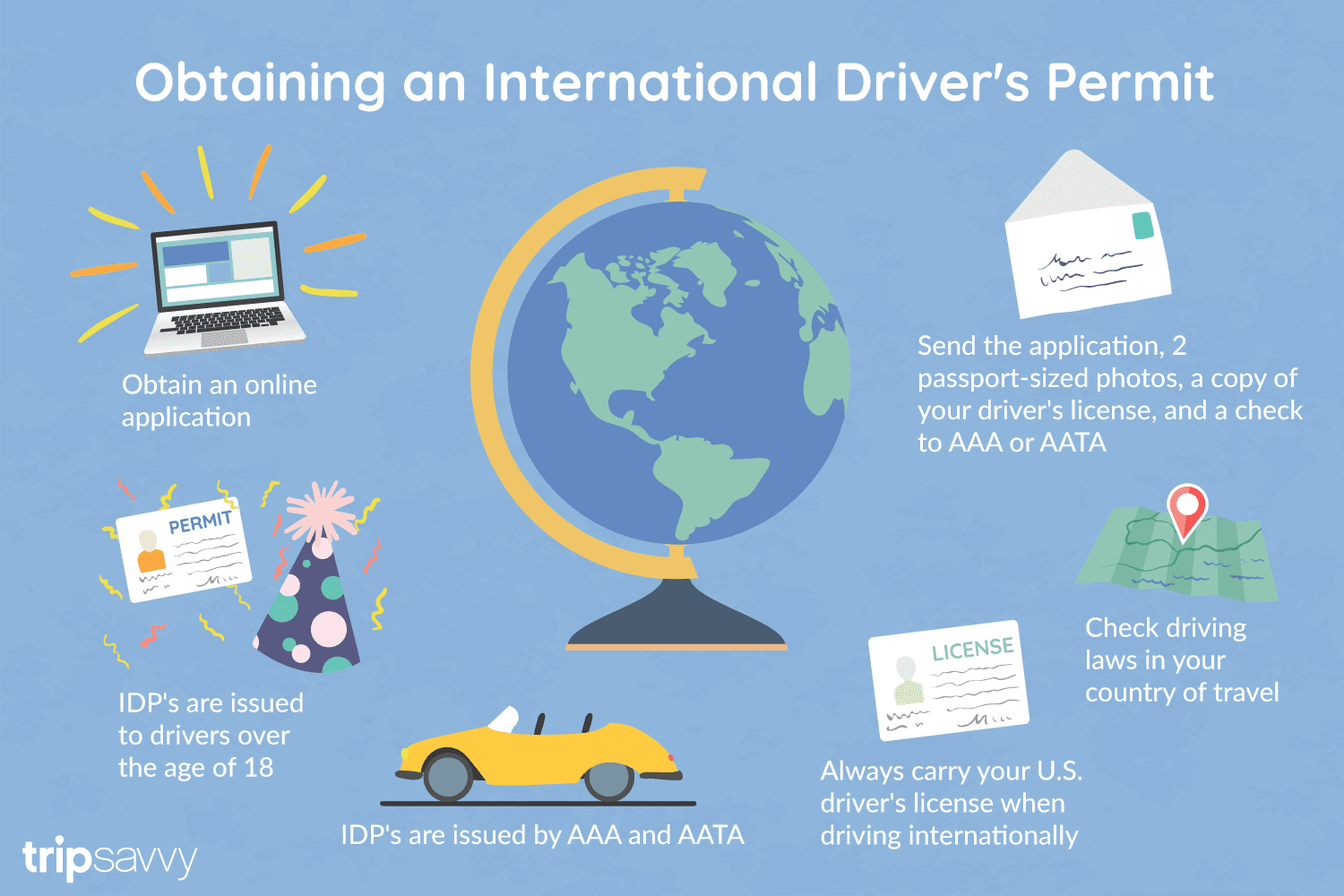
An International Driver's Permit (IDP) allows you to drive a vehicle in another country, as long as you also have a valid driver's license issued by your state. It is also recognized as a proper form of identification in over 175 countries and by many major car rental companies internationally.
Getting an International Driver's Permit (sometimes incorrectly called an international driver's license) can take anywhere from a day to a few weeks, depending on whether you're going through walk-in processing or applying via mail, so make sure to plan ahead if you're planning to drive on your international trip. There are only two locations in the United States that issue these documents: The American Automobile Association (AAA) and the American Automobile Touring Alliance (AATA).
In the United States, International Driver Permits (IDPs) are only issued by the American Automobile Association and the American Automobile Touring Alliance, and the State Department recommends against purchasing an IDP from other outlets as they are all entirely illegal to buy, carry, or sell.
IDPs can be issued to anyone over 18 who has had a valid driver's license for six months or longer. They typically remain valid for one year or the expiration of your existing state driving license. It's essential to investigate an IDP before your trip and make sure you know the requirements.
Both AAA and AATA are excellent sources for these documents, so once you've selected a provider, go to either the AAA's or NAATA's website, print out the International Driving Permit Application, complete all applicable fields, and submit it.
Once you have the application completed, you can send it in via the mail or visit a local office of an organization like AAA; you'll also need two original passport-sized photos and a signed copy of your valid U.S. driver's license as well as an enclosed check for the fee.
Tips to Getting and Using Your Permit
AAA offices can process IDPs during your visit, but processing generally takes 10 to 15 business days if you send the application in. However, expedited services may be available to get your license within one or two business days for an additional fee.
When applying, you'll need a computer and printer, a completed application, a copy of your valid U.S. driver's license, two passport photos, and a check, money order, or credit card to complete the process. Remember to bring these with you if you're applying in person.
Always make sure to carry your valid United States driver's license when driving internationally, as your IDP is invalid without this accompanying proof of eligibility to drive. IDPs only translate domestically-accepted licenses and do not allow those without government-issued driver's licenses to drive abroad.
You'll also want to make sure to enclose the proper fees (the fee for the IDP, as well as any shipping and handling fees), photos, and photocopies of your license when submitting your application to AAA or AATA as omitting any of these required documents will result in your application being rejected.
You should also check the driving requirements and laws for the countries you will be driving in on your vacation, so you'll know what will be required in the event you get stopped by local authorities. (Quelle:https://www.tripsavvy.com/)
国际皮划艇联合会(International Canoe Federation,ICF)是一个国际性的皮划艇体育组织,由世界各国的皮划艇协会组成。目前共有147个会员协会。皮划艇竞速,原称为静水竞赛(世界皮划艇竞速锦标赛从1938年开始举办) 皮划艇激流,原称为激流竞赛(世界皮划艇激流锦标赛从1949年开始举办) 激流皮划艇 皮划艇马拉松(世界皮划艇马拉松锦标赛从1988年开始举办) 皮艇球(世界皮艇球锦标赛从1994年开始举办) 龙舟 皮划艇花式 皮划艇风帆 皮划艇海洋竞赛 帕艇
Die International Canoe Federation (ICF) ist der Dachverband der nationalen Kanuverbände weltweit. Die ICF ist Mitglied im Internationalen Olympischen Komitee, der GAISF und der IWGA und vertritt dort die Belange des Kanusports.


Argentina
Australia
Belgium
Brazil
China
Denmark
Germany
 Financial
International Bank for Cooperation
Financial
***Key regulatory authorities
France
India
Indonesia
Internationaler Währungsfonds
Camille Gutt
Internationaler Währungsfonds
Christine Lagarde
Internationaler Währungsfonds
Dominique Strauss-Kahn
Internationaler Währungsfonds
Horst Köhler
Internationaler Währungsfonds
Ivar Rooth
Internationaler Währungsfonds
Jacques de Larosière
Internationaler Währungsfonds
Johan Witteveen
Internationaler Währungsfonds
Michel Camdessus
Internationaler Währungsfonds
Per Jacobsson
Internationaler Währungsfonds
Pierre-Paul Schweitzer
Internationaler Währungsfonds
Rodrigo Rato
Internationaler Währungsfonds
Kristalina Georgiewa
Italy
Japan
Canada
Malaysia
Mexico
Netherlands
Nigeria
Norwegen
Austria
Poland
Republic of Korea
Russia
Saudi Arabia
Sweden
Switzerland
Spain
South Africa
Venezuela
United States
United Kingdom
Financial
International Bank for Cooperation
Financial
***Key regulatory authorities
France
India
Indonesia
Internationaler Währungsfonds
Camille Gutt
Internationaler Währungsfonds
Christine Lagarde
Internationaler Währungsfonds
Dominique Strauss-Kahn
Internationaler Währungsfonds
Horst Köhler
Internationaler Währungsfonds
Ivar Rooth
Internationaler Währungsfonds
Jacques de Larosière
Internationaler Währungsfonds
Johan Witteveen
Internationaler Währungsfonds
Michel Camdessus
Internationaler Währungsfonds
Per Jacobsson
Internationaler Währungsfonds
Pierre-Paul Schweitzer
Internationaler Währungsfonds
Rodrigo Rato
Internationaler Währungsfonds
Kristalina Georgiewa
Italy
Japan
Canada
Malaysia
Mexico
Netherlands
Nigeria
Norwegen
Austria
Poland
Republic of Korea
Russia
Saudi Arabia
Sweden
Switzerland
Spain
South Africa
Venezuela
United States
United Kingdom
 Washington, D.C.
Important International Organizations
Washington, D.C.
Important International Organizations
 Economy and trade
Economic and political research
Economy and trade
Economic and political research

国际货币基金组织(法语:Fonds Monétaire International,缩写:FMI;英语:International Monetary Fund,缩写:IMF)于1945年12月27日成立,与世界银行同为世界两大金融机构,由189个国家组成,致力于促进全球货币合作,确保金融稳定,促进国际贸易。职责是监察货币汇率和各国贸易情况、提供技术和资金协助[3][4][5],确保全球金融制度运作正常;其总部设置于美国华盛顿特区。
Der Internationale Währungsfonds (IWF; englisch International Monetary Fund, IMF; auch bekannt als Weltwährungsfonds) ist eine rechtlich, organisatorisch und finanziell selbständige Sonderorganisation der Vereinten Nationen mit Sitz in Washington, D.C., USA.
Hauptaufgabe des IWF ist die Vergabe von Krediten an Länder ohne ausreichende Währungsreserven, die in Zahlungsbilanzschwierigkeiten geraten sind. Weitere Tätigkeitsfelder sind die Förderung der internationalen Zusammenarbeit in der Währungspolitik, Ausweitung des Welthandels, Stabilisierung von Wechselkursen, Überwachung der Geldpolitik und technische Hilfe.
Der IWF und seine Schwesterorganisation Weltbank haben ihren Ursprung im 1944 geschaffenen Bretton-Woods-System fester Wechselkurse, das auf der damals mit Gold gedeckten Leitwährung US-Dollar beruhte. Sie waren als internationale Steuerungsinstrumente geplant, mit denen eine Wiederholung der Währungsturbulenzen der Zwischenkriegszeit und der Fehler des Goldstandards aus den 1920er Jahren verhindert werden sollte. Beide Organisationen werden daher als Bretton-Woods-Institution bezeichnet. Die Kreditvergabe des IWF ist an wirtschaftspolitische Auflagen geknüpft, die die Rückzahlung der Kredite sichern sollen. Anders als der IWF vergibt die Weltbank auch Kredite für spezielle Projekte.
Der IWF hat zurzeit (Stand April 2020) 189 Mitgliedstaaten, deren Stimmrecht sich an ihrem Kapitalanteil orientiert. Die Mitgliedstaaten mit den größten Stimmanteilen sind: USA 16,51 %, Japan 6,15 %, China 6,08 %, Deutschland 5,32 %, Frankreich 4,03 %, Vereinigtes Königreich 4,03 % und Italien 3,02 %. Von den deutschsprachigen Ländern haben außerdem Luxemburg 0,29 %, Österreich 0,81 % und die Schweiz 1,18 % Stimmenanteile.[4]
Beschlüsse müssen im IWF mit einer Mehrheit von 85 % getroffen werden. Dadurch verfügen jeweils die USA allein und die EU-Staaten gemeinsam de facto über eine Sperrminorität.[5]
国際通貨基金(こくさいつうかききん、英語: International Monetary Fund, IMF)は、国際金融、並びに、為替相場の安定化を目的として設立された国際連合(国連)の専門機関である。本部は、アメリカ合衆国の首都ワシントンD.C.にある。2018年現在、加盟国は189か国である[2]。
加盟国の経常収支が著しく悪化した場合などに融資などを実施することで、国際貿易の促進、加盟国の高水準の雇用と国民所得の増大、為替の安定、などに寄与する事を目的としている。 また、為替相場の安定のために、経常収支が悪化した国への融資や、為替相場と各国の為替政策の監視などを行っている。各国の中央銀行の取りまとめ役のような役割を負う。世界銀行と共に、国際金融秩序の根幹を成す。
The International Monetary Fund (IMF) is an international organization headquartered in Washington, D.C., consisting of 189 countries working to foster global monetary cooperation, secure financial stability, facilitate international trade, promote high employment and sustainable economic growth, and reduce poverty around the world while periodically depending on the World Bank for its resources.[1] Formed in 1944 at the Bretton Woods Conference primarily by the ideas of Harry Dexter White and John Maynard Keynes,[6] it came into formal existence in 1945 with 29 member countries and the goal of reconstructing the international payment system. It now plays a central role in the management of balance of payments difficulties and international financial crises.[7] Countries contribute funds to a pool through a quota system from which countries experiencing balance of payments problems can borrow money. As of 2016, the fund had XDR 477 billion (about US$ 667 billion).[8]
Through the fund and other activities such as the gathering of statistics and analysis, surveillance of its members' economies, and the demand for particular policies,[9] the IMF works to improve the economies of its member countries.[10] The organization's objectives stated in the Articles of Agreement are:[11] to promote international monetary co-operation, international trade, high employment, exchange-rate stability, sustainable economic growth, and making resources available to member countries in financial difficulty.[12] IMF funds come from two major sources: quotas and loans. Quotas, which are pooled funds of member nations, generate most IMF funds. The size of a member's quota depends on its economic and financial importance in the world. Nations with larger economic importance have larger quotas. The quotas are increased periodically as a means of boosting the IMF's resources in the form of special drawing rights.[13]
The current Managing Director (MD) and Chairwoman of the IMF is Bulgarian Economist Kristalina Georgieva, who has held the post since October 1, 2019.[14]
Gita Gopinath was appointed as Chief Economist of IMF from 1 October 2018. She received her PhD in economics from Princeton University. Prior to her IMF appointment she was economic adviser to the Chief Minister of Kerala, India.[15]
Le Fonds monétaire international (FMI) est une institution internationale regroupant 189 pays, dont le but est de promouvoir la coopération monétaire internationale, garantir la stabilité financière, faciliter les échanges internationaux, contribuer à un niveau élevé d’emploi, à la stabilité économique et faire reculer la pauvreté2.
Le FMI a ainsi pour fonction d'assurer la stabilité du système monétaire international (SMI) et la gestion des crises monétaires et financières. Pour cela, il fournit des crédits aux pays qui connaissent des difficultés financières mettant en péril l'organisation gouvernementale du pays, la stabilité de son système financier (banques, marchés financiers) ou les flux d'échanges de commerce international avec les autres pays.
Lors d'une crise financière, pour éviter qu’un pays ne fasse « défaut » (c’est-à-dire que ce pays ne puisse plus rembourser ses créanciers, voire ne plus payer ses dépenses courantes), le FMI lui prête de l’argent le temps que la confiance des agents économiques revienne. Le FMI conditionne l’obtention de prêts à la mise en place de certaines réformes économiques visant en principe à réguler la gestion des finances publiques (ingérence financière) et à établir une croissance économique équilibrée à long terme.
L'institution a été créée le 27 décembre 1945 et devait à l'origine garantir la stabilité du système monétaire international, dont l'écroulement après le krach de 1929 avait eu des effets catastrophiques sur l'économie mondiale. Après 1976 et la disparition d’un système de change fixe, le FMI perd l'essentiel de sa raison d'être et hérite d'un nouveau rôle face aux problèmes d'endettement des pays en développement et à certaines crises financières.
Il Fondo Monetario Internazionale (in sigla FMI; in inglese International Monetary Fund, IMF) è un'organizzazione internazionale pubblica[1] a carattere universale composta dai governi nazionali di 189 Paesi e insieme al gruppo della Banca Mondiale fa parte delle organizzazioni internazionali dette di Bretton Woods, dal nome della località in cui si tenne la famosa conferenza che ne sancì la creazione. L'FMI è stato formalmente istituito il 27 dicembre 1945, quando i primi 44 stati firmarono l'accordo istitutivo e l'organizzazione nacque nel maggio del 1946. Attualmente gli Stati membri sono 189.
El Fondo Monetario Internacional o FMI (en inglés: International Monetary Fund, IMF) es una organización financiera internacional con sede en Washington D. C., Estados Unidos. Nace como idea el 22 de julio de 1944 en los acuerdos de Bretton Woods, una reunión de 730 delegados de 44 países aliados de la Segunda Guerra Mundial, entrando en vigor oficialmente el 27 de diciembre de 1945. Después de 1976 y de la desaparición del sistema de cambio fijo, el FMI toma un papel preponderante ante países en desarrollo y crisis financieras internacionales. En 2010, durante la 14ª revisión general de cuotas los fondos financieros disponibles del FMI se situaban en 755 700 millones de U.S.dólares.1
A través del fondo y otras actividades como la recolección de estadísticas y datos, monitoreo de las actividades económicas de los países miembros, y la demanda de políticas concretas,2 el FMI trabaja para mejorar la economía de sus países miembros.3 Los objetivos proclamados por la organización son:4 promover la cooperación monetaria internacional, comercio internacional, reducir la desocupación, conseguir tasas de cambio sustentables, lograr crecimiento económico, y otorgar razonablemente recursos a países miembros en dificultades económicas.5 El FMI se financia con dos grandes herramientas: cuotas y préstamo. Las cuotas son aportes realizados por los países miembros al fondo común de la organización. Las mayores economías hacen aportes proporcionales mayores que las economías más pequeñas. Además, las obligaciones de cuotas aumentan periódicamente como forma de aumentar los recursos de los que puede disponer el FMI en forma de derechos especiales de giro.6
Esta organización ha sido fuertemente criticada en las últimas décadas. Las principales críticas se centran en el papel dominante que tienen los países desarrollados dentro del organismo, lo que causa que el FMI oriente sus políticas globales al fomento de un capitalismo que suele denominarse neoliberal,7 a causa de haber impuesto a los países en vías de desarrollo —y más recientemente a algunos países europeos— sus programas económicos basados en el Consenso de Washington que consisten en la reducción del déficit y del gasto público y consecuentemente de servicios y prestaciones sociales, con fundamento en las políticas y teorías monetaristas y en el principio de libre mercado,8 que deben llevarse a cabo como condiciones de los préstamos realizados y que según sus críticos ha provocado un aumento de la brecha entre ricos y pobres y un empeoramiento de los servicios públicos, como la sanidad.9 También está acusada por haber apoyado y financiado a las dictaduras militares en Latinoamérica y Africa,10 y se le han criticado puntualmente sus políticas sobre medio ambiente11 y alimentación.12
Международный валютный фонд, (МВФ) (англ. International Monetary Fund, IMF) — специализированное учреждение (валютный фонд) Организации объединённых наций (ООН) с главным офисом в городе Вашингтон, США.
189 стран являются членами МВФ, в его структурах работают 2500 человек из 133 государств мира. МВФ предоставляет кратко- и среднесрочные кредиты при дефиците платёжного баланса государства. Предоставление кредитов обычно сопровождается набором определённых условий и рекомендаций. Политика и рекомендации МВФ в отношении развивающихся стран неоднократно подвергались критике, суть которой состоит в том, что выполнение рекомендаций и условий, в итоге, направлено не на повышение самостоятельности, стабильности и развитие национальной экономики государства, а лишь на привязывание её к международным финансовым потокам.
В отличие от Всемирного банка, деятельность МВФ сосредоточена на относительно кратковременных макроэкономических кризисах. Всемирный банк предоставляет кредиты только бедным странам, МВФ может давать кредиты любой из своих стран-членов, которая испытывает нехватку иностранной валюты для покрытия краткосрочных финансовых обязательств.