
Deutsch-Chinesische Enzyklopädie, 德汉百科
 Chūbu
Chūbu
Chūgoku
Hokkaidō
Japan
Kantō
Kinki
Kyūshū
Shikoku
Shinkansen
Chūbu
Chūbu
Chūgoku
Hokkaidō
Japan
Kantō
Kinki
Kyūshū
Shikoku
Shinkansen
 500
Shinkansen
700
Shinkansen
700T
Shinkansen
800
Shinkansen
CRH2
Shinkansen
E2
Shinkansen
E3
Shinkansen
E4
Shinkansen
E5
Shinkansen
E6
Shinkansen
E7
Shinkansen
N700
High speed train technology
Rad-Schiene-System
High speed train technology
Distributed Drive
Tōhoku
500
Shinkansen
700
Shinkansen
700T
Shinkansen
800
Shinkansen
CRH2
Shinkansen
E2
Shinkansen
E3
Shinkansen
E4
Shinkansen
E5
Shinkansen
E6
Shinkansen
E7
Shinkansen
N700
High speed train technology
Rad-Schiene-System
High speed train technology
Distributed Drive
Tōhoku
 Transport and traffic
High speed traffic
Transport and traffic
High speed train technology
Transport and traffic
High speed traffic
Transport and traffic
High speed train technology
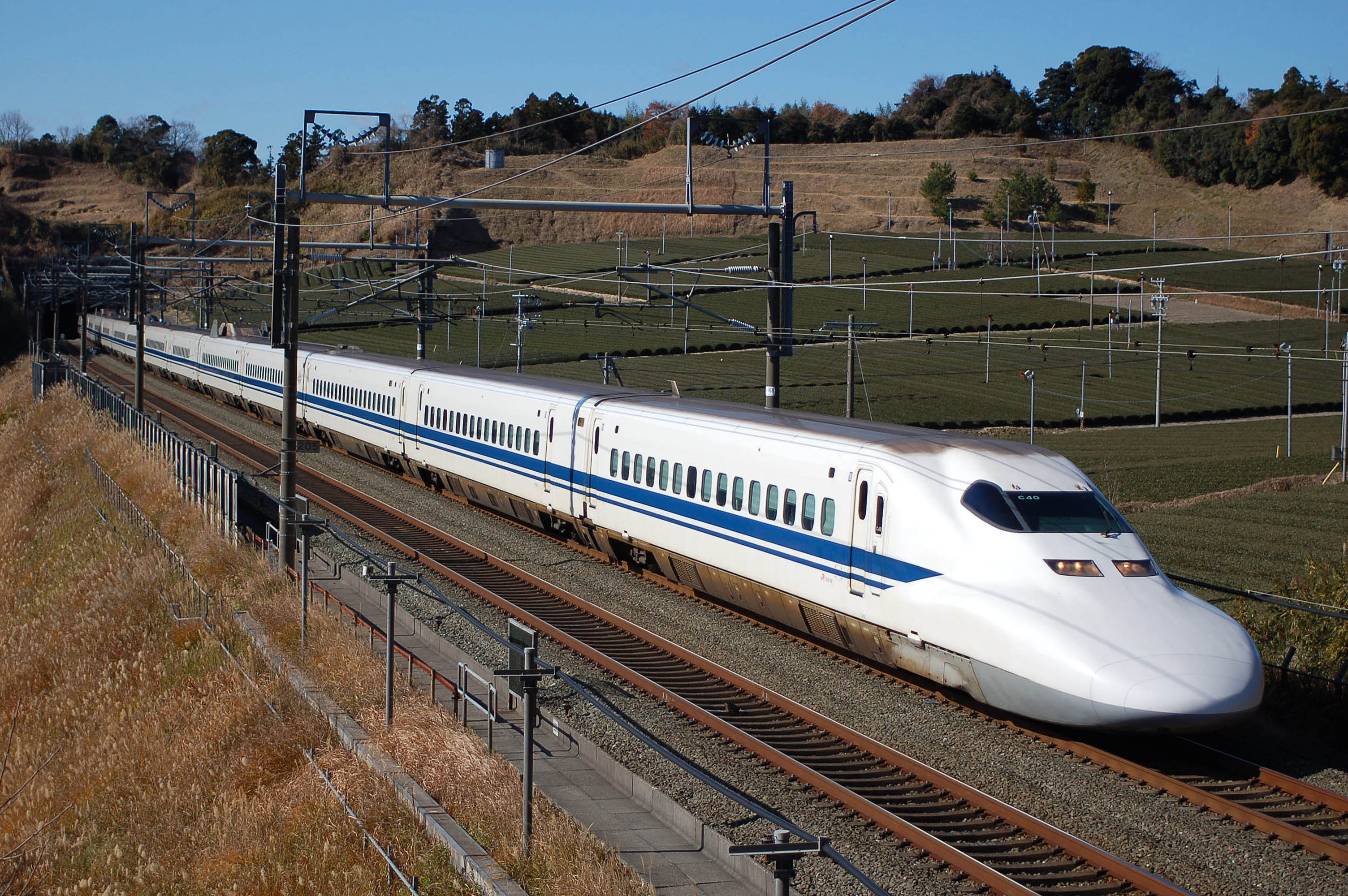
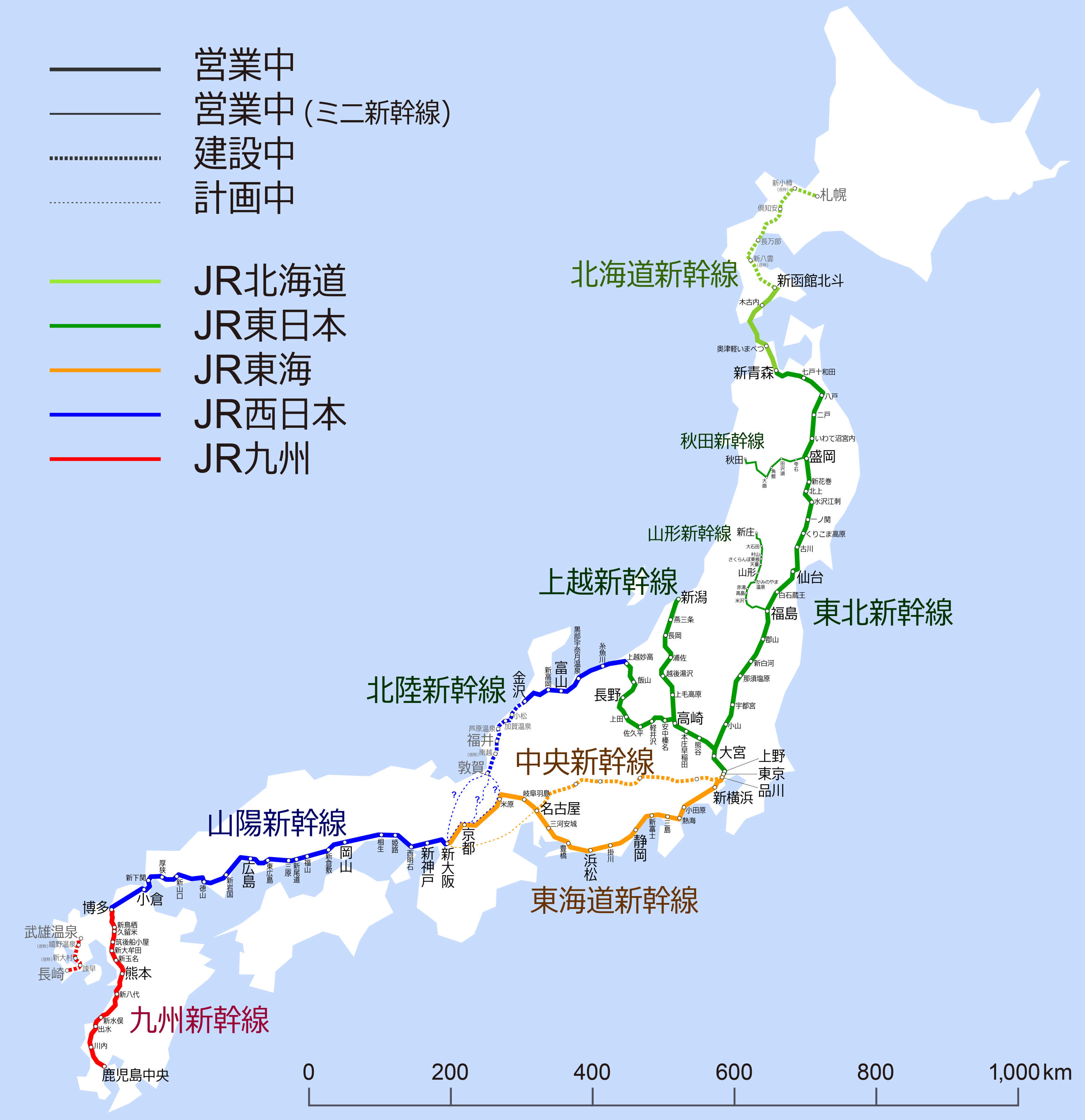
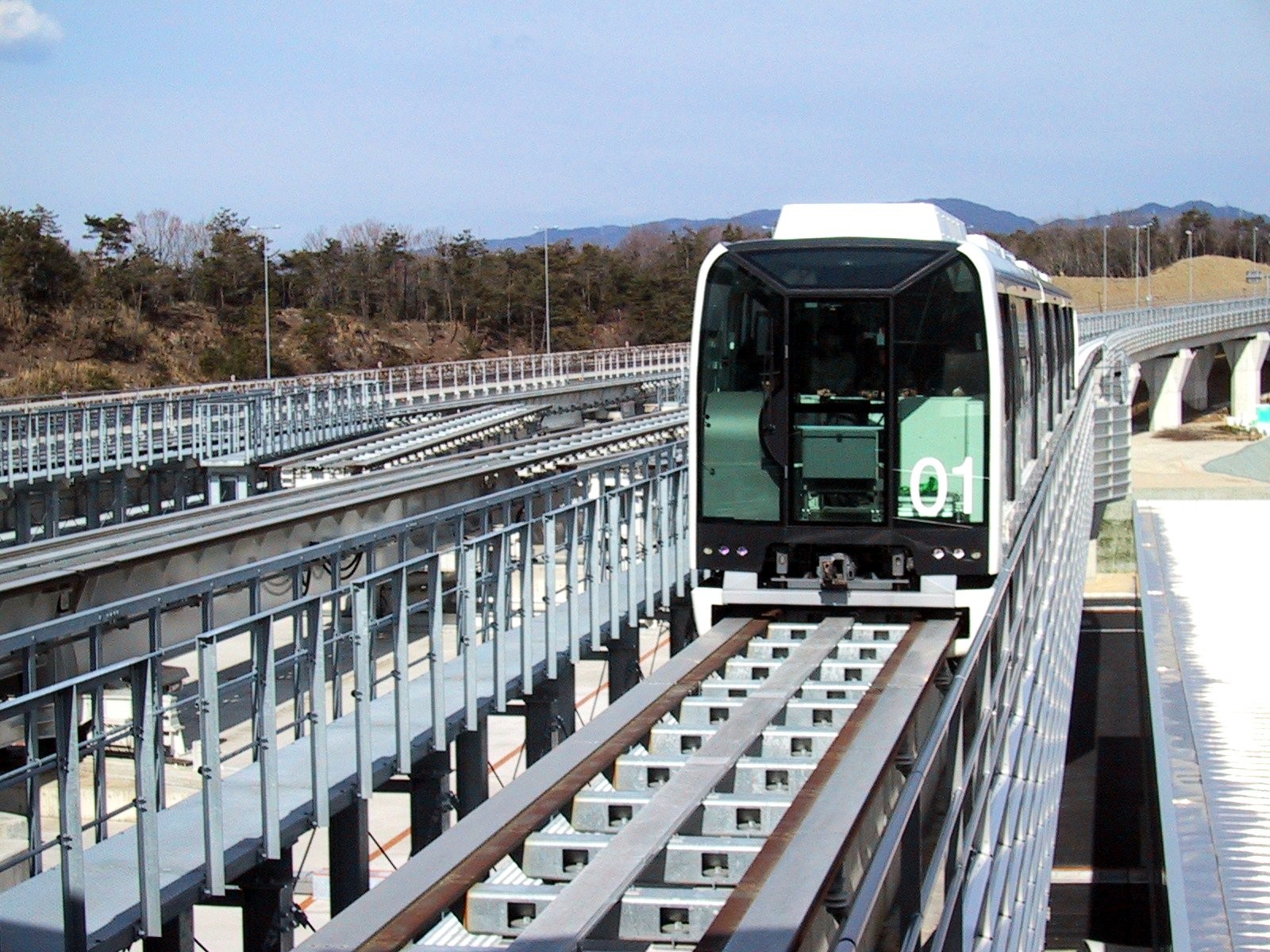
新干线(日语:新幹線/しんかんせん Shinkansen */?)是日本的高速铁路系统,也是全世界第一个投入商业营运的采用标准轨(1435mm)的纯客运高速铁路系统。第一条路线是连结东京与大阪之间的东海道新干线,于东京奥运开幕前的1964年10月1日通车营运。经过多年扩展,目前有10条路线,其中包含2条路线较短的“迷你新干线”,将日本大多数的重要都市连结起来。最初由日本国有铁道研发与营运,国铁分割民营化后由JR集团接续,目前由JR北海道、JR东日本、JR东海、JR西日本、JR九州等5家JR公司提供服务。
新干线是以同时适合快速及大量运输而设计,因而其建造与营运技术均有别于传统铁路,例如全面采用动力分散式列车、轨道全面采用立体交叉[1]、首创列车自动控制系统[2]等。最短可以3分钟的班距运行。除了迷你新干线之外,列车运行最高车速依路线可达到每小时240至320公里,但在进行速度测试时,曾创下每小时443公里的最高纪录(由“300X”实验列车在1996年所创下)。身为日本铁路技术居于世界顶尖的重要象征,新干线的技术也向海外输出,如台湾高铁及施工中的印度高速铁路;做为系统基础而采用新干线系统部分技术的有英国、中国大陆、美国德州等地的高速铁路。
Shinkansen (jap. 新幹線, [ɕĩŋkaãsẽɴ], dt. „neue Stammstrecke“) ist sowohl der Name des Streckennetzes japanischer Hochgeschwindigkeitszüge der verschiedenen JR-Gesellschaften als auch der Züge selbst.
Im ursprünglichen Sinn ist Shinkansen der Name des ab 1964 eingeführten regelspurigen Schnellfahrstreckennetzes und nicht der Züge selbst. Er wird gebildet aus den Schriftzeichen shin (新) für „neue“, kan (幹) für „Stamm/Haupt-“, sen (線) für „Strecke, Linie“ und bezeichnet damit die Rückgratfunktion für das übrige Eisenbahnnetz, über das die japanischen Großstädte mit einer Höchstgeschwindigkeit von bis zu 320 km/h verbunden werden. Tatsächlich wird der Begriff aber auch synonym für die Züge verwendet und subsumiert dabei unterschiedliche Baureihen und die in Japan üblichen Namen für die angebotenen Expresszugverbindungen.
Chūbu
Chūgoku
Hokkaidō
Japan
Kantō
Kinki
Kyūshū
Shikoku
Tōhoku
Transport and traffic
High speed traffic


每年5月上旬举办为期2天的潮干祭。此祭典与过去祭祀之神神武天皇东征时,从海上经由此地上岸的传说有关,因5辆山车被拽入海滨而得名。退潮后的海滨排列着的5辆山车雄壮华丽,如同盛开在海滩上的花。
祭典的起源没有定论,有一说法是由应仁、文明时代(15世纪后半叶)迁居龟崎的18个武士家族发起的活动,他们在像大蓬车一样的车上插竹子,挂上印染有神纹的帷幕,和着伴奏在城内拉着山车到处游走,据说这就是潮干祭的起源。但是近年来根据专家的调查,有各种史料证明,潮干祭的历史可追溯到元禄至宝历年间(17世纪末至18世纪前半叶左右),此后历经300年岁月直到现在,祭典的风格和传统被很好地保留了下来。
The Shiohi-matsuri Festival is held for two days in early May every year. This festival was named after the legend of Emperor Jimmu’s arrival on this land from the sea during his eastern expedition, and started with the drawing of five parade floats to the beach to pay respects to Emperor Jimmu as the deity of the festival. The five parade floats lined up on the beach at ebb tide are brave and splendid, and they look as if flowers were in bloom on the beach.
The origin of this festival is not certain. There is a legend that 18 samurai families who moved to the land of Kamezaki started the festival during the Japanese eras of Onin and Bummei (late in the 15th century) and that they set up small bamboos like a cart, put a curtain stained with a shrine emblem on it, and towed it in town with a musical accompaniment. Experts tracked back the history of the festival to the Japanese eras of Genroku through Horeki (from the end of the 17th century to the early 18th century) with various historical materials in their recent survey. Since then, it has become evident that the style and tradition of the festival have been inherited firmly for over 300 years.
 World Heritage
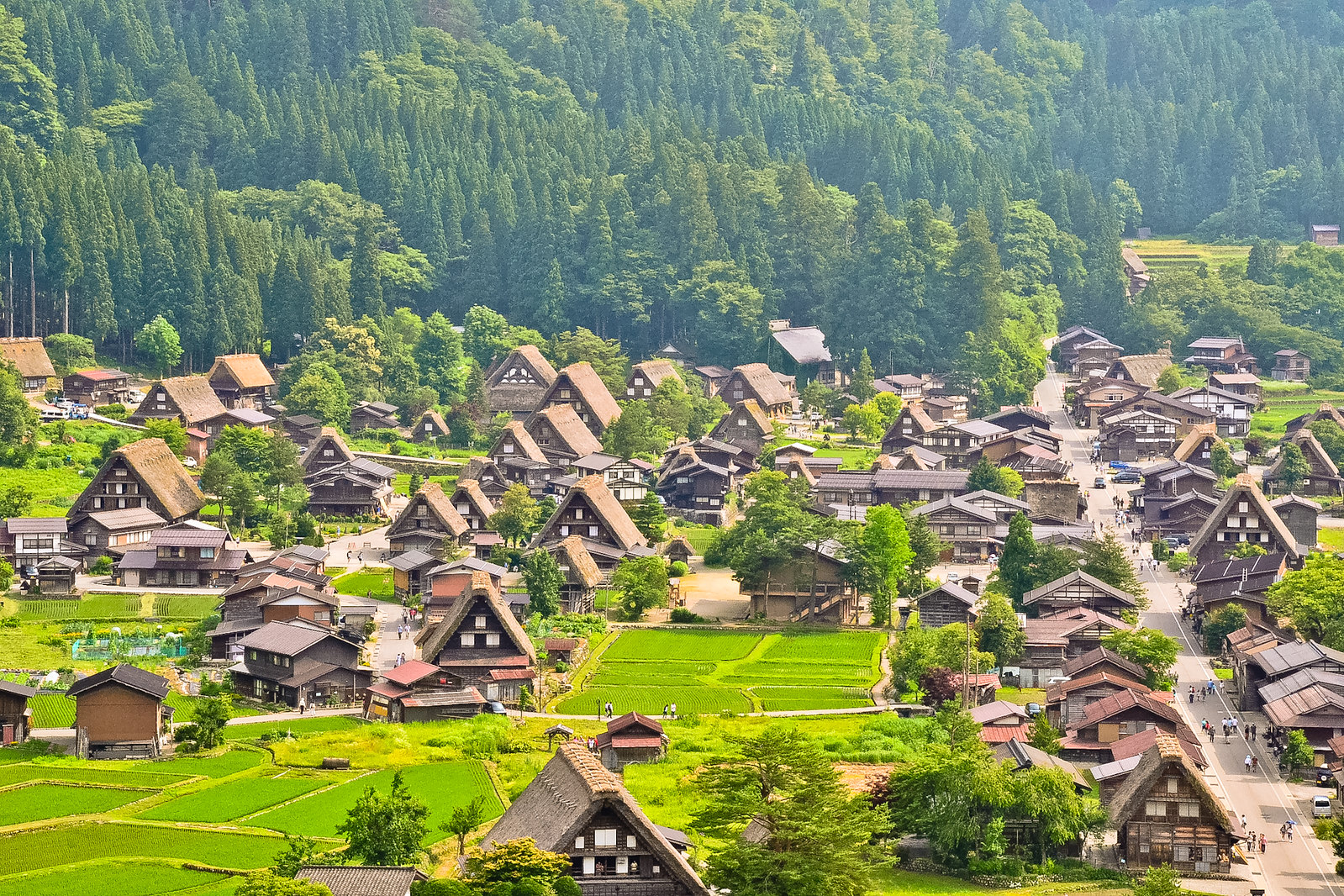
Die historischen Dörfer von Shirakawa-gō und Gokayama sind drei Dörfer, die 1995 von der UNESCO als Weltkulturerbe anerkannt wurden. Sie befinden sich im Flusstal des Shōgawa entlang der Grenzen der Präfekturen Gifu und Toyama in der Region Tōkai-Hokuriku auf Honshū in Japan.
Shirakawa-gō (白川郷, wörtlich: Dorf am weißen Fluss) erstreckt sich im Landkreis Ōno in der Präfektur Gifu über das Dorf Shirakawa (白川村, -mura), sowie über den Westteil des ehemaligen Dorfes Kiyomi (清見村, -mura) und dem ehemaligen Dorf Shōkawa (荘川村, -mura), die beide 2005 in Takayama eingemeindet wurden.
Gokayama (五箇山, wörtlich: fünf Berge) erstreckt sich in der Präfektur Toyama über die ehemaligen Dörfer Kamitaira (上平村, -mura), Taira (平村, -mura) und Toga (利賀村, -mura), die alle 2004 in Nanto eingemeindet wurden.
Die von der UNESCO anerkannten Orte sind Ogimachi (荻町, ♁36° 15′ N, 136° 54′ O) in Shirakawa, Suganuma (菅沼, ♁36° 24′ N, 136° 53′ O) in Kamitaira und Ainokura (相倉, ♁36° 26′ N, 136° 56′ O) in Taira.
白川乡与五箇山的合掌造聚落[1](日语:白川郷·五箇山の合掌造り集落)是日本飞驒地区白川乡(岐阜县大野郡白川村)及五箇山(富山县南砺市)地区的合掌造聚落的总称。于1995年12月9日被联合国教科文组织登录为世界文化遗产。其冬季雪景为其主要代表意象。
 Eat and Drink
 Geography

 Top Global University Project
National universities
Top Global University Project
Global Traction Type
Universities in Japan
Top Global University Project
National universities
Top Global University Project
Global Traction Type
Universities in Japan

 Architecture
 History
 Religion

 Automobile
*Engine
Automobile
***Technology
Automobile
*Commercial vehicles
Automobile
Lexus
Automobile
Automobile
Daihatsu
Automobile
Hino
Automobile
ISUZU
Automobile
Subaru
Automobile
GAC
Automobile
*Self-driving car
Automobile
*Hydrogen propulsion
Chūbu
Automobile
*Engine
Automobile
***Technology
Automobile
*Commercial vehicles
Automobile
Lexus
Automobile
Automobile
Daihatsu
Automobile
Hino
Automobile
ISUZU
Automobile
Subaru
Automobile
GAC
Automobile
*Self-driving car
Automobile
*Hydrogen propulsion
Chūbu
 Energy resource
*****Energy storage
Manufacturing and Innovation
Japan
Partner of the Paris 2024 organizing committee
Energy resource
Energy resource
*****Energy storage
Manufacturing and Innovation
Japan
Partner of the Paris 2024 organizing committee
 Companies
*Big automaker
Companies
*Big automaker
 Science and technology
Global Innovators
Science and technology
Global Innovators

Die Toyota Motor Corporation (japanisch トヨタ自動車株式会社, Toyota Jidōsha Kabushiki-gaisha) ist ein multinationales Unternehmen und einer der größten Automobilhersteller der Welt.
丰田汽车公司(日语:トヨタ自動車株式会社/トヨタじどうしゃ Toyota Jidōsha */?,英语:Toyota Motor Corporation),简称丰田(トヨタ,TOYOTA)是日本的跨国汽车公司,丰田亦是雷克萨斯(LEXUS)、大发(Daihatsu)及日野(HINO)品牌的母公司,并以20%股份成为斯巴鲁的最大股东,拥有马自达5.1%的股份。2020年起,丰田成为全球最大的汽车制造商。
