
Deutsch-Chinesische Enzyklopädie, 德汉百科
 Guangdong Sheng-GD
 Frühlingsfest

行花街,即逛迎春花市,是广府地区春节前夕规模较大的一项传统民俗。它是指每年农历腊月廿八至除夕夜之间,人们聚集在特定场所举行的以花卉为主要载体,以年俗文化、花卉文化、商贸文化为主要内容的辞旧迎新、祈福贺岁活动。该民俗起源于广州,遍及珠三角、港澳乃至海外华侨居住地,以喜庆的气氛、美好的寓意、风雅的情趣受到群众喜爱。
广府方言称市集为“街市”,故“花街”与“花市”同义。明代,广州花市已与罗浮山药市、东莞香市、廉州珠市并称广东“四市”,至清晚期出现“岁除尤盛”的特点。20世纪20年代,行花街于农历腊月廿四至除夕夜间进行。1949年后,行花街之俗有增无减,时间则逐步固定于年廿八至年三十晚深夜间。董必武有《羊城除夕》诗云:“处处迎春节,羊城风习殊。岁除花市闹,利是夜谈珠”。
行花街是广府人过年必不可少的一项活动,民间称“没行花街就等于没过年”。届时,十里长街,张灯结彩,人们摩肩接踵,携亲带友,徜徉在花海人流之中,或购买各式年花、贺年品,或赏花游乐、欢聚联谊,均为在此盛会中迎新岁、求福运,正是“行花街、转大运”。其汇聚了搭棚、灯饰、楹联艺术与地方美食、工艺美术、民间文艺等元素,是广府文化的集中展示平台。
其中“年花”主要包括枝头花、鲜切花、盆桔、盆花四大类,均有丰富、吉祥的含义。如金桔寓意“大吉大利”,桃花寓意姻缘及“大展宏图”,猪笼草寓意“财源滚滚”等。花贩与顾客有讨价还价的习俗,花卉价格讲究,多带有“3”“8”“9”,与“生”“发”“久”谐音;花农花贩交易、花档投标也讲究吉利,体现了广府人自古至今爱花、好讲“意头”的传统。
行花街展现了人民群众对美好生活的热切期盼,广府商业城市独特的气质风貌,以及人与自然和谐共生的繁荣景象。作为粤港澳大湾区乃至海外华侨中均有流布的传统民俗盛事,其对于增强地区间文化交流,促进文化认同,提升中华民族精神凝聚力均有深刻的现实意义。
 Geographie
Fujian Sheng-FJ
Guangdong Sheng-GD
Guangxi Zhuangzu Zizhiqu-GX
Hainan Sheng-HI
Hebei Sheng-HE
Jiangsu Sheng-JS
Liaoning Sheng-LN
Shandong Sheng-SD
Shanghai Shi-SH
Tianjin Shi-TJ
Zhejiang Sheng-ZJ
Geographie
Fujian Sheng-FJ
Guangdong Sheng-GD
Guangxi Zhuangzu Zizhiqu-GX
Hainan Sheng-HI
Hebei Sheng-HE
Jiangsu Sheng-JS
Liaoning Sheng-LN
Shandong Sheng-SD
Shanghai Shi-SH
Tianjin Shi-TJ
Zhejiang Sheng-ZJ


 Automobil
 FIAT
Automobil
Honda
Automobil
Hino
Automobil
Toyota
Chinesiches Automobil
Neue Energiefahrzeuge/New Energy Vehicles
Guangdong Sheng-GD
Joint-Ventures
FIAT
Automobil
Honda
Automobil
Hino
Automobil
Toyota
Chinesiches Automobil
Neue Energiefahrzeuge/New Energy Vehicles
Guangdong Sheng-GD
Joint-Ventures

 Unternehmen

 Essen und Trinken
Anhui Sheng-AH
Gelber Tee
Guangdong Sheng-GD
Hubei Sheng-HB
Hunan Sheng-HN
Sichuan Sheng-SC
Zhejiang Sheng-ZJ
Essen und Trinken
Anhui Sheng-AH
Gelber Tee
Guangdong Sheng-GD
Hubei Sheng-HB
Hunan Sheng-HN
Sichuan Sheng-SC
Zhejiang Sheng-ZJ
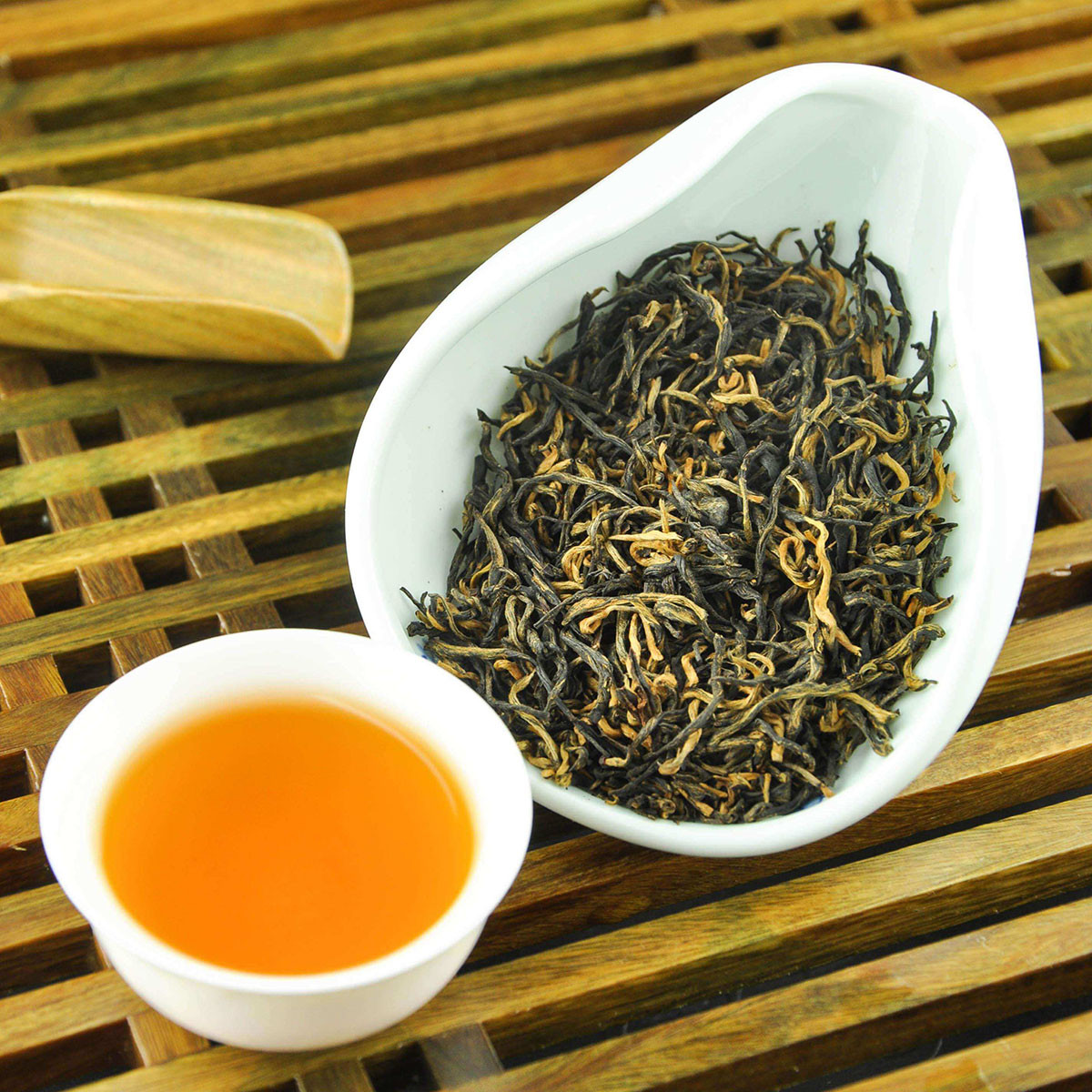
Gelber Tee (Gelbtee) ist eine Teesorte, die von ihrem Fermentationsgrad (max. 20 %) zwischen weißem Tee und Oolongtee einzuordnen ist. Seine Sortenvielfalt ist sehr begrenzt, die verfügbaren Mengen gering. Der Tee ist reich an Vitaminen, Antioxidantien und Koffein. Wie auch andere schwach fermentierte Tees fördert er die Magensaftproduktion und wirkt deshalb verdauungsfördernd.[1]
黄茶(きちゃ、ホァンチャ/ファンチャ)は中国茶の一種。
通常の中国緑茶とは異なる加熱処理を行うことと、その後牛皮紙に包み悶黄と呼ばれる熟成工程を経て作られることが製造工程における特徴である。黄茶の加熱処理は低い温度から始まり、徐々に温度を上げ、その後徐々に温度を下げる。この処理法によって、茶葉の持つ酵素による酸化発酵が起こる。中国緑茶の場合、最初から高温に熱した釜に茶葉を投入するため、上記の酸化発酵は(一部、萎凋を施す緑茶はあるが[1])基本的には起こらない。黒茶以外で発酵と呼ばれる青茶は、施される工程と発酵の度合いこそ違えど、酵素による酸化発による酵茶であることは共通している。また、黒茶以外で論ずると、一部の緑茶で萎凋を施すことを勘定[1]すれば、この黄茶とは発酵茶の中では唯一萎凋を施さない種類といえる。
工程で中途半端に酸化発酵した茶葉は、次に悶黄と呼ばれる黄茶独特の熟成工程を経る。この悶黄と呼ばれる工程、微生物による発酵という俗説があるが、これは間違いである。悶黄には微生物は一切関与しない。高湿度高温の環境下茶葉内のポリフェノールを中心とする成分が非酵素的に酸化される[2]工程である。ポリフェノールおよび葉緑素(クロロフィル)は酸化されることで、緑から透明及び黄色へと変色する。これにより茶葉と水色がうっすらとした黄色になるため黄茶と呼ばれる。
代表的な黄茶として君山銀針、霍山黄芽、蒙頂黄芽などが挙げられる。黄茶は清朝皇帝も愛飲したといわれ、中国茶の中でももっとも希少価値が高い。100グラム1万円を超えるものも決して珍しくはない。
Yellow tea can refer to Chinese huángchá (黄茶; 黃茶) and Korean hwangcha (황차; 黃茶).It is an increasingly rare and expensive variety of tea.[3]:58 The process for making yellow tea is similar to that of green but with an added step of encasing and steaming the tea. This allows the tea to oxidize at a slower rate, producing a far more mellow taste than is found in most green teas [4]; this also gives the leaves a slightly yellow colouring during the drying process.[3]:32[4] Yellow tea is often placed in the same category with green tea due to its light oxidation. One of the primary aims of making yellow tea is to remove the characteristic grassy smell of green tea while preserving the associated health qualities of green tea. Some have even speculated that yellow tea may be healthier because it is easier on the stomach than green tea.[5]
Un thé jaune (en Chinois: 黃茶; pinyin: huángchá) est un thé vert chinois qui a subi une phase de fermentation post-enzymatique. Les thés verts de grande qualité sont parfois aussi appelés thé jaune. A la suite de la cueillette, les feuilles de thé sont fermentées à l'étouffée (environ 50°C) avant d'être flétries et torréfiées. Après cette torréfaction et un roulage, les feuilles couvertes d'un tissu humide sont entassées en petits tas, pendant plus de vingt heures, à un degré d'humidité situé entre 80 et 90 %. Elles demeurent ainsi jusqu'à ce qu'elles s'oxydent. Elles subissent ensuite une brève dessiccation.
Il tè giallo (in cinese 黃茶T, 黄茶S, huángcháP; in coreano 황차?, hwangchaLR) è una pregiata variante del tè ottenuta con una parziale ossidazione enzimatica delle foglie della Camellia sinensis.
Dopo la torrefazione e una lieve pressatura, le foglie vengono raccolte in cumuli di piccole dimensioni e coperte con un panno umido, poi sono lasciate per venti ore a un tasso di umidità compreso tra 80 e 90%. Esse rimangono così fino a quando si ossidano, quindi vengono sottoposte ad una breve asciugatura.
La preparazione della bevanda si effettua per infusione, con le stesse modalità del tè verde.
Un altro uso dell'espressione "tè giallo" è per indicare i tè verdi più pregiati.
El té amarillo (en chino: 黃茶, pinyin: huángchá) suele ser un té especial procesado de forma parecida al té verde, pero con una fase de secado más corta, en la que las hojas húmedas se dejan reposar y amarillean. Este té tiene por lo general una apariencia y olor diferentes a los del té blanco o verde. El aroma se confunde a veces con el del té negro si se cura con otras hierbas, pero su sabor sigue siendo similar al del té blanco y el verde.
El término, sin embargo, también alude a los tés de alta calidad servidos en la Corte Imperial, aunque en realidad puede aplicarse a cualquier té servido en ella.
Жёлтый чай — вид чая, подвергшийся слабой ферментации (окислению). Жёлтый чай по классификации по степени ферментации стоит на третьем месте после зелёного, примерно 7—10 % ферментации.
Жёлтый чай изготавливается из сырья высокого качества, исключительно в Китае, в провинциях Сычуань, Хунань, Чжецзян, Фуцзянь. Считается императорским чаем, очень долгое время жёлтый чай тщательно оберегался от иностранцев, за разглашение его тайн строго карали. Известен с эпохи Тан (VIII век н. э.). Долгое время был привилегией только императора и высшей знати. Geschichte
Bangladesh
China
Guangdong Sheng-GD
Indien
Indonesien
Iran
Malaysia
Nepal
Niederlande
Pakistan
Portugal
Spanien
Sri Lanka
Türkei
Geschichte
Bangladesh
China
Guangdong Sheng-GD
Indien
Indonesien
Iran
Malaysia
Nepal
Niederlande
Pakistan
Portugal
Spanien
Sri Lanka
Türkei
 Veneto
Vereinigtes Königreich
Veneto
Vereinigtes Königreich


香料贸易在人类历史上有着举足轻重的作用,尤其是中世纪的欧洲,对香料的渴望直接催生了地理大发现。从遥远的东方运送香辛料到欧洲的贸易线路被称为香料之路。香料作为当时最贵重的商品之一,其价值几与黄金相当。英语中“Spice”(香辛料)这个词来源于拉丁语“species”,常用来指代贵重但量小的物品。
在16世纪,葡萄牙统治了东印度的香料贸易,17世纪的霸主是荷兰,而18世纪则是英国。而在16~19世纪初,中国大陆是世界上最大的香料市场,东南亚大部分香料都销往这里;而荷兰、英国、美国等国商人,就由广州运载中国香料返国,广州成为早期东南亚香料的集散中心[1]。
Der Gewürzhandel umfasste historische Zivilisationen in Asien, Nordostafrika und Europa. Gewürze wie Zimt, Kassia, Kardamom, Ingwer, Pfeffer, Muskatnuss, Sternanis, Nelken und Kurkuma waren bereits in der Antike bekannt und wurden in der östlichen Welt gehandelt. Diese Gewürze fanden ihren Weg in den Nahen Osten noch vor Beginn der christlichen Zeitrechnung, wobei fantastische Geschichten ihre wahre Herkunft verschleierten.
Der maritime Aspekt des Handels wurde von den austronesischen Völkern in Südostasien dominiert, nämlich den alten indonesischen Seefahrern, die bis 1500 v. Chr. Routen von Südostasien nach Sri Lanka und Indien (und später nach China) etablierten. [2] Diese Waren wurden dann von indischen und persischen Händlern über die Weihrauchroute und die römisch-indischen Routen auf dem Landweg zum Mittelmeer und in die griechisch-römische Welt transportiert. Die maritimen Handelswege der Austronesier dehnten sich später bis ins 1. Jahrtausend n. Chr. auf den Nahen Osten und Ostafrika aus, was zur austronesischen Kolonisierung Madagaskars führte.
The spice trade involved historical civilizations in Asia, Northeast Africa and Europe. Spices, such as cinnamon, cassia, cardamom, ginger, pepper, nutmeg, star anise, clove, and turmeric, were known and used in antiquity and traded in the Eastern World.[1] These spices found their way into the Near East before the beginning of the Christian era, with fantastic tales hiding their true sources.[1]
The maritime aspect of the trade was dominated by the Austronesian peoples in Southeast Asia, namely the ancient Indonesian sailors who established routes from Southeast Asia to Sri Lanka and India (and later China) by 1500 BC.[2] These goods were then transported by land toward the Mediterranean and the Greco-Roman world via the incense route and the Roman–India routes by Indian and Persian traders.[3] The Austronesian maritime trade lanes later expanded into the Middle East and eastern Africa by the 1st millennium AD, resulting in the Austronesian colonization of Madagascar.
Within specific regions, the Kingdom of Axum (5th century BC – 11th century AD) had pioneered the Red Sea route before the 1st century AD. During the first millennium AD, Ethiopians became the maritime trading power of the Red Sea. By this period, trade routes existed from Sri Lanka (the Roman Taprobane) and India, which had acquired maritime technology from early Austronesian contact. By the mid-7th century AD, after the rise of Islam, Arab traders started plying these maritime routes and dominated the western Indian Ocean maritime routes.[citation needed]
Arab traders eventually took over conveying goods via the Levant and Venetian merchants to Europe until the rise of the Seljuk Turks in 1090. Later the Ottoman Turks held the route again by 1453 respectively. Overland routes helped the spice trade initially, but maritime trade routes led to tremendous growth in commercial activities to Europe. [citation needed]
The trade was changed by the Crusades and later the European Age of Discovery,[4] during which the spice trade, particularly in black pepper, became an influential activity for European traders.[5] From the 11th to the 15th centuries, the Italian maritime republics of Venice and Genoa monopolized the trade between Europe and Asia.[6] The Cape Route from Europe to the Indian Ocean via the Cape of Good Hope was pioneered by the Portuguese explorer navigator Vasco da Gama in 1498, resulting in new maritime routes for trade.[7]
This trade, which drove world trade from the end of the Middle Ages well into the Renaissance,[5] ushered in an age of European domination in the East.[7] Channels such as the Bay of Bengal served as bridges for cultural and commercial exchanges between diverse cultures[4] as nations struggled to gain control of the trade along the many spice routes.[1] In 1571 the Spanish opened the first trans-Pacific route between its territories of the Philippines and Mexico, served by the Manila Galleon. This trade route lasted until 1815. The Portuguese trade routes were mainly restricted and limited by the use of ancient routes, ports, and nations that were difficult to dominate. The Dutch were later able to bypass many of these problems by pioneering a direct ocean route from the Cape of Good Hope to the Sunda Strait in Indonesia.


 IT-Times



 Religion
 Architektur
