
Deutsch-Chinesische Enzyklopädie, 德汉百科
 特雷莎·梅
阿卜杜勒-法塔赫·塞西
安倍晋三
安格娜·默克尔
东南亚国家联盟
特雷莎·梅
阿卜杜勒-法塔赫·塞西
安倍晋三
安格娜·默克尔
东南亚国家联盟
 本扬·沃拉吉
贝拉克·奥巴马
本扬·沃拉吉
中国
唐纳德·图斯克
恩里克·培尼亚·涅托
金融稳定委员会
马克·卡尼
本扬·沃拉吉
贝拉克·奥巴马
本扬·沃拉吉
中国
唐纳德·图斯克
恩里克·培尼亚·涅托
金融稳定委员会
马克·卡尼
 财政金融
联合国粮食及农业组织
若泽·格拉齐亚诺·达席尔瓦
弗朗索瓦·奥朗德
联合国秘书长
潘基文
财政金融
联合国粮食及农业组织
若泽·格拉齐亚诺·达席尔瓦
弗朗索瓦·奥朗德
联合国秘书长
潘基文
 手拉手
伊德里斯·代比
国际劳工组织
居伊·莱德
国际货币基金组织
克里斯蒂娜·拉加德
雅各布·祖玛
让-克洛德·容克
佐科·维多多
贾斯汀·特鲁多
李显龙
麦基·萨勒
马尔科姆·特恩布尔
马里亚诺·拉霍伊
马泰奥·伦齐
毛里西奥·马克里
米歇尔·特梅尔
穆罕默德·本·萨勒曼·本·阿卜杜勒-阿齐兹·阿勒沙特
纳伦德拉·莫迪
努尔苏丹·纳扎尔巴耶夫
经济合作与发展组织
何塞·安赫尔·古里亚
朴槿惠
巴育·占奥差
雷杰普·塔伊普·埃尔多安
特雷莎·梅
世界银行
金墉
手拉手
伊德里斯·代比
国际劳工组织
居伊·莱德
国际货币基金组织
克里斯蒂娜·拉加德
雅各布·祖玛
让-克洛德·容克
佐科·维多多
贾斯汀·特鲁多
李显龙
麦基·萨勒
马尔科姆·特恩布尔
马里亚诺·拉霍伊
马泰奥·伦齐
毛里西奥·马克里
米歇尔·特梅尔
穆罕默德·本·萨勒曼·本·阿卜杜勒-阿齐兹·阿勒沙特
纳伦德拉·莫迪
努尔苏丹·纳扎尔巴耶夫
经济合作与发展组织
何塞·安赫尔·古里亚
朴槿惠
巴育·占奥差
雷杰普·塔伊普·埃尔多安
特雷莎·梅
世界银行
金墉
 经济和贸易
弗拉基米尔·弗拉基米罗维奇·普京
世界贸易组织
罗伯托·阿泽维多
习近平
浙江省-浙
经济和贸易
弗拉基米尔·弗拉基米罗维奇·普京
世界贸易组织
罗伯托·阿泽维多
习近平
浙江省-浙
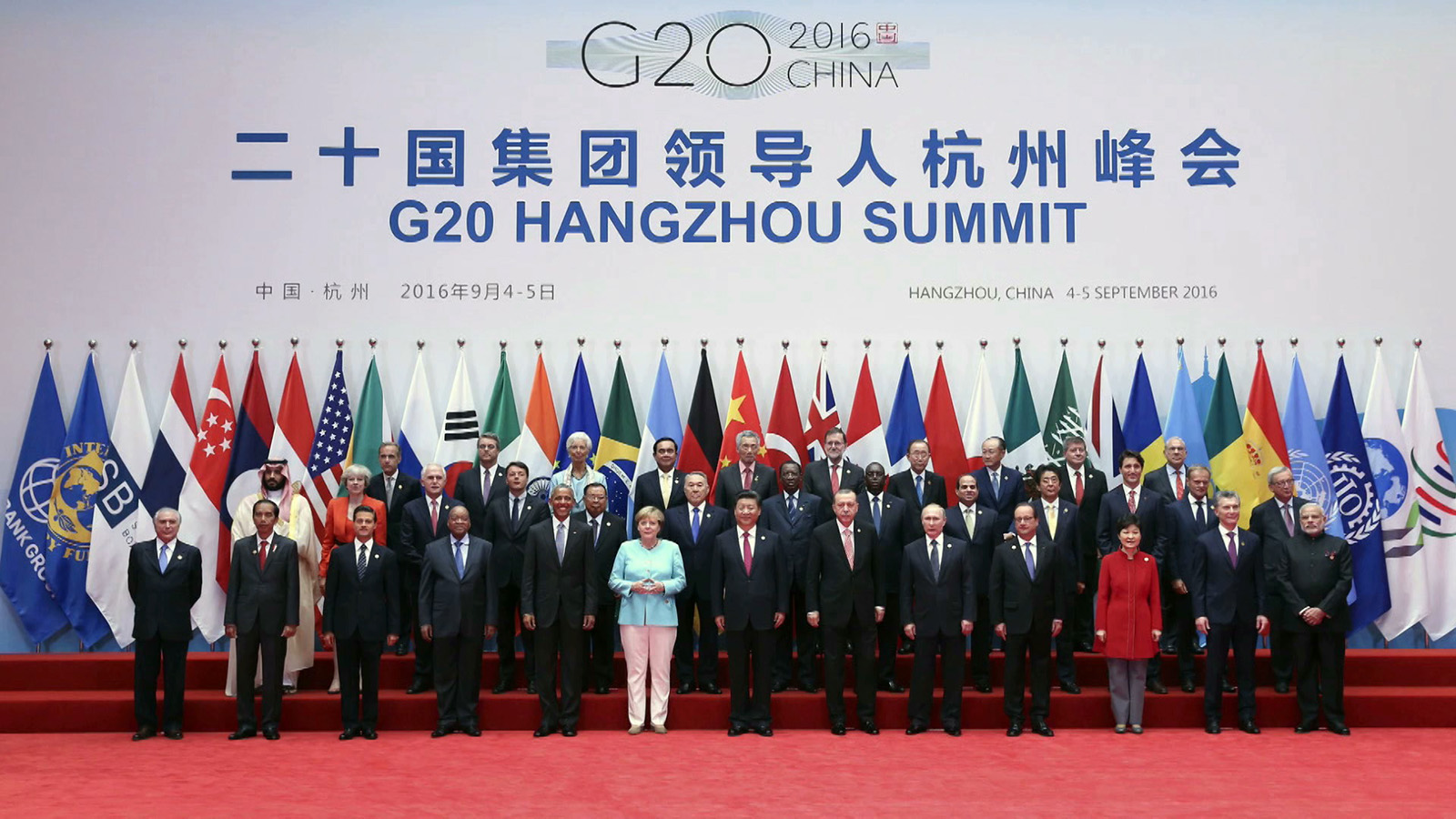 安倍晋三
非洲联盟
阿尔法·孔戴
安格娜·默克尔
东南亚国家联盟
阮春福
联邦德国
唐纳德·特朗普
唐纳德·图斯克
埃马纽埃尔·马克龙
恩里克·培尼亚·涅托
埃尔娜·索尔伯格
金融稳定委员会
马克·卡尼
财政金融
联合国粮食及农业组织
若泽·格拉齐亚诺·达席尔瓦
联合国秘书长
安东尼奥·古特雷斯
安倍晋三
非洲联盟
阿尔法·孔戴
安格娜·默克尔
东南亚国家联盟
阮春福
联邦德国
唐纳德·特朗普
唐纳德·图斯克
埃马纽埃尔·马克龙
恩里克·培尼亚·涅托
埃尔娜·索尔伯格
金融稳定委员会
马克·卡尼
财政金融
联合国粮食及农业组织
若泽·格拉齐亚诺·达席尔瓦
联合国秘书长
安东尼奥·古特雷斯
 汉堡州
手拉手
国际劳工组织
居伊·莱德
国际货币基金组织
克里斯蒂娜·拉加德
雅各布·祖玛
让-克洛德·容克
佐科·维多多
贾斯汀·特鲁多
李显龙
麦基·萨勒
马尔科姆·特恩布尔
马里亚诺·拉霍伊
马克·吕特
毛里西奥·马克里
米歇尔·特梅尔
文在寅
纳伦德拉·莫迪
经济合作与发展组织
何塞·安赫尔·古里亚
保罗·真蒂洛尼
雷杰普·塔伊普·埃尔多安
特雷莎·梅
世界银行
金墉
经济和贸易
弗拉基米尔·弗拉基米罗维奇·普京
世界卫生组织
特沃德罗斯·阿达诺姆
世界贸易组织
罗伯托·阿泽维多
习近平
汉堡州
手拉手
国际劳工组织
居伊·莱德
国际货币基金组织
克里斯蒂娜·拉加德
雅各布·祖玛
让-克洛德·容克
佐科·维多多
贾斯汀·特鲁多
李显龙
麦基·萨勒
马尔科姆·特恩布尔
马里亚诺·拉霍伊
马克·吕特
毛里西奥·马克里
米歇尔·特梅尔
文在寅
纳伦德拉·莫迪
经济合作与发展组织
何塞·安赫尔·古里亚
保罗·真蒂洛尼
雷杰普·塔伊普·埃尔多安
特雷莎·梅
世界银行
金墉
经济和贸易
弗拉基米尔·弗拉基米罗维奇·普京
世界卫生组织
特沃德罗斯·阿达诺姆
世界贸易组织
罗伯托·阿泽维多
习近平
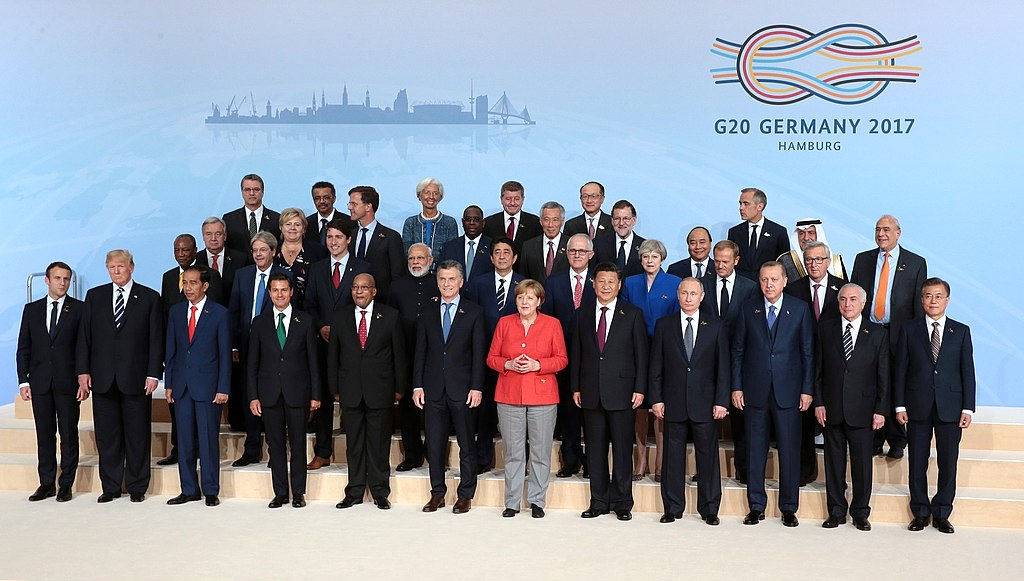 安倍晋三
非洲联盟
保罗·卡加梅
安德鲁·霍尼斯
东南亚国家联盟
李显龙
加勒比共同体
安德鲁·霍尼斯
西里尔·拉马弗萨
唐纳德·特朗普
唐纳德·图斯克
埃马纽埃尔·马克龙
恩里克·培尼亚·涅托
朱塞佩·孔特
手拉手
让-克洛德·容克
贾斯汀·特鲁多
李显龙
麦基·萨勒
马克·吕特
毛里西奥·马克里
米歇尔·特梅尔
穆罕默德·本·萨勒曼·本·阿卜杜勒-阿齐兹·阿勒沙特
文在寅
纳伦德拉·莫迪
非洲发展新伙伴计划
麦基·萨勒
保罗·卡加梅
佩德罗·桑切斯
雷杰普·塔伊普·埃尔多安
斯科特·莫里森
塞巴斯蒂安·皮涅拉
特雷莎·梅
弗拉基米尔·弗拉基米罗维奇·普京
习近平
安倍晋三
非洲联盟
保罗·卡加梅
安德鲁·霍尼斯
东南亚国家联盟
李显龙
加勒比共同体
安德鲁·霍尼斯
西里尔·拉马弗萨
唐纳德·特朗普
唐纳德·图斯克
埃马纽埃尔·马克龙
恩里克·培尼亚·涅托
朱塞佩·孔特
手拉手
让-克洛德·容克
贾斯汀·特鲁多
李显龙
麦基·萨勒
马克·吕特
毛里西奥·马克里
米歇尔·特梅尔
穆罕默德·本·萨勒曼·本·阿卜杜勒-阿齐兹·阿勒沙特
文在寅
纳伦德拉·莫迪
非洲发展新伙伴计划
麦基·萨勒
保罗·卡加梅
佩德罗·桑切斯
雷杰普·塔伊普·埃尔多安
斯科特·莫里森
塞巴斯蒂安·皮涅拉
特雷莎·梅
弗拉基米尔·弗拉基米罗维奇·普京
习近平
 阿卜杜勒-法塔赫·塞西
安倍晋三
安德烈斯·曼努埃尔·洛佩斯·奥夫拉多尔
安格娜·默克尔
安东尼奥·古特雷斯
亚洲开发银行
克里斯蒂娜·拉加德
西里尔·拉马弗萨
大卫·马尔帕斯
唐纳德·特朗普
唐纳德·图斯克
埃马纽埃尔·马克龙
金融稳定委员会
朱塞佩·孔特
居伊·莱德
手拉手
国际劳工组织
居伊·莱德
国际货币基金组织
克里斯蒂娜·拉加德
雅伊尔·博索纳罗
让-克洛德·容克
佐科·维多多
何塞·安赫尔·古里亚
贾斯汀·特鲁多
李显龙
麦基·萨勒
马克·吕特
毛里西奥·马克里
穆罕默德·本·萨勒曼·本·阿卜杜勒-阿齐兹·阿勒沙特
文在寅
纳伦德拉·莫迪
经济合作与发展组织
何塞·安赫尔·古里亚
佩德罗·桑切斯
巴育·占奥差
兰德尔·夸尔斯
雷杰普·塔伊普·埃尔多安
萨勒曼·本·阿卜杜勒-阿齐兹·阿勒沙特
斯科特·莫里森
塞巴斯蒂安·皮涅拉
中尾武彦
特沃德罗斯·阿达诺姆
特雷莎·梅
世界银行
大卫·马尔帕斯
弗拉基米尔·弗拉基米罗维奇·普京
世界卫生组织
特沃德罗斯·阿达诺姆
世界贸易组织
罗伯托·阿泽维多
习近平
阿卜杜勒-法塔赫·塞西
安倍晋三
安德烈斯·曼努埃尔·洛佩斯·奥夫拉多尔
安格娜·默克尔
安东尼奥·古特雷斯
亚洲开发银行
克里斯蒂娜·拉加德
西里尔·拉马弗萨
大卫·马尔帕斯
唐纳德·特朗普
唐纳德·图斯克
埃马纽埃尔·马克龙
金融稳定委员会
朱塞佩·孔特
居伊·莱德
手拉手
国际劳工组织
居伊·莱德
国际货币基金组织
克里斯蒂娜·拉加德
雅伊尔·博索纳罗
让-克洛德·容克
佐科·维多多
何塞·安赫尔·古里亚
贾斯汀·特鲁多
李显龙
麦基·萨勒
马克·吕特
毛里西奥·马克里
穆罕默德·本·萨勒曼·本·阿卜杜勒-阿齐兹·阿勒沙特
文在寅
纳伦德拉·莫迪
经济合作与发展组织
何塞·安赫尔·古里亚
佩德罗·桑切斯
巴育·占奥差
兰德尔·夸尔斯
雷杰普·塔伊普·埃尔多安
萨勒曼·本·阿卜杜勒-阿齐兹·阿勒沙特
斯科特·莫里森
塞巴斯蒂安·皮涅拉
中尾武彦
特沃德罗斯·阿达诺姆
特雷莎·梅
世界银行
大卫·马尔帕斯
弗拉基米尔·弗拉基米罗维奇·普京
世界卫生组织
特沃德罗斯·阿达诺姆
世界贸易组织
罗伯托·阿泽维多
习近平
 安倍晋三
安格娜·默克尔
联邦德国
唐纳德·特朗普
唐纳德·图斯克
埃马纽埃尔·马克龙
安倍晋三
安格娜·默克尔
联邦德国
唐纳德·特朗普
唐纳德·图斯克
埃马纽埃尔·马克龙
 欧洲联盟
法国
朱塞佩·孔特
手拉手
意大利
日本
让-克洛德·容克
贾斯汀·特鲁多
加拿大
欧洲联盟
法国
朱塞佩·孔特
手拉手
意大利
日本
让-克洛德·容克
贾斯汀·特鲁多
加拿大
 魁北克省
特雷莎·梅
美国
英国
魁北克省
特雷莎·梅
美国
英国

 安倍晋三
安格娜·默克尔
联邦德国
唐纳德·特朗普
唐纳德·图斯克
埃马纽埃尔·马克龙
欧洲联盟
法国
手拉手
意大利
日本
让-克洛德·容克
贾斯汀·特鲁多
加拿大
保罗·真蒂洛尼
安倍晋三
安格娜·默克尔
联邦德国
唐纳德·特朗普
唐纳德·图斯克
埃马纽埃尔·马克龙
欧洲联盟
法国
手拉手
意大利
日本
让-克洛德·容克
贾斯汀·特鲁多
加拿大
保罗·真蒂洛尼
 西西里大区
特雷莎·梅
美国
英国
西西里大区
特雷莎·梅
美国
英国


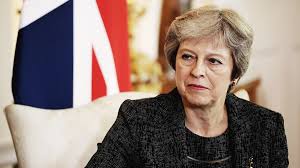
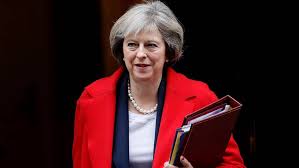
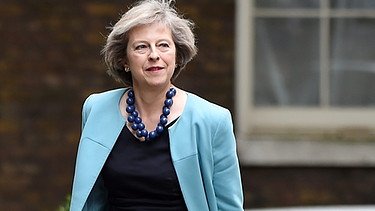
Theresa Mary May, Baroness May of Maidenhead (britisches Englisch [təˈɹiːzə ˈmɛə.ɹi meɪ];[1] PC * 1. Oktober 1956 als Theresa Mary Brasier in Eastbourne, East Sussex, England)[2] ist eine britische Politikerin. Sie war vom 13. Juli 2016 bis zum 24. Juli 2019 Premierministerin des Vereinigten Königreichs. In dieser Funktion bildete sie die Kabinette May I (2016 bis 2017) und May II (2017 bis 2019). Zuvor hatte sie ab Mai 2010 das Amt der Innenministerin (Home Secretary; Kabinett Cameron I, II) bekleidet. Im britischen Unterhaus vertrat sie von 1997 bis 2024 den Wahlkreis Maidenhead. Von 11. Juli 2016 bis 7. Juni 2019 war sie Parteiführerin der Conservative Party. Seit 2024 ist sie als Life Peeress Mitglied des Oberhauses.
梅登黑德的梅女男爵特雷莎·玛丽·梅[注 1],PC(英语:Theresa Mary May, Baroness May of Maidenhead,1956年10月1日—),婚前姓布拉西耶(Brasier),[4]英国保守党籍政治家,曾任英国首相及保守党领袖,是继同属保守党的撒切尔夫人后第二位出任英国首相的女性,1997年获选为梅登黑德选区的国会议员。自保守党于2010年上台执政后,特雷莎·梅曾在内阁中任职过内政大臣与妇女和平等事务大臣,2016年7月接替戴维·卡梅伦出任英国首相及保守党领袖,2019年6月因脱欧僵局问题宣布辞职,后由鲍里斯·约翰逊接手其职务,并继续留任其梅登黑德选区的下议院议员职务直至2024年5月辞去议员职务。
安倍晋三
亚历山大·武契奇
亚历山大·斯图布
阿列克西斯·齐普拉斯
安格娜·默克尔
安东尼奥·古特雷斯
巴尔特·德韦弗
本雅明·内塔尼亚胡
比尔·克林顿
鲍里斯·约翰逊
克里斯蒂娜·拉加德
西里尔·拉马弗萨
戴维·卡梅伦
迪克·斯霍夫
迪尔玛·罗塞夫
德米特里·阿纳托利耶维奇·梅德韦杰夫
唐纳德·特朗普
埃马纽埃尔·马克龙
 能源
欧洲中央银行
欧洲中央银行
克里斯蒂娜·拉加德
费利佩·卡尔德龙
费利佩六世
财政金融
弗里德里希·默茨
岸田文雄
手拉手
哈桑·鲁哈尼
伊利哈姆·阿利耶夫
国际货币基金组织
国际货币基金组织
克里斯塔利娜·格奥尔基耶娃
雅伊尔·博索纳罗
詹姆斯·戈登·布朗
哈维尔·米莱
让-克洛德·容克
金墉
艾萨克·赫尔佐格
约阿希姆·高克
乔·拜登
何塞·路易斯·罗德里格斯·萨帕特罗
胡安·曼努埃尔·桑托斯
贾斯汀·特鲁多
基里亚科斯·米佐塔基斯
李克强
辽宁省-辽
路易斯·伊纳西奥·卢拉·达席尔瓦
曼莫汉·辛格
马里奥·蒙蒂
马克·卡尼
马克·吕特
毛里西奥·马克里
Naoto Kan
纳伦德拉·莫迪
纳尔逊·曼德拉
尼古拉·萨科齐
奥拉夫·绍尔茨
能源
欧洲中央银行
欧洲中央银行
克里斯蒂娜·拉加德
费利佩·卡尔德龙
费利佩六世
财政金融
弗里德里希·默茨
岸田文雄
手拉手
哈桑·鲁哈尼
伊利哈姆·阿利耶夫
国际货币基金组织
国际货币基金组织
克里斯塔利娜·格奥尔基耶娃
雅伊尔·博索纳罗
詹姆斯·戈登·布朗
哈维尔·米莱
让-克洛德·容克
金墉
艾萨克·赫尔佐格
约阿希姆·高克
乔·拜登
何塞·路易斯·罗德里格斯·萨帕特罗
胡安·曼努埃尔·桑托斯
贾斯汀·特鲁多
基里亚科斯·米佐塔基斯
李克强
辽宁省-辽
路易斯·伊纳西奥·卢拉·达席尔瓦
曼莫汉·辛格
马里奥·蒙蒂
马克·卡尼
马克·吕特
毛里西奥·马克里
Naoto Kan
纳伦德拉·莫迪
纳尔逊·曼德拉
尼古拉·萨科齐
奥拉夫·绍尔茨
 政党和政府组织
*智库
保罗·卡加梅
彼得·波罗申科
普拉博沃·苏比延多
雷杰普·塔伊普·埃尔多安
瑞士
夏巴兹·谢里夫
斯蒂芬·约瑟夫·哈珀
麻生太郎
特雷莎·梅
天津市-津
托尼·布莱尔
乌尔苏拉·冯·德·莱恩
温家宝
政党和政府组织
*智库
保罗·卡加梅
彼得·波罗申科
普拉博沃·苏比延多
雷杰普·塔伊普·埃尔多安
瑞士
夏巴兹·谢里夫
斯蒂芬·约瑟夫·哈珀
麻生太郎
特雷莎·梅
天津市-津
托尼·布莱尔
乌尔苏拉·冯·德·莱恩
温家宝
 重要的国际组织
经济和贸易
经济与政治研究
弗拉基米尔·弗拉基米罗维奇·普京
弗拉基米尔·泽连斯基
世界经济论坛
克劳斯·施瓦布
习近平
福田康夫
重要的国际组织
经济和贸易
经济与政治研究
弗拉基米尔·弗拉基米罗维奇·普京
弗拉基米尔·泽连斯基
世界经济论坛
克劳斯·施瓦布
习近平
福田康夫

| Year | Dates | Theme |
|---|---|---|
| 1988 | The new state of the world economy | |
| 1989 | Key developments in the 90s: implications for global business | |
| 1990 | Competitive cooperation in a decade of turbulence | |
| 1991 | The new direction for global leadership | |
| 1992 | Global cooperation and megacompetition | |
| 1993 | Rallying all the forces for global recovery | |
| 1994 | Redefining the basic assumptions of the world economy | |
| 1995 | 26–30 January | Leadership for challenges beyond growth |
| 1996 | 1–6 February | Sustaining globalization |
| 1997 | 30 January – 4 February | Building the network society |
| 1998 | 29 January – 3 February | Managing volatility and priorities for the 21st century |
| 1999 | 28 January – 2 February | Responsible globality: managing the impact of globalization |
| 2000 | 26 January – 2 February | New beginnings: making a difference |
| 2001 | 25–30 January | Sustaining growth and bridging the divides: a framework for our global future |
| 2002 | 31 January – 4 February | Leadership in fragile times (held in New York instead of Davos) |
| 2003 | 21–25 January | Building trust |
| 2004 | 21–25 January | Partnering for security and prosperity |
| 2005 | 26–30 January | Taking responsibility for tough choices |
| 2006 | 25–29 January | The creative imperative[80] |
| 2007 | 24–28 January | Shaping the global agenda, the shifting power equation |
| 2008 | 23–27 January | The power of collaborative innovation |
| 2009 | 28 January – 1 February | Shaping the post-crisis world |
| 2010 | 27–30 January | Improve the state of the world: rethink, redesign, rebuild |
| 2011 | 26–30 January | Shared norms for the new reality |
| 2012 | 25–29 January | The great transformation: shaping new models |
| 2013 | 23–27 January | Resilient dynamism[81] |
| 2014 | 22–25 January | The reshaping of the world: consequences for society, politics and business |
| 2015 | 21–24 January | New global context |
| 2016 | 20–23 January | Mastering the fourth industrial revolution |
| 2017 | 17–20 January | Responsive and responsible leadership |
| 2018 | 23–26 January | Creating a shared future in a fractured world |
| 2019 | 22–25 January | Globalization 4.0: shaping a global architecture in the age of the fourth industrial revolution |
| 2020 | 20–24 January | Stakeholders for a cohesive and sustainable world[citation needed] |
| 2021 | 17–20 August | Crucial Year to Rebuild Trust,[82] canceled as a result of COVID-19 pandemic |
| 2022 | 22–26 May | History at a Turning Point: Government Policies and Business Strategies[83] |
| 2023 | 16–20 January | Cooperation in a Fragmented World[46] |
| 2024 | 15–19 January | Rebuilding Trust[84] |
| 2025 | 20–24 January | Collaboration for the Intelligent Age[85] |
| 2026 | 19–23 January | A Spirit of Dialogue[86] |
世界经济论坛(英语:World Economic Forum,简称WEF)是一个以基金会形式成立的非营利组织,成立于1971年,总部设在瑞士日内瓦州科洛尼。其以每年冬季在瑞士滑雪胜地达沃斯举办的年会(俗称达沃斯论坛,英语:Davos Forum)闻名于世,历次论坛均聚集全球工商、政治、学术、媒体等领域的领袖人物,讨论世界所面临最紧迫问题。[1]
Das Weltwirtschaftsforum (World Economic Forum, kurz WEF) ist eine in Cologny im Schweizer Kanton Genf ansässige Stiftung, die in erster Linie für das von ihr veranstaltete Jahrestreffen gleichen Namens bekannt ist, das alljährlich in Davos im Kanton Graubünden stattfindet. Hierbei kommen international führende Wirtschaftsexperten, Politiker, Intellektuelle und Journalisten zusammen, um über aktuelle globale Fragen zu diskutieren. Diese umfassen neben der Wirtschafts- auch die Gesundheits- und Umweltpolitik.
Das Forum organisiert auch das Annual Meeting of the New Champions in China sowie verschiedene regionale Treffen im Verlauf des Jahres. Es wurde 1971 von Klaus Schwab in der Schweiz gegründet.[1] Neben den Jahrestreffen gibt das Forum Forschungsberichte heraus. Seine Mitglieder betätigen sich in verschiedenen branchenspezifischen Initiativen.[2]
世界経済フォーラム(せかいけいざいフォーラム、World Economic Forum)は、経済、政治、学究、その他の社会におけるリーダーたちが連携することにより、世界・地域・産業の課題を形成し、世界情勢の改善に取り組む、独立した国際機関。ジュネーヴに本部を置きスイスの非営利財団の形態を有している。1971年にスイスの経済学者クラウス・シュワブにより設立された。
スイスのダボスで開催される年次総会が特によく知られており、約2500名の選ばれた知識人やジャーナリスト、多国籍企業経営者や国際的な政治指導者などのトップリーダーが一堂に会し、健康や環境等を含めた世界が直面する重大な問題について議論する場となっている。また、同機関は、東アジアやラテンアメリカなど6-8の地域会議を開催し、中国及びアラブ首長国連邦においても別途の年次総会を開催している。さらに、会議だけではなく、同機関はさまざまな研究報告書を発表したり、メンバーたちが各業界に関連したイニシアティブに関わるなどの活動を行っている。2011年のダボスにおける年次総会は1月26日-30日に開催された。2012年総会は1月25日-29日に"The Great Transformation: Shaping New Models"というテーマで開催された。2013年総会は1月23日-27日に、創設者クラウス・シュワブによる「地球規模の協力の必要性が今ほど重要な時代はない」との声明を受け、"Resilient Dynamism"というテーマで催された。2014年年次総会は1月22-25日に"The Reshaping of the World: Consequences for Society, Politics and Business"というテーマで催された。2015年年次総会は、"The New Global Context"というテーマで催された。
The World Economic Forum (WEF) is a Swiss nonprofit foundation, based in Cologny, Geneva, Switzerland. Recognised in 2015 by the Swiss authorities as an "other international body" under Switzerland's Host State Act 2007 (HSA, SR 192.12),[1] its mission is cited as "committed to improving the state of the world by engaging business, political, academic, and other leaders of society to shape global, regional, and industry agendas".
The WEF is best known for its annual meeting at the end of January in Davos, a mountain resort in Graubünden, in the eastern Alps region of Switzerland. The meeting brings together some 2,500 top business leaders, international political leaders, economists, celebrities and journalists for up to four days to discuss the most pressing issues facing the world. Often this location alone is used to identify meetings, participation, and participants, with such phrases as "a Davos panel" and "Davos man" being used.[2]
The organization also convenes some six to eight regional meetings each year in locations across Africa, East Asia, and Latin America, and holds two further annual meetings in China, India and the United Arab Emirates. Beside meetings, the foundation produces a series of research reports and engages its members in sector-specific initiatives.[3]
Le forum économique mondial (en anglais : World Economic Forum, abrégé WEF), souvent appelé forum de Davos1,2,3, est une fondation à but non lucratif dont le siège est à Genève. Ce forum est connu pour sa réunion annuelle à Davos, en Suisse, qui réunit des dirigeants d’entreprise, des responsables politiques du monde entier ainsi que des intellectuels et des journalistes, afin de débattre les problèmes les plus urgents de la planète, y compris dans les domaines de la santé et de l’environnement. Le forum organise également la « Réunion annuelle des nouveaux champions » en Chine et plusieurs réunions régionales qui se tiennent tout au long de l’année. Il a été créé en 1971 par Klaus M. Schwab, professeur d’économie en Suisse4. Parallèlement aux réunions, le forum publie un certain nombre de rapports économiques et implique ses membres dans différentes initiatives liées à des secteurs spécifiques5.
Il Forum economico mondiale (nome originale in inglese: World Economic Forum, conosciuto anche come Forum di Davos) è una fondazione senza fini di lucro con sede a Cologny, vicino a Ginevra, in Svizzera, nata nel 1971 per iniziativa dell'economista ed accademico Klaus Schwab.[1]
La fondazione organizza ogni inverno, presso la cittadina sciistica di Davos in Svizzera, un incontro tra esponenti di primo piano della politica e dell'economia internazionale con intellettuali e giornalisti selezionati, per discutere delle questioni più urgenti che il mondo si trova ad affrontare, anche in materia di salute e di ambiente. Oltre a questo celebre incontro annuale, il Forum economico mondiale organizza ogni anno un meeting in Cina e negli Emirati Arabi Uniti e diversi incontri a livello regionale. La Fondazione produce anche una serie di rapporti di ricerca e impegna i suoi membri in specifiche iniziative settoriali.[2]
El Foro Económico Mundial (World Economic Forum, WEF), también llamado Foro de Davos, es una fundación sin fines de lucro con sede en Ginebra, que se reúne anualmente en el Monte de Davos (Suiza), y que sobre todo es conocida por su asamblea anual en Davos, Suiza. Allí se reúnen los principales líderes empresariales, los líderes políticos internacionales, así como periodistas e intelectuales selectos, a efectos de analizar los problemas más apremiantes que afronta el mundo, y entre ellos, la salud y el medio ambiente desde 1991.
El Foro también organiza la “Asamblea Anual de Nuevos Campeones” en China y una serie de asambleas regionales durante el año. En 2008, dichas asambleas regionales incluyeron reuniones en Europa y Asia Central, Asia Oriental, la Mesa Redonda de Directores Ejecutivos de Rusia, África, Oriente Medio, así como el Foro Económico Mundial en Latinoamérica.
Durante el 2008, se lanzó la “Cumbre Inaugural sobre la Agenda Global" en Dubái, con la presencia de 700 expertos mundiales de cada sector que trataron 68 cambios globales identificados por el Foro.
El Foro Económico Mundial fue fundado en 1971 por Klaus M. Schwab, profesor de economía en Suiza.1 Además de asambleas, el Foro genera una serie de informes de investigación e involucra a sus miembros en iniciativas específicas de cada sector.2
Всемирный экономический форум (ВЭФ) — швейцарская неправительственная организация, наиболее известная организацией ежегодных встреч в Давосе. На встречи приглашаются ведущие руководители бизнеса, политические лидеры, видные мыслители и журналисты. Предметом обсуждения являются наиболее острые мировые проблемы, включая здравоохранение и охрану окружающей среды.