
Deutsch-Chinesische Enzyklopädie, 德汉百科
 Art
Art


 History


唐三彩是唐代盛行的一种釉陶,距今已有1000多年的历史。所谓唐三彩,是指唐代陶器上的釉色,后来也用来泛称唐代彩陶。唐代彩陶的釉色有很多种,如浅黄、赭黄、浅绿、深绿、天蓝、褐红、茄紫等,但主要以黄、绿、褐(或绿、赭、蓝)三色为主,所以称之为“三彩”。
唐三彩不见于古代文献,直到清末建造隴海鐵路,在洛阳邙山毁损唐代墓葬,發現颇多的唐三彩陶器。古董商将其运至北京,引起学者王国维、罗振玉等的高度重视,出土的唐三彩被修復成功,引發了收藏熱[1]。
唐三彩采用二次烧成法。首先使用白色粘土作胎,在窑内经过1000℃-1100℃的素烧,经过冷却,再于胎上绘以各种釉料入窑进行釉烧。唐三彩是一种低温(850℃-950℃)釉陶器,用含有铜(釉为绿色)、铁(赭黄色)、锰(紫色)、钴(蓝色)、锑(浅黄)等作釉料着色剂,并加入铅、铝作助熔剂。其釉色互相渗化,加上年代久远,部分颜色发生变化并产生新色,具有较高的装饰艺术水平。但由于实用性较差,唐三彩主要用于随葬,即冥器和俑。
唐三彩种类很多,主要分为人物、动物和器物三种。人物有文臣、武将、贵妇、男僮、女仆、艺人、胡人等。动物有马、骆驼、牛、羊、狮、虎等。器物有盛器、文房用具、室内用具等。古时,唐三彩很少用作日用品和陈设品,大部分用作随葬品,主要出产、流行于中原地区,供这一带的大小官僚们使用。随着唐朝陵墓的发掘,大量随葬品唐三彩得以面世。随葬品唐三彩主要分为器物类,如碗、壶、盘、房屋等;以及俑像类,如仕女、文吏、胡人、乐伎、武士、天王、马、骆驼等。
Sancai (Chinese: 三彩; pinyin: sāncǎi; literally: "three colours")[1] is a versatile type of decoration on Chinese pottery using glazes or slip, predominantly in the three colours of brown (or amber), green, and a creamy off-white. It is particularly associated with the Tang Dynasty (618–907) and its tomb figures,[2] appearing around 700.[3] Therefore, it is commonly referred to as Chinese: 唐三彩 Tang Sancai in Chinese. Tang sancai wares were sometimes referred in China and the West as egg-and-spinach by dealers, for their use of green, yellow, and white, especially when combined with a streaked effect.[4]
It uses lead-glazed earthenware, and although two firings were needed,[5] it was easier and therefore cheaper to make than Chinese porcelain or celadon, and suitable for making large figures, if necessary made up of several moulded sections assembled after a first firing. Vessels, mostly rather small and made for burial, were made in the technique as well as figures. Small plates with three feet, typically about 18-40 cm (7-16 inches) across, called "offering-trays", are a distinctive type, with more carefully controlled decoration than other types of pieces.[6]
The white may come from the natural colour of the fired clay, sometimes coated with a transparent glaze, or there may be a white slip. The brown and green colours came from adding metal oxides to a lead glaze, and in fact blues and blacks are also found. The blue came from adding imported cobalt, and was therefore more expensive and used sparingly, often on smaller pieces.[7]
唐三彩(とうさんさい、拼音: 、三彩とも)は唐代の鉛釉を施した陶器で、主として副葬用に制作された。いわゆる唐三彩は唐代の陶器の上の釉薬の色を指し、後に唐代の彩陶(上絵を施した陶器)を総称する語として使われるようになった。唐代の陶器の釉薬の色は非常に多く、クリーム色、赤褐色、薄緑、深緑、藍色、紫などがある。中でもクリーム色・緑・白の三色の組み合わせ、或いは緑・赤褐色・藍の三色の組み合わせを主としていることから三彩と称されている。
唐三彩は成形後二回にわたって焼かれる。一回目は白色の粘土で器物の原型を作り、窯の中で1000~1100度で素焼きにされる。冷却の後、器物を取り出し、各種の釉薬をかけ、再び窯の中で850~950度で焼かれる。炎色反応を用いて色を付けることから、釉薬には銅(緑)、鉄(赤褐色)、マンガン(紫色)、コバルト(藍色)、アンチモン(クリーム色)を用い、助燃剤として鉛やアルミニウムを用いる。釉薬の色が互いに浸透し、年代が経つことにより、顔料の色が微妙に変化し、新たな色を作る。 この釉薬は鉛釉と呼ばれ、漢代に西域から伝播した技術とも言われている。鉛釉の特徴は、釉層中の気泡の少なさからくる透明度と光沢の強さにある。施釉技法は刷毛や筆、柄杓掛け、浸し掛けなどが基本となる。
唐三彩の形状は非常に多く、人物、動物、器物の三種に主に分類される。人物には天子、文官、武将、貴婦人、男の子、下女、芸人、ペルシア人などがある。動物には、馬、ラクダ、牛、羊、ライオン、虎などがある。器物には容器、文房具、お碗、壺、皿などがある。 日用品や部屋の装飾品よりも主に埋葬品として使用され、主に中原一帯で生産・流行し、中原一帯の官僚たちに使用された。『唐六典』には葬儀における唐三彩の規定が記されており、『旧唐書』には当時の唐三彩熱を伺わせる文章がある。
Le terme sancai (chinois : 三彩 ; pinyin : ; littéralement : « trois couleurs ») désigne un type de céramique chinoise dont les décorations comportent des glaçures polychrome de trois couleurs, ou davantage.
La technique de la céramique sancai remonte à la dynastie Tang. En dépit du nom, le nombre de glaçures de couleurs différentes réellement utilisées pour les sancai, les céramiques « trois couleurs », pouvait s'élever à une douzaine, sur certaines pièces très élaborées.
Les céramiques sancai étaient fabriquées au nord de la Chine, en utilisant du kaolin et de l'argile réfractaire1, et contenant très peu de fer ; le corps de l'objet était ensuite recouvert d'un engobe blanc, sur lequel le potier posait les glaçures. Celles-ci étaient souvent juxtaposées, et, du fait de leur fluidité assez élevée, avaient tendance à couler et à se mêler, produisant à la surface des l'objet des coulures et des taches colorées2.
Les glaçures colorées avaient les origines suivantes : Le jaune provenait de l'oxyde de fer (cuit en oxydation), le vert venait de l'oxyde de cuivre, le violet du manganèse. Mais les Tang introduisirent une nouvelle et importante couleur, le bleu, obtenu à partir de l'oxyde de cobalt qu'ils importaient du Moyen-Orient (sans doute de Perse) par les nouvelles routes commerciales qu'ils avaient ouvertes au travers de l'Asie centrale.
Le biscuit sancai était tout d'abord cuit sans glaçure, à 900°C. Puis on rajoutait les glaçures, pour cuire la poterie aux alentours de 1 000°C3.
À Yaozhou, province du Hebei, et à Gongyi dans le Henan1, les argiles utilisées pour les statuettes funéraires étaient similaires à celles utilisées par les potiers Tang. Ces statuettes étaient cuites à une température inférieure à la porcelaine d'aujourd'hui ; ces statuettes funéraires, comme les représentations bien connues de chameaux et de chevaux, étaient moulées en plusieurs parties (corps et tête séparés) que l'on assemblait par une barbotine. Pour les pièces les plus élaborées, la statuette était personnalisée en retouchant la pièce à la main.
Il termine sancai (cinese: 三彩S, sāncǎiP, letteralmente "tre colori") designa un tipo di ceramica cinese le cui decorazioni comportano vetrine policrome di tre colori, o più.
La tecnica della ceramica sancai risale alla dinastia Tang. A dispetto del nome, il numero di vetrine di colori diversi realmente utilizzati per i sancai, le ceramiche «tre colori», poteva aumentare a una dozzina, su certi pezzi molto elaborati.
Le ceramiche sancai erano fabbricate nel nord della Cina, usando caolino e argilla refrattaria[1], e contenente pochissimo ferro; il corpo dell'oggetto era poi ricoperto da un ingobbio bianco, sul quale il vasaio posava le vetrine. Queste erano spesso giustapposte e, a causa dello loro fluidità abbastanza elevata, avevano la tendenza a fondere e a mescolarsi, producendo sulla superficie dell'oggetto colature e chiazze colorate[2].
Le vetrine colorate avevano le seguenti origini: il giallo proveniva dall'ossido di ferro (cotto in ossidazione), il verde veniva dall'ossido di rame, il viola dal manganese. Ma i Tang introdussero un nuovo e importante colore, il blu, ottenuto a partire dall'ossido di cobalto che importavano dal Medio Oriente (senza dubbio dalla Persia) lungo le nuove rotte commerciali che avevano aperto attraverso l'Asia centrale.
Il biscotto sancai era innanzitutto cotto senza vetrina, a 900°C. Poi si aggiungevano le vetrine, per cuocere la ceramica intorno a 1 000°C[3].
A Yaozhou, provincia dell'Hebei, e a Gongyi nell'Henan[1], le argille usate per le statuette funerarie erano simili a quelle utilizzate dai vasai Tang. Queste statuette erano cotte a una temperatura inferiore alla porcellana di oggigiorno; queste statuette funerarie, come le rappresentazioni ben conosciute di cammelli e di cavalli, erano modellati in varie parti (corpo e testa separati) che si assemblavano mediante una barbottina. Per i pezzi più elaborati, la statuetta era personalizzata ritoccando il pezzo a mano.
Sancai (chino:三彩; literalmente=tres colores) es un tipo de cerámica que utiliza como decoración tres colores entremezclados.
El cuerpo de la cerámica sancai era fabricado con arcilla blanca, pintada con una capa de vidrio, y cocida a temperaturas de unos 800 grados Celsius. Sancai es un tipo de cerámica vidriada con plomo: el óxido de plomo era el principal fundente en el vidriado, a menudo mezclado con cuarzo en una proporción de 3:1.1 El efecto policromado a menudo era obtenido utilizando como agentes colorantes cobre (que se torna verde), hierro (el cual toma un tono marrón amarillento), y en forma menos frecuente manganeso y cobalto (el cual se vuelve azul).1
El sancai se basa en el desarrollo de la cerámica vidriada verde que se remonta al período Han (25-220).1
Los predecesores del estilo sancai también pueden ser observados en algunos trabajos en cerámica de Qi del norte (550-577). Las tumbas Northern Qi han permitido el hallazgo de hermosas piezas, tales como elementos de porcelana con diseños en tonos de verde, que antes se consideraba habían sido realizados durante la dinastía Tang.2 Una jarra con estas características fue encontrada en una tumba de Northern Qi, que se remonta al 576 CE, y es considerada una precursora del estilo de cerámica sancai Tang.3
Сань-цай[1][2] (кит. упр. 三彩, пиньинь: sāncǎi; дословно: «три цвета») — тип керамики, в котором для украшения используется три цвета. В русскоязычных текстах также встречается неграмотное написание «санкай»[3]
Техника сань-цай восходит к эпохе династии Тан. Однако, несмотря на название, количество цветов глазури для украшения изделий той эпохи обычно не ограничивалось тремя. Торговцы на Западе иногда называли изделия сань-цай эпохи Тан «яйцом со шпинатом», за использование в них зелёного, жёлтого и белого цветов (хотя последний цвет более точно можно назвать «янтарным», «не совсем белым» или «кремовым»).
Изделия сань-цай делали в северном Китае, где для изготовления керамики использовался белый каолин и обожжённый тёмно-жёлтый вторичный каолин, а также огнеупорная глина[4] В этом сырье содержится очень мало железа. Изделия перед обжигом покрывали белой глиной и наносили глазурь. Из-за высокой пластичности материала на изделии образовывались переплетающиеся подтёки, которые создавали на поверхности цветные пятна и полосы.
В печах, расположенных в Тунчуане, округе Нэйцюи провинции Хэбэй и в Гунсяне (провинция Хэнань)[4], глина, использовавшаяся для ритуальных изделий, была похожа на ту, которую использовали гончары эпохи империи Тан. Ритуальные изделия изготовляли при более низкой температуре, чем белый фарфор той эпохи. В некоторых случаях фигуркам в наборе придавали индивидуальность с помощью ручной гравировки.


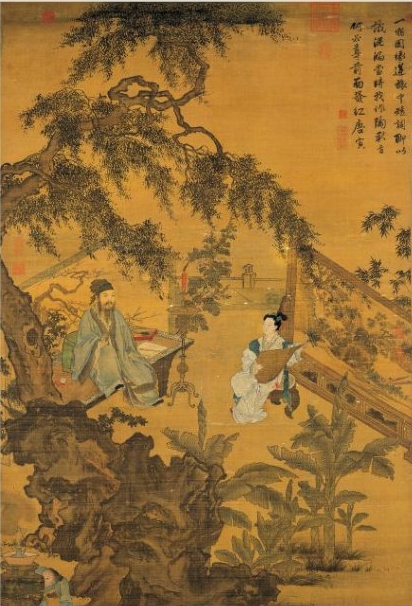
此作繪歷史故事一則。北宋初年,陶穀(903-970)出使南唐,時南唐國力弱小,而陶穀態度傲慢,在南唐後主面前出言不遜。南唐臣僚忿而設下圈套,派宮 妓秦蒻蘭扮做驛吏之女以誘之。原本盛氣凌人的陶穀,見到溫婉美麗的秦蒻蘭之後,不禁為之邪念萌動,曲意奉迎並贈詞討好,變得庸俗不堪,遂敗慎獨之戒。不 日,後主設宴招待陶穀,陶氏再次擺出正人君子派頭,後主舉起酒杯令蒻蘭出來勸酒唱歌,歌詞即是陶穀所贈,頓時弄得陶穀面紅耳赤,狼狽至極。
畫中人物刻畫,工謹微妙,陶穀拈鬚倚坐榻上,旁置筆墨紙硯,前面燃著紅燭。秦蒻蘭束髮高髻繡襦羅巾,坐彈琵琶,情態生動逼真,正是贈詞前後的情景。背景之 樹石、竹蕉、盆花,乃至坐榻、畫屏也都精心刻畫,不獨佈局得體,設色秀妍,而且理趣兼優,形神俱佳。右上有唐寅題詩:「一宿姻緣逆旅中,短詞聊以識泥鴻。 當時我作陶承旨,何必尊前面發紅。」詩情畫意,寓意殊深。(撰稿/陳階晉 Quelle:http://www.npm.gov.tw)
 Religion
 Architecture
 World Heritage

Der Daoismus (chin. 道教 dàojiào „Lehre des Weges“), gemäß anderer Umschriften auch Taoismus, ist eine chinesische Philosophie und Religion und wird als Chinas eigene und authentisch chinesische Religion angesehen. Seine historisch gesicherten Ursprünge liegen im 4. Jahrhundert v. Chr., als das Daodejing (in älteren Umschriften: Tao te king, Tao te ching …) des Laozi (Laotse, Lao-tzu) entstand.
Neben Konfuzianismus und Buddhismus ist der Daoismus eine der „Drei Lehren“, die China maßgeblich prägten. Auch über China hinaus haben die „Drei Lehren“ wesentlichen Einfluss auf Religion und Geisteswelt der Menschen ausgeübt. In China beeinflusste der Daoismus die Kultur in den Bereichen der Politik, Wirtschaft, Philosophie, Literatur, Kunst, Musik, Ernährungskunde, Medizin, Chemie, Kampfkunst und Geographie. (Quelle:Wikipedia)
道教(どうきょう、拼音: )は、中国三大宗教(三教と言い、儒教・仏教・道教を指す)の一つである。中国の歴史記述において、他にも「道家」「道家の教」「道門」「道宗」「老氏」「老氏の教」「老氏の学」「老教」「玄門」などとも呼称され、それぞれ若干ニュアンスの違いがある[1]。そのため「道教」の定義については、学者の間では論争が行われている。
道教は漢民族の伝統的な宗教とされる。中心概念の道(タオ)とは宇宙と人生の根源的な不滅の真理を指す。道の字は辶(しんにょう)が終わりを、首が始まりを示し、道の字自体が太極にもある二元論的要素を表している。この道(タオ)と一体となる修行のために錬丹術を用いて、不老不死の霊薬、丹を錬り、仙人となることを究極の理想とする。それはひとつの道に成ろうとしている。
道教では、道は学ぶことはできるが教えることはできないと言われる[2]。言葉で言い表すことのできる道は真の道ではないとされ、道士の書物や言葉は道を指し示すものに過ぎず、真の「恒常不変の道」は各自が自分自身で見出さなくてはならないとされている。
神仙となって長命を得ることは道を得る機会が増えることであり、奨励される。真理としての宇宙観には多様性があり、中国では儒・仏・道の三教が各々補完し合って共存しているとするのが道教の思想である。食生活においても何かを食することを禁ずる律はなく、さまざまな食物を得ることで均衡が取れ、長生きするとされる。 また、拳法を通じて「気」を整え精神の安定を図る、瞑想によって「無為を成す」ことも道への接近に有効であるという[2]。
全世界で道教の信徒を自認する人は約三千万人程度であり[2]、 現在でも台湾や東南アジアの華僑・華人の間ではかなり根強く信仰されている宗教である。中華人民共和国では文化大革命によって道教は壊滅的な打撃を受けたが、民衆の間では未だにその慣習が息づいている。現在では共産党政権下でも徐々に宗教活動が許され、その宗教観の修復が始まっている。
老荘すなわち道家の思想と道教とには直接的な関係はないとするのが、日本及び中国の専門家の従来の見解であった。しかし、当時新興勢力であった仏教に対抗して道教が創唱宗教の形態を取る過程で、老子を教祖に祭り上げ、大蔵経に倣った道蔵を編んで道家の書物や思想を取り入れたことは事実で、そのため西欧では、19世紀後半に両方を指す語としてタオイズム(Tao-ism)の語が造られ、アンリ・マスペロを筆頭とするフランス学派の学者たちを中心に両者の間に因果関係を認める傾向があった。それを承けて、日本の専門家の間でも同様な見解を示す向きも多かったが[3]、近年、欧米では術語として、Daoismの語が用いられるようになり、道家と宗教としての道教(the religion of Daoism or the Daoist religion)を区別している。
Daoism (/ˈdaʊɪzəm/, /ˈdaʊ-/), or Taoism (/ˈtaʊ-/), is a philosophical or religious tradition of Chinese origin which emphasises living in harmony with the Dao (Chinese: 道; pinyin: Dào; literally: 'the Way', also romanised as Tao). The Dao is a fundamental idea in most Chinese philosophical schools; in Daoism, however, it denotes the principle that is the source, pattern and substance of everything that exists.[2][3] Daoism differs from Confucianism by not emphasising rigid rituals and social order, but is similar in the sense that it is a teaching about the various disciplines for achieving "perfection" by becoming one with the unplanned rhythms of the universe called "the way" or "dao".[2][4] Daoist ethics vary depending on the particular school, but in general tend to emphasise wu wei (action without intention), "naturalness", simplicity, spontaneity, and the Three Treasures: 慈 "compassion", 儉 "frugality", and 不敢為天下先 "humility".
The roots of Daoism go back at least to the 4th century BCE. Early Daoism drew its cosmological notions from the School of Yinyang (Naturalists), and was deeply influenced by one of the oldest texts of Chinese culture, the I Ching (Yi Jing), which expounds a philosophical system about how to keep human behaviour in accordance with the alternating cycles of nature. The "Legalist" Shen Buhai (c. 400 – c. 337 BCE) may also have been a major influence, expounding a realpolitik of wu wei.[5] The Dao De Jing, a compact book containing teachings attributed to Laozi (老子; Lǎozǐ; Lao³ Tzŭ³), is widely considered the keystone work of the Daoist tradition, together with the later writings of Zhuangzi.
Daoism has had a profound influence on Chinese culture in the course of the centuries, and Daoists (道士; dàoshi, "masters of the Dao"), a title traditionally attributed only to the clergy and not to their lay followers, usually take care to note distinction between their ritual tradition and the practices of Chinese folk religion and non-Taoist vernacular ritual orders, which are often mistakenly identified as pertaining to Daoism. Chinese alchemy (especially neidan), Chinese astrology, Chan (Zen) Buddhism, several martial arts, traditional Chinese medicine, feng shui, and many styles of qigong have been intertwined with Daoism throughout history. Beyond China, Taoism also had influence on surrounding societies in Asia.
Le taoïsme (chinois: 道教, pinyin: dàojiào, « enseignement de la voie ».) est un des trois piliers de la philosophie chinoise avec le confucianisme et le bouddhisme, et se fonde sur l'existence d'un principe à l’origine de toute chose, appelé « Tao ».
Plongeant ses racines dans la culture ancienne, ce courant se fonde sur des textes, dont le Tao Tö King de Lao Tseu, le Lie Tseu et le Zhuāngzǐ de Tchouang Tseu, et s’exprime par des pratiques qui influencèrent de façon significative tout l’Extrême-Orient, et même l'Occident depuis le XXe siècle. Il apporte entre autres :
- une mystique quiétiste, reprise par le bouddhisme chán (ancêtre du zen japonais) ;
- une éthique libertaire qui inspira notamment la littérature ;
- un sens des équilibres yin yang poursuivi par la médecine chinoise et le développement personnel ;
- un naturalisme visible dans la calligraphie et l’art.
Ces influences, et d’autres, permettent de comprendre ce qu’a pu être cet enseignement dans ses époques les plus florissantes.
Il taoismo o daoismo, termine di conio occidentale, designa le dottrine a carattere filosofico e mistico, esposte principalmente nelle opere attribuite a Laozi e Zhuāngzǐ (composte tra il IV e III secolo a.C.), sia la religione taoista, istituzionalizzatasi come tale all'incirca nel I secolo d.C.[2]. Di queste le prime rappresentano in realtà l'esito di una sacralità naturale percepita in senso mistico e che risale alla più antica preistoria e alla storia antica della Cina, in seguito espressa per aforismi e similitudini a sfondo sacrale nelle opere dei due autori sopra ricordati[senza fonte]. Con il progressivo strutturarsi dell'Impero Cinese il Tao fu in seguito istituzionalizzato e utilizzato, a partire dalla sua ridefinizione nelle opere di Confucio, ad uso e consumo dello "Stato positivo", allo scopo di ammaestrare le varie componenti sociali all'utile dello Stato. Essa è basata sul Dao (in cinese "la via"), il principio indifferenziato che dà origine al cosmo[senza fonte]. Non possiede un insegnamento fondamentale come il confucianesimo o un credo e pratica unitari. È principalmente una religione cosmica, centrata sul posto e la funzione dell'essere umano, di tutte le creature e dei fenomeni in esso.[3] Nel tempo se ne sono sviluppate diverse scuole e interpretazioni. Nonostante la distribuzione ubiquitaria in Cina e la ricchezza di testi, si tratta probabilmente della meno conosciuta tra le maggiori religioni al mondo[4].
El taoísmo o daoísmo (en chino simplificado y tradicional: 道教 ; en pinyin : dàojiào ; literalmente 'enseñanza del camino') es una tradición filosófica y religiosa de origen chino la cual enfatiza vivir en armonía con el tao (en chino simplificado y tradicional: 道; en pinyin: dào; literalmente: 'el camino', también romanizado como dao). La palabra china 道 tao (o dao, dependiendo de la romanización que se use), se suele traducir por 'vía' o 'camino', aunque tiene innumerables matices en la filosofía y las religiones populares chinas.
El tao es una idea fundamental en la mayoría de las escuelas que forman parte de la filosofía china; sin embargo, para el taoísmo es referido como el principio de unidad absoluta, y al mismo tiempo mutable, que conforma la realidad suprema y el principio cosmogónico y ontológico de todas las cosas.1 Así, para los taoístas el tao constituye la fuente, el patrón y la sustancia de todo lo existente.23
El Dào Dé Jīng (en chino: 道德經) también conocido como Tao Te King o Tao Te Ching, es el libro que condensa las enseñanzas atribuidas al filósofo Lao-Tse (también llamado Lao Tzu, Lao Zi, Laozi (en chino simplificado y tradicional: 老子; en pinyin: lǎozǐ; literalmente 'viejo maestro') o Laocio.4 Y aunque la existencia histórica de tal personalidad aún se debate, el libro es considerado como clave para la tradición taoísta. Junto con el Zhuangzi se consideran los textos clave de la tradición.5
Y aunque los valores éticos taoístas varían dependiendo de las distintas escuelas, por lo general tienden a enfatizar el wu wei («la no acción» o acción sin intención), la naturalidad, la simplicidad, la espontaneidad, y sobre todo, los «Tres Tesoros»: 慈 «la compasión», 儉 «la frugalidad», y 不敢為天下先 «la humildad», mientras que pone menos énfasis en las normas y el ritual (en oposición al confucianismo).
El objetivo fundamental de los taoístas es alcanzar la inmortalidad, si bien, a veces no se entiende esta literalmente, sino como longevidad en plenitud. De la misma manera, se decía que las personas que vivían en armonía con la naturaleza eran inmortales. Lao-Tse fue deificado como dios taoísta ―un inmortal― encabezando un enorme panteón de héroes folclóricos, generales famosos y sabios, todos los cuales alcanzaron la inmortalidad. Sin embargo, la antigua forma del taoísmo era la de una corriente filosófica y no una religión, por lo que los antiguos pensadores interpretaban por «inmortalidad» el hecho de autosuperación del propio ser en comunidad con el entorno, lo que implica buscar la superación y el progreso personal y colectivo, de acuerdo con la mutación constante que enseña el taoísmo. Por otra parte, el logro de la inmortalidad a través de la alquimia externa (waidan) y la alquimia interna (neidan) fue un objetivo importante para muchos taoístas históricamente.6
Даоси́зм (кит. упр. 道教, пиньинь: dàojiào) — учение о дао или «пути вещей», китайское традиционное учение, включающее элементы религии и философии[1][2]. Обыкновенно различаются даосизм как определённый стиль философской критики (дао цзя) и даосизм как совокупность духовных практик (дао цзяо), но это деление достаточно условно. Под дао цзя подразумевают преимущественно доциньский даосизм, связываемый с текстами, авторство которых приписывается Лао-цзы и Чжуан-цзы[3].

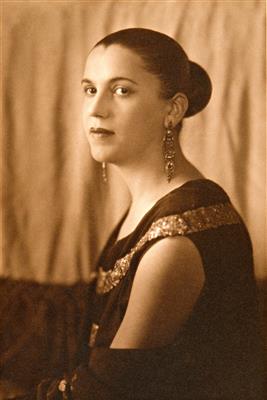
Tarsila do Amaral (* 1. September 1886 in Fazenda São Bernardo, Capivari, Bundesstaat São Paulo; † 17. Januar 1973 in São Paulo) war eine brasilianische Malerin und Mitbegründerin der Anthropophagie-Bewegung. Sie war Mitglied der Künstlergruppe Grupo dos Cinco („Gruppe der Fünf“) und wird daher als eine der einflussreichsten Künstlerinnen für moderne Kunst in Brasilien gesehen.

 Museum
