
漢德百科全書 | 汉德百科全书
 Taiwan Sheng-TW
 Holidays
China
Hongkong Tebiexingzhengqu-HK
Kyūshū
Macau Tebiexingzhengqu-MO
Taiwan Sheng-TW
Holidays
China
Hongkong Tebiexingzhengqu-HK
Kyūshū
Macau Tebiexingzhengqu-MO
Taiwan Sheng-TW
 Traditions
 Vacation and Travel
Vietnam
Vacation and Travel
Vietnam
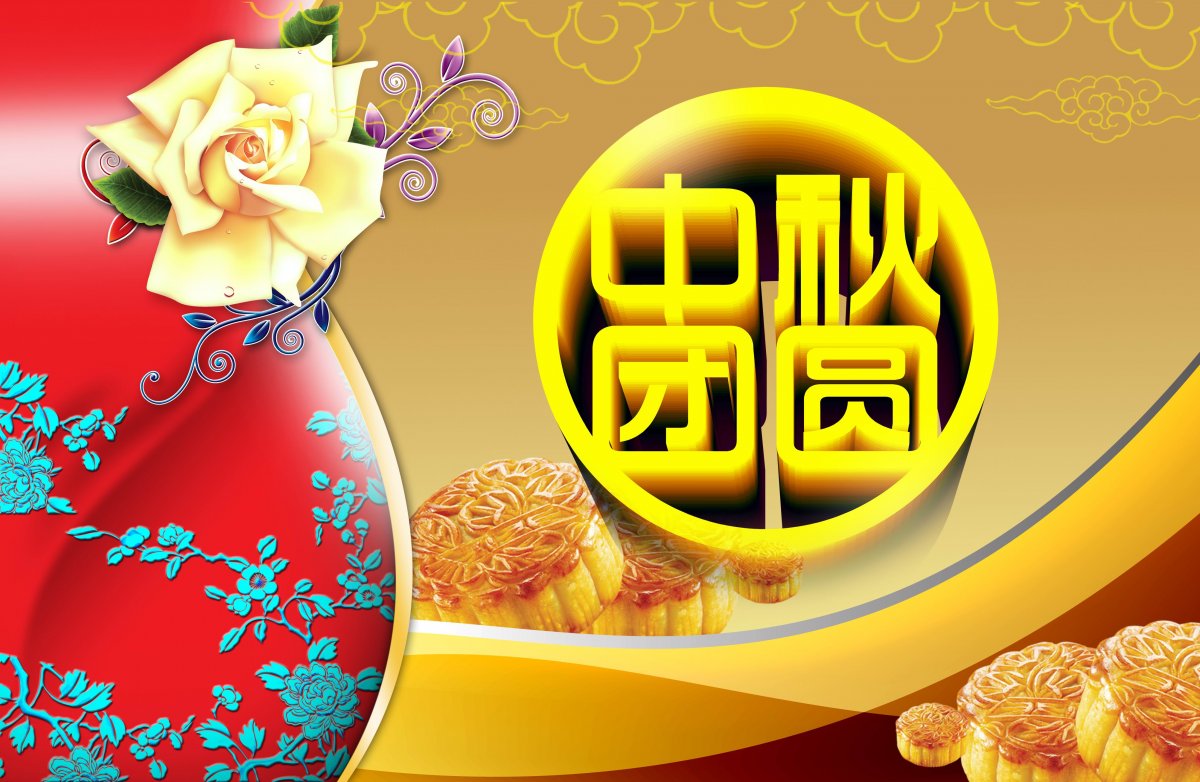
Das Mondfest oder Mittherbstfest (chin. 中秋節 / 中秋节, Zhōngqiūjié) wird in China am 15. Tag des 8. Mondmonats nach dem traditionellen chinesischen Kalender begangen. Im Altertum opferten die Kaiser im Frühling der Sonne und im Herbst dem Mond. Schon in den Geschichtswerken aus der Zhou-Dynastie (ca. 11. Jahrhundert-256 v. Chr.) ist das Wort „Mittherbst“ zu finden. Später folgten die Adligen und Literaten dem Beispiel der Kaiser und bewunderten im Herbst den hellen Vollmond. In der Tang-Dynastie (618-907), der Ming- und der Qing-Dynastie (1368-1911) wurde es eines der wichtigsten Feste Chinas.
Das Fest wird auch in Südkorea gefeiert, wo es Chuseok heißt.
Zum Mondfest gibt es mehrere Sagen. Nach einer rührt das Mondfest von der Legende Cháng'é bēnyuè chin. 嫦娥奔月 um den Helden Hou Yi, den Bogenschützen, her. In der Vorzeit gab es zehn Sonnen, von der Sonnengöttin Xi He 羲和, xīhé geborene dreifüßige Vögel namens 陽烏, yángwū oder 金烏, jīnwū, die sich eines Tages sammelten und die Erde vertrockneten und die Ernte verdorren ließen. Hou Yi bestieg den Gipfel des Kunlun-Berges, schoss neun Sonnen herunter und befahl der letzten Sonne, jeden Tag pünktlich auf- und unterzugehen.[1]
Von einer Göttin hatte Hou Yi eine Pille der Unsterblichkeit bekommen. Seine Frau Chang'e 嫦娥, cháng'é schluckte diese Medizin und schwebte daraufhin zum Mond empor. Dort baute sie sich einen Palast, in dem sie seitdem lebt.
中秋节是汉字文化圈的重要传统节日,为每年的农历八月十五,约在公历的9月至10月初。中秋节始于唐朝初年,已成为与春节齐名的中国传统节日之一。在汉字文化圈的影响,中秋节也是东亚和东南亚一些国家尤其是当地的华人华侨的传统节日。按照农历,八月为秋季的第二个月,在中国古代称为仲秋,因此民间称为中秋,又称秋夕、八月节、八月半、月夕、月节、 十五夜,是汉族四大传统节日之一。
中秋節(ちゅうしゅうせつ、拼音: )とは、東アジアの伝統的な行事のひとつで、旧暦(農暦)の8月15日に行われる。グレゴリオ暦では9月または10月にあたる。とくに中華圏では春節、清明節、端午節とならぶ重要な行事であり、中華民国・中華人民共和国のいずれも法定祝日になっている(香港・マカオでは中秋節の翌日が祝日)。
The Mid-Autumn Festival (simplified Chinese: 中秋节; traditional Chinese: 中秋節), also known as Moon Festival or Mooncake Festival, is a traditional Chinese festival celebrated by many East and Southeast Asian countries and regions. It is the second-most important holiday after Chinese New Year with a history dating back over 3,000 years, when the Emperor of China worshipped the moon for bountiful harvests.[2][3]
The festival is held on the 15th day of the 8th month of the Chinese lunisolar calendar with a full moon at night, corresponding to mid-September to early October of the Gregorian calendar.[4] On this day, the Chinese believe that the moon is at its brightest and fullest size, coinciding with harvest time in the middle of Autumn.[5]
Lanterns of all size and shapes, are carried and displayed – symbolic beacons that light people's path to prosperity and good fortune. Mooncakes, a rich pastry typically filled with sweet-bean, egg yolk, meat or lotus-seed paste, are traditionally eaten during this festival.[6][7][8] The Mid-Autumn Festival is based on the legend of Chang'e, the moon goddess in Chinese mythology.
La fête de la mi-automne ou fête de la lune est célébrée dans divers pays de l'Asie de l'Est et du Sud-Est le soir du 15e jour du huitième mois lunaire, qui peut varier en fonction des années aux environs de septembre (ou du début d'octobre) sur le calendrier grégorien. La 15e nuit du calendrier lunaire est une nuit de pleine lune. Le jour de cette fête, la pleine lune est la plus ronde et la plus lumineuse de l’année, ce qui symbolise l’unité de la famille et le rassemblement.
La fête de la mi-automne représente l'un des deux plus importants évènements du calendrier chinois, l’autre étant la nouvelle année lunaire chinoise ou Nouvel An chinois ; elle est jour férié dans de nombreux pays asiatiques.
On parle aussi parfois, en raison de la présence de gâteaux de lune lors de cette fête, de « fête des gâteaux de lune ». Dans certaines régions de Chine, comme à Shanghaï, il est aussi dans la tradition de manger des raviolis (xiaolongbao ou huntun, spécialités du Sud).
La festa di metà autunno (cinese tradizionale: 中秋節T, 中秋节S, ZhōngqiūjiéP, Chung ch'iu chiehW; cantonese: Jūng chāu jit; jyutping: Zung1 cau1 zit³; POJ: Tiong-chhiu-chiat; vietnamita: Tết Trung Thu; coreano: 추석?, ChuseokLR, Ch'usŏkMR), conosciuta anche con i nomi di Festa della Luna, Festa delle Torte Lunari o Festa Zhongqiu, è una festività celebrata dai popoli cinese e vietnamita secondo il calendario lunare[1].
La prima descrizione della Festa pervenutaci è contenuta nei Riti di Zhou, una raccolta di rituali databile alla dinastia Zhou occidentale, scritta circa 3.000 anni fa[1]. Pare, tuttavia, che la celebrazione sia divenuta massimamente popolare durante i primi anni della dinastia Tang[1]. La Festa viene celebrata il quindicesimo giorno dell'ottavo mese del calendario cinese, che secondo il calendario gregoriano cade tra la seconda metà di settembre ed i primi giorni di ottobre, in un periodo piuttosto vicino all'equinozio d'autunno[1]. Nel 2006 il governo della Repubblica Popolare Cinese ha nominato la Festa "eredità culturale intangibile", mentre nel 2008 è stata resa festa nazionale cinese[1]. È anche festa nazionale della Repubblica cinese.
El Festival del Medio Otoño es una festividad anual celebrada por el pueblo chino, vietnamita, coreano y japonés.1 El festival se celebra el día 15 del octavo mes en el calendario chino y calendario vietnamita, durante la luna llena, que es en septiembre o principios de octubre en el calendario gregoriano, a lo largo de los 15 días del equinoccio de otoño.1 El día festivo es también celebrado en Corea (Chuseok) y Japón (Tsukimi). Es una festividad de origen chino. En China continental aparece el festival como un "patrimonio cultural inmaterial" en el 2006 y en festivos públicos en China en 2008. Entre los vietnamitas, es considerado el segundo festival tradicional más importante del año.
Праздник середины осени (кит. трад. 中秋節, упр. 中秋节, пиньинь zhōngqiūjié, палл. чжунцюцзе, Тет чунг тху (вьетн. Tết Trung thu)) — один из праздников народов Восточной и Юго-Восточной Азии, широко отмечается в Китае и Вьетнаме.
 Architecture

 Religion


 Spring Festival

 Geography

 Media and press

 Education and Research
Academia Sinica
China
Education and Research
Academia Sinica
China
 Financial
 *China economic data
International Council for Science,ICSU
Mitgliedstaaten
Taiwan Sheng-TW
*China economic data
International Council for Science,ICSU
Mitgliedstaaten
Taiwan Sheng-TW
 Science and technology
*World famous research institutions
Science and technology
Asian city
Science and technology
*World famous research institutions
Science and technology
Asian city
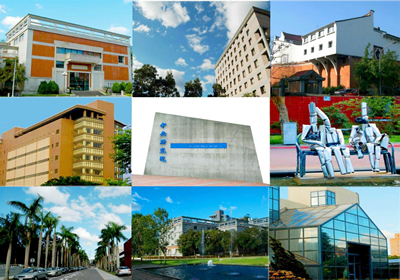
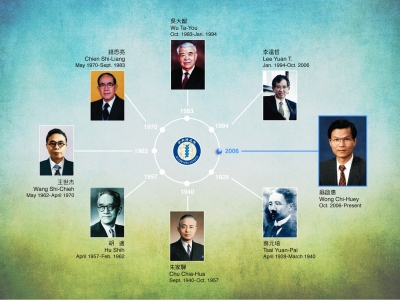
Die Academia Sinica (chin. 中央研究院, Zhōngyāng Yánjiūyuàn) ist die Nationale Akademie der Wissenschaften der Republik China (Taiwan).
Sie wurde 1928 noch auf dem chinesischen Festland gegründet.
中央研究院,简称中研院,是中华民国的国家学院及学术最高殿堂[1],为总统府直属机构,其任务包括人文及科学研究,指导、联络及奖励学术研究,培养高级学术研究人才,并兼有科学与人文之研究。现今院址位于台湾台北市南港旧庄。
中央研究院所属之研究员、副研究员与助研究员,其位阶与学术地位普遍高于一般大学教授、副教授与助理教授,由于研究要求上的落差,大学教授如想转任中央研究院研究员,通常需要降级(例如: 教授改聘为副研究员,副教授改聘为助研究员)。台湾的大学也经常借由合聘与兼任的方式,聘请中央研究院研究员充实其师资阵容与指导研究生。中央研究院院士为中华民国学术界最高荣誉,许多院士是在中央研究院担任专任研究员时当选,或是当选后兼任研究员或通信研究员,所以有相当比例的院士同时在院内担任研究员。


