
Deutsch-Chinesische Enzyklopädie, 德汉百科
 Art
Art

 Architecture
 Review
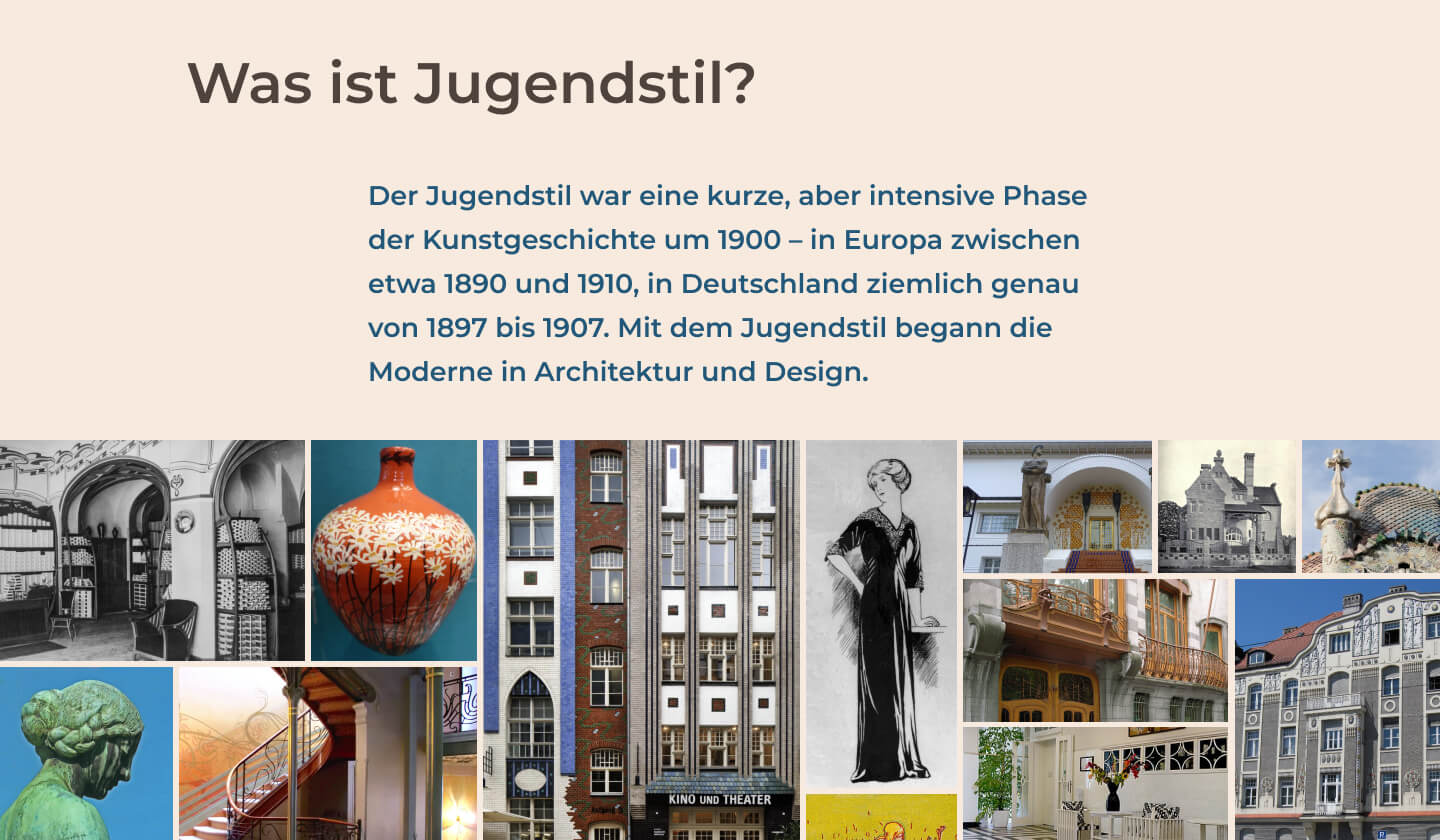
“新艺术”(Art Nouveau)是流行于19世纪末和20世纪初的一种建筑、美术及实用艺术的风格。就像哥特式、巴洛克式和洛可可式一样,新艺术一时风靡欧洲大陆,显示 了欧洲文化基本上的统一性,同时也表明了各种思潮的不断演化与相互融会。新艺术在时间上发生于新旧世纪交替之际,在设计发展史上也标志着是由古典传统走向 现代运动的一个必不可少的转折与过渡,其影响十分深远。
1.新艺术运动概述 新艺术运动潜在的动机是彻底地与19世纪下半叶的西方艺术界流行的两种趋势决裂。首先,新艺术是与先前的历史风格决裂,这种风格体现了一种怀旧的趋势 和折衷主义的混乱局面,只是冷漠而机械地照搬经典的传统形式。与这种热衷于对过去传统的顺从态度相反,新艺术的艺术家们声称希望将他们的艺术建立在当今现 实,甚至是最近的未来基础上,为探索一个崭新的纪元打开大门。为此,必须打破旧时代的束缚,抛弃旧有风格的元素,创造出具有青春活力和现代感的新风格来。 第二,新艺术又拒绝了西方艺术的另一趋势——自然主义。新艺术的拥护者热衷于表现华美、精致的装饰,而这正是自然主义者们为追求日常生活的真实而抛弃了的 特点。新艺术指责自然主义者是对自然奴隶般的模仿者,使自己囿于细微末节之中而不是努力综合、提炼,以更为自由和更富想象力的方式来表现它们。然而,尽管 新艺术反对自然主义,新艺术运动的艺术家们实际上又是崇拜自然的,只是他们崇尚的是热烈而旺盛的自然活力,这种活力是难以用复制其表面形式来传达的。他们 认为应该去寻找自然造物最深刻的根源,发掘决定植物和动物生长、发展的内在过程。这样,自然的精髓才能被把握住。新艺术最典型的纹样都是从自然草木中抽象 出来的,多是流动的形态和蜿蜒交织的线条,充满了内在活力。它们体现了隐藏于自然生命表面形式之下无止无休的创造过程。这些纹样被用在建筑和设计的各个方 面,成了自然生命的象征和隐喻。 新艺术运动十分强调整体艺术环境,即人类视觉环境中的任何人为因素都应精心设计,以获得和谐一致的总体艺术效果。新艺术反对任何艺术和设计领域内的划 分和等级差别,认为不存在大艺术与小艺术,也无实用艺术与纯艺术之分。艺术家们决不应该只是致力于创造单件的“艺术品”,而应该创造出一种为社会生活提供 适当环境的综合艺术。在如何对待工业的问题上,新艺术的态度有些似是而非。从根本上来说,新艺术并不反对工业化。新艺术的理想是为尽可能广泛的公众提供一 种充满现代感的优雅,因此,工业化是不可避免的。新艺术的中心人物宾(Samuel Bing,1838—1905)就认为“机器在大众趣味的发展中将起重要作用。”但是,新艺术不喜欢过分的简洁,主张保留某种具有生命活力的装饰性因素, 而这常常是在批量生产中难以做到的。实际上,由于新艺术作品的实验性和复杂性,它不适合机器生产,只能手工制作,因而价格昂贵,只有少数富有的消费者能光 顾。 新艺术风格的变化是很广泛的,在不同国家、不同学派具有不同的特点:使用不同的技巧和材料也会有不同的表现方式。既有非常朴素的直线或方格网的平面构 图,也有极富装饰性的三度空间的优美造型。但新艺术运动的实际作品很少完全实现其理想,有时甚至陷于猎奇的手法主义。新艺术风格把主要重点放在动、植物的 生命形态上,一幢建筑或一件产品都应是一件和谐完整的杰作,但设计师却不可能抛弃结构原则,其结果常常是表面上的装饰,流于肤浅的“为艺术而艺术”。新艺 术在本质上仍是一场装饰运动,但它用抽象的自然花纹与曲线,脱掉了守旧、折衷的外衣,是现代设计简化和净化过程中的重要步骤之一。


 History

Jun yao (chinesisch 钧窑, Pinyin Jun yao, W.-G. Chün yao, englisch Jun Kiln ‚Jun-Brennofen‘) ist die Fachbezeichnung für in der Stadt Yuzhou der chinesischen Provinz Henan befindliche song-zeitliche Porzellanbrennöfen. Der Jun-Brennofen zählt zu den Fünf berühmte Brennöfen der Song-Dynastie, er wird auch Jun yao 均窑 oder Junzhou yao 钧州窑 genannt.[1] Die Stätte wurde 1951 entdeckt. Das Jun-Porzellan hat einen dunklen Grundton mit einer blauschwarz gesprenkelten Glasur, die meist mit einem feinen Netz von Rissen überzogen ist.
钧窑也称均窑,均州窑是宋代初年,在今河南省禹州市神垕镇钧台建立的瓷窑。钧窑古瓷窑址现在是全国重点文物保护单位,原址处建有“禹州钧官窑址博物馆”[1]。
钧窑是中国宋代五大名窑之一,创烧于唐,兴盛于宋,复烧于金元,延至明清仍继续仿制,历经千年而不衰,形成了一个庞大的钧窑系,与汝、官、哥、定诸窑齐名。迄今为止,在禹州境内已发现北宋钧窑遗址多达四十处,尤以神垕镇大刘山下最为集中。
禹州现存最早的《钧州志》中说:“瓷窑在州西大刘山下”。在禹州市神垕镇下白峪村和苌庄乡等地,先后出土黑、褐釉高温窑变花瓷,被陶瓷学家称为“唐钧”,它是宋代钧瓷的先声。宋“靖康之变”(1126年)后,宋室南迁,官钧窑停烧,钧瓷一时受挫。到金、元时代,钧瓷有了新的发展,各地争相仿制,风靡一时,钧窑播火全国。元末明初,因战乱和灾荒,钧窑生产渐衰。明、清时期,制瓷中心南移,北方诸名窑衰退,钧窑也基本停烧。清朝晚期,钧瓷复苏。到光绪三十年(1904年),神垕镇烧制钧瓷者已有十余家。民国年间,因战乱、灾荒频繁,钧瓷生产举步维艰。至民国三十一年(1942年)后,因大旱和政局混乱,艺人外流,钧瓷生产趋于停产状态。1949年以后,特别是中国改革开放以来得到了快速发展,被做为国礼,达到了一个新的高度。
钧窑土脉细,釉彩有兔丝纹:红的像胭脂、朱沙,青翠的像葱,紫色如紫玫瑰等多种颜色,俗称海棠红、梅子青、茄皮紫、天兰等色彩。钧窑瓷器常发生窑变,除本色釉外还会变出其他颜色,而钧瓷的名贵正在于其独特的窑变釉色,其釉色是烧制过程中自然形成,非人工描绘,每一件钧瓷的釉色都是唯一的,故有“钧瓷无双”的说法,钧瓷的釉质深厚透活,晶莹玉润,有明快的流动感。
明代文震亨在《长物志》一书中对钧窑的评论:“均州窑色如胭脂者为上,青若葱翠、紫若黑色者次之,杂色者不贵。”[2] 景德镇窑在清代也烧制仿钧窑瓷器。[3]
Jun ware (Chinese: 鈞窯; pinyin: Jūn yáo; Wade–Giles: Chün-yao) is a type of Chinese pottery, one of the Five Great Kilns of Song dynasty ceramics. Despite its fame, much about Jun ware remains unclear, and the subject of arguments among experts. Several different types of pottery are covered by the term, produced over several centuries and in several places, during the Northern Song dynasty (960–1126), Jin dynasty (1115–1234) and Yuan dynasty (1271–1368), and (as has become clearer in recent years) lasting into the early Ming dynasty.[1]
Some of the wares were popular, especially the drinking vessels, but others seem to have been made for the imperial court and are known as "official Jun wares"; they are not mentioned in contemporary documents and their dating remains somewhat controversial. These are mostly bowls for growing bulbs or flower-pots with matching stands, such as can be seen in many paintings of scenes in imperial palaces.[2] The consensus that seems to be emerging, driven largely by the interpretation of excavations at kiln sites, divides Jun wares into two groups: a large group of relatively popular wares made in simple shapes from the Northern Song to (at lower quality) the Yuan, and a much rarer group of official Jun wares made at a single site (Juntai) for the imperial palaces in the Yuan and early Ming periods.[3] Both types rely largely for their effect on their use of the blue and purple glaze colours; the latter group are sturdy shapes for relatively low-status uses such as flowerpots and perhaps spitoons.[4]
The most striking and distinctive Jun wares use blue to purple glaze colours, sometimes suffused with white, made with straw ash in the glaze.[5] They often show "splashes" of purple on blue, sometimes appearing as though random, though they are usually planned. A different group are "streaked" purple on blue,[6] the Chinese describing the streaks as "worm-tracks". This is a high-prestige stoneware which was greatly admired and often imitated in later periods. But colours range from a light greenish-brown through green to blue and purple. The shapes are mostly simple, except for the official wares, and other decoration is normally limited to the glaze effects.[7] Most often, the "unofficial" wares are wheel-thrown, but the official ones moulded.
The wares are stoneware in terms of Western classification, and "high-fired" or porcelain in Chinese terms (where the class of stoneware is not generally recognised). Like the still more prestigious Ru ware, they are often not quite fired as high as the normal stoneware temperature range, and the body remains permeable to water.[8] They form a "close relative" of the wider group of Northern celadons or greenwares.[9]


 Bavaria
 Science and technology

 Museum
 North Rhine-Westphalia
 Vacation and Travel

位于格拉贝广场(Grabbeplatz)的20世纪艺术收藏馆(K20- Kunstsammlung)是欣赏克利(Klee)、毕加索(Picasso)、恩斯特(Ernst)、博伊斯(Beuys)等古典现代派大师艺术的首 选地点。等级代表会堂(Ständehaus)里面的21世纪艺术收藏馆(K21 Kunstsammlung)展示的是21世纪的艺术、艺术皇宫博物馆(museum kunst palast)的当代艺术、古典现代派和古代艺术。苯拉特王宫花园基金会(Stiftung Schloss und Park Benrath)不仅拥有难得一见的洛可可晚期风格的整体艺术作品,而且它本身还是一座欧洲园艺博物馆(Museum für Europäische Gartenkunst)。 (Quelle: http://www.deyudeyu.com/)
 Religion


Datum 1852
Medium Öl auf Leinwand
Abmessungen Höhe: 94 cm (37 in) ; Breite: 72 cm (28.3 in)
Franz Krüger (1797–1857)