
Deutsch-Chinesische Enzyklopädie, 德汉百科
 China
China
 Finanz

 Wissenschaft und Technik

上海同步辐射光源(英语:Shanghai Synchrotron Radiation Facility,缩写SSRF),又称上海光源,是一台高性能的中能第三代同步辐射光源。工程包括三大加速器,分别是一台150MeV的电子直线加速器、一台能在0.5秒内把电子束能量从150MeV提升到3.5GeV的全能量增强器和一台周长432米的3.5GeV高性能电子储存环。
上海光源隶属中国科学院上海高等研究院,位于上海浦东张江高科技园区,工程于2004年12月25日动工,于2009年4月完成调试并向用户开放。
Die Shanghai Synchrotron Radiation Facility (SSRF) ist ein 2009 eröffnetes Synchrotron in Shanghai. In ihren Speicherring mit einem Umfang von 432 m werden Elektronen mit einer Energie von 3,5 Gigaelektronenvolt (GeV) injiziert. Gegenwärtig ist die SSRF noch im Aufbau und es können an 14 Beamlines Experimente mit Synchrotronstrahlung durchgeführt werden (Stand Dezember 2016).[1] Der Schwerpunkt liegt auf Röntgenbeugung mit Photonenenergien von 250 eV bis 72 keV. Nach Fertigstellung wird es ungefähr 60 Messstationen geben.
 Unternehmen

 Essen und Trinken

 Architektur

 Messe
Messe
 Beijing Shi-BJ
Belarus
Beijing Shi-BJ
Belarus
 Hand in Hand
Indien
Iran
Kasachstan
Kirgisistan
Pakistan
Russland
Shanghaier Organisation für Zusammenarbeit
Tadschikistan
Usbekistan
Hand in Hand
Indien
Iran
Kasachstan
Kirgisistan
Pakistan
Russland
Shanghaier Organisation für Zusammenarbeit
Tadschikistan
Usbekistan
 Wichtige internationale Organisationen
上海合作组织(简称上合组织;俄语:Шанха́йская организа́ция сотру́дничества,缩写为 ШОС;英语:Shanghai Cooperation Organization,缩写为 SCO)是中华人民共和国、俄罗斯联邦、哈萨克斯坦、吉尔吉斯、塔吉克斯坦、乌兹别克、巴基斯坦、印度、伊朗和白俄罗斯等10个国家组成的国际组织,另有2个观察员国:蒙古国和阿富汗(前政府),以及13个对话伙伴:亚美尼亚、阿塞拜疆、柬埔寨、尼泊尔、斯里兰卡、土耳其、沙特阿拉伯、埃及、卡塔尔、缅甸、科威特、阿拉伯联合酋长国、马尔代夫、巴林[1][3][2]。工作语言为汉语和俄语[5]。成员总面积为约3,600万平方公里,约为亚欧大陆总面积的3/5,人口约34亿,约为世界总人口的43%。这是在中国境内成立的第二个政府与政府之间的国际性组织[注 1],也是首次以中国城市命名的政府间国际组织。上海合作组织表示以“上海精神”解决各成员国间的边境问题。
上合组织是上海五国的继承者,上海五国于1996年由中华人民共和国、哈萨克斯坦、吉尔吉斯斯坦、俄罗斯和塔吉克斯坦组成。2001年6月,这些国家和乌兹别克斯坦领导人在上海会面,宣布成立一个新组织,深化政治和经济合作。2017年6月,它扩展到八个国家,包括印度和巴基斯坦。伊朗和白俄罗斯也分别于2023年7月和2024年7月加入该组织。多个国家也作为观察员或对话伙伴参与其中。[6]
上海合作组织由其最高决策机构——国家元首理事会(HSC)领导,每年举行一次会议。该组织还包含所谓的区域反恐机构(RATS)。
The Shanghai Cooperation Organisation (SCO), or Shanghai Pact,[1] is a Eurasian political, economic, and security alliance, the creation of which was announced on 15 June 2001 in Shanghai, China by the leaders of China, Kazakhstan, Kyrgyzstan, Russia, Tajikistan, and Uzbekistan; the Shanghai Cooperation Organisation Charter, formally establishing the organisation, was signed in June 2002 and entered into force on 19 September 2003. The original five nations, with the exclusion of Uzbekistan, were previously members of the Shanghai Five group, founded on 26 April 1996. Since then, the organisation has expanded its membership to eight countries when India and Pakistan joined SCO as full members on 9 June 2017 at a summit in Astana, Kazakhstan.
The Heads of State Council (HSC) is the supreme decision-making body in the SCO, it meets once a year and adopts decisions and guidelines on all important matters of the organisation. Military exercises are also regularly conducted among members to promote cooperation and coordination against terrorism and other external threats, and to maintain regional peace and stability. The SCO is the largest regional organisation in the world in terms of geographical coverage and population, covering three-fifths of the Eurasian continent and nearly half of the human population.
L'Organisation de coopération de Shanghai (OCS ; chinois : 上海合作组织 ; pinyin : , 上合组织 ; en russe : Шанхайская Организация Сотрудничества, ШОС) est une organisation intergouvernementale régionale asiatique qui regroupe la Russie, la Chine, le Kazakhstan, le Kirghizistan, le Tadjikistan et l'Ouzbékistan. Elle a été créée à Shanghai les 14 et 15 juin 2001 par les présidents de ces six pays.
Succédant au « groupe de Shanghai » réunissant les chefs d'État d'Asie centrale à partir de 1996, l'OCS vise d'abord à répondre aux bouleversements géopolitiques consécutifs à l'effondrement de l'URSS en Asie centrale et à l'instabilité que cela entraînait dans la région. Stabilisant les frontières des nouveaux États créés, le groupe puis l'organisation formalise peu à peu une coopération économique puis sécuritaire et militaire visant à assurer la sécurité collective des adhérents. La Chine et la Russie sont au centre de cette entente et formalisant par son biais une forme de rapprochement géostratégique que le refus de l'entrée des États-Unis et du Japon illustre.
Le 10 juillet 2015, l'OCS décide d'admettre l'Inde et le Pakistan comme membres à part entière, intégration officialisée le 9 juin 20171.
L'Organizzazione per la Cooperazione di Shanghai (OCS; in cinese 上海合作组织, pinyin: shànghǎi hézuò zǔzhī, 上合组织; in russo Шанхайская Организация Сотрудничества, ШОС; in inglese Shanghai Cooperation Organization, SCO) è un organismo intergovernativo fondato il 14 giugno 2001 dai capi di Stato di sei Paesi: Cina, Russia, Kazakistan, Kirghizistan, Tagikistan e Uzbekistan.
Questi paesi, con l'eccezione dell'Uzbekistan, facevano già parte dello Shanghai Five (noto in Italia come Gruppo di Shanghai). Dopo l'adesione dell'Uzbekistan, nel 2001, i membri dell'organizzazione decisero di cambiarne il nome in quello attuale.
La Organización de Cooperación de Shanghái (OCS) es una organización intergubernamental fundada el 15 de junio de 2001 por los líderes de la República Popular China, Rusia, Kazajistán, Kirguistán y Tayikistán, países que, con la excepción de Uzbekistán (que ingresó en la organización en 2001), de India y de Pakistán (que ingresaron a la organización en enero de 2016), habían sido previamente conocidos como los Cinco de Shanghái.
Шанха́йская организа́ция сотру́дничества (ШОС) — международная организация, основанная 15 июня 2001 года лидерами Китая, России, Казахстана, Таджикистана, Киргизии и Узбекистана[2].
10 июля 2015 года было объявлено о начале процедуры вступления в ШОС Индии и Пакистана[3][4]. 9 июня 2017 года Индия и Пакистан стали полноправными членами ШОС[5]. Членами ШОС стали все участники «Шанхайской пятёрки», основанной в результате подписания в 1996—1997 годах между Казахстаном, Киргизией, Китаем, Россией и Таджикистаном соглашений об укреплении доверия в военной области и о взаимном сокращении вооружённых сил в районе границы. Общая территория входящих в ШОС стран составляет более 34 млн км², то есть 60 % территории Евразии. Общая численность населения стран ШОС равна 3 млрд 40 млн человек (2015 год)[6], половина населения планеты[7]. Экономика КНР — вторая экономика мира по номинальному ВВП, первая по ВВП по паритету покупательной способности (c 2014 года).
ШОС не является военным блоком (как, например, НАТО) или открытым регулярным совещанием по безопасности (как, например, АРФ), а занимает промежуточную позицию[8]. Главными задачами организации провозглашены укрепление стабильности и безопасности на широком пространстве, объединяющем государства-участников, борьба с терроризмом, сепаратизмом, экстремизмом[9], наркотрафиком, развитие экономического сотрудничества, энергетического партнёрства, научного и культурного взаимодействия.
 Energieressource


 Geschichte
 Religion
 Sport
Sport
 Internationale Städte




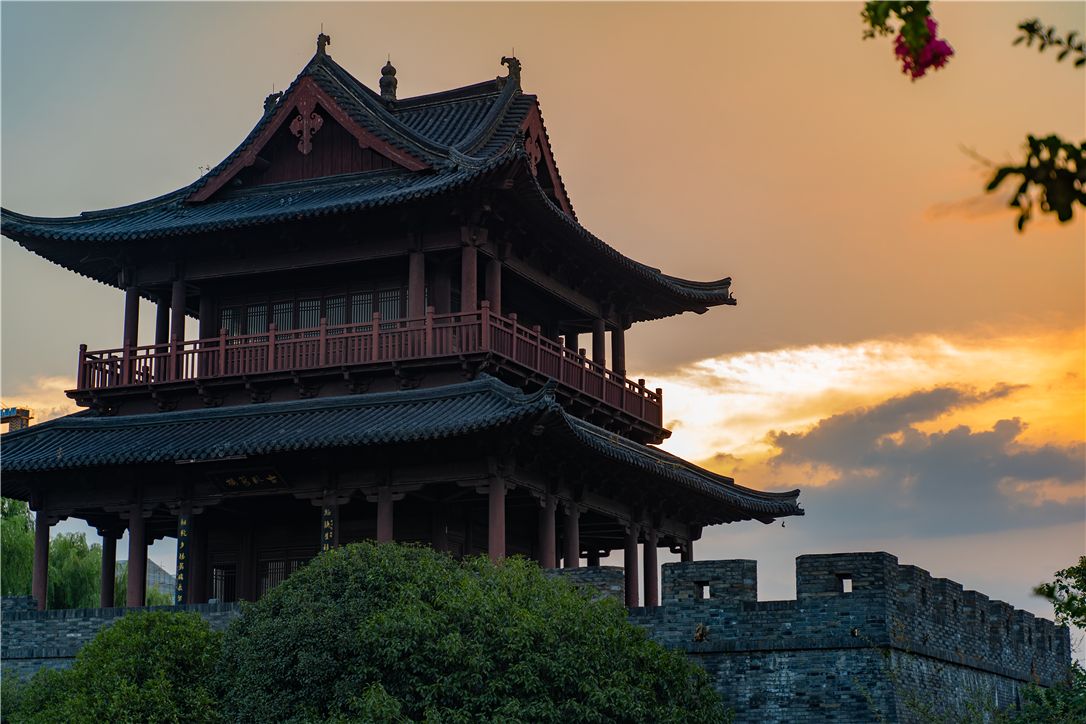

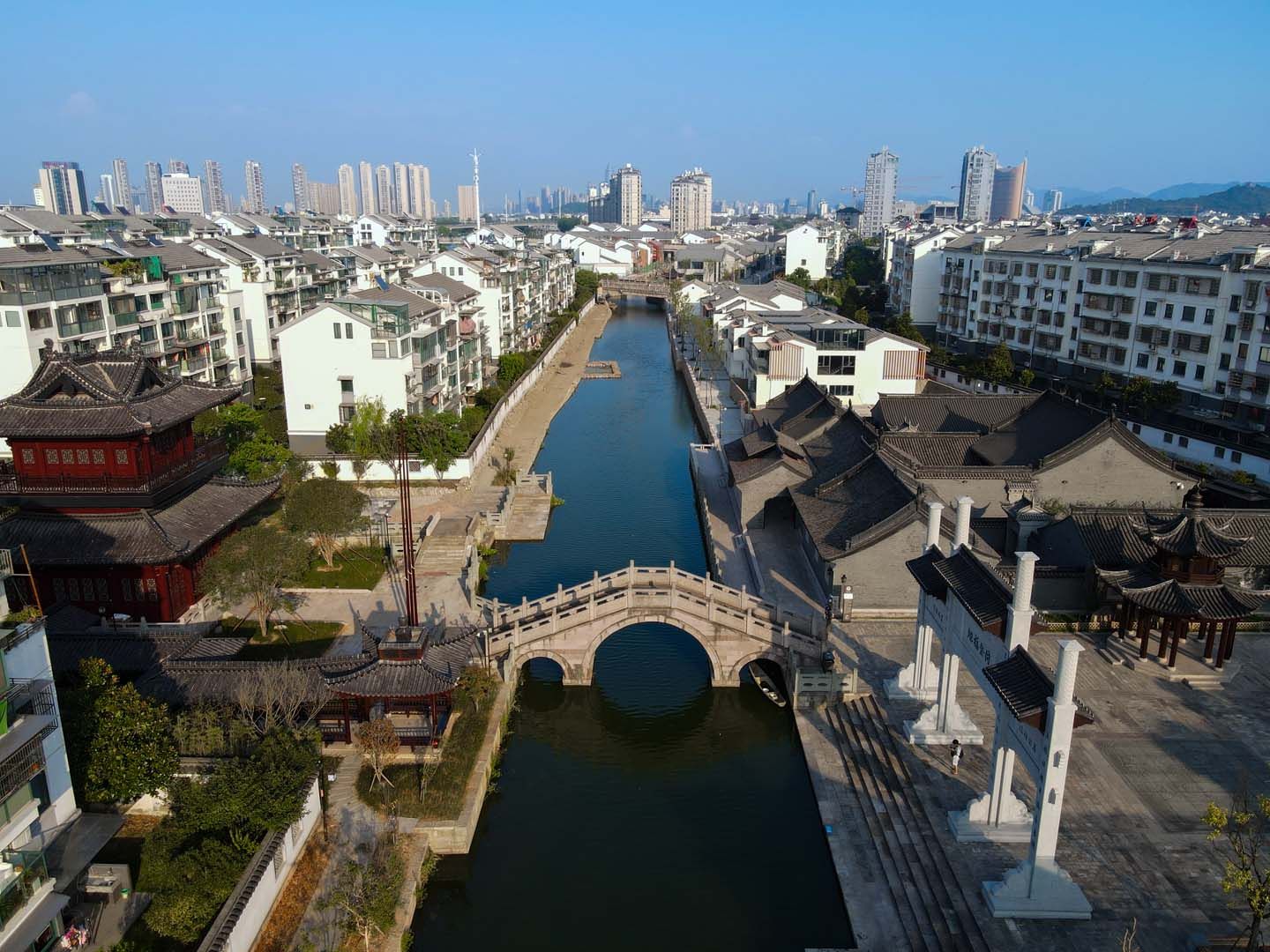
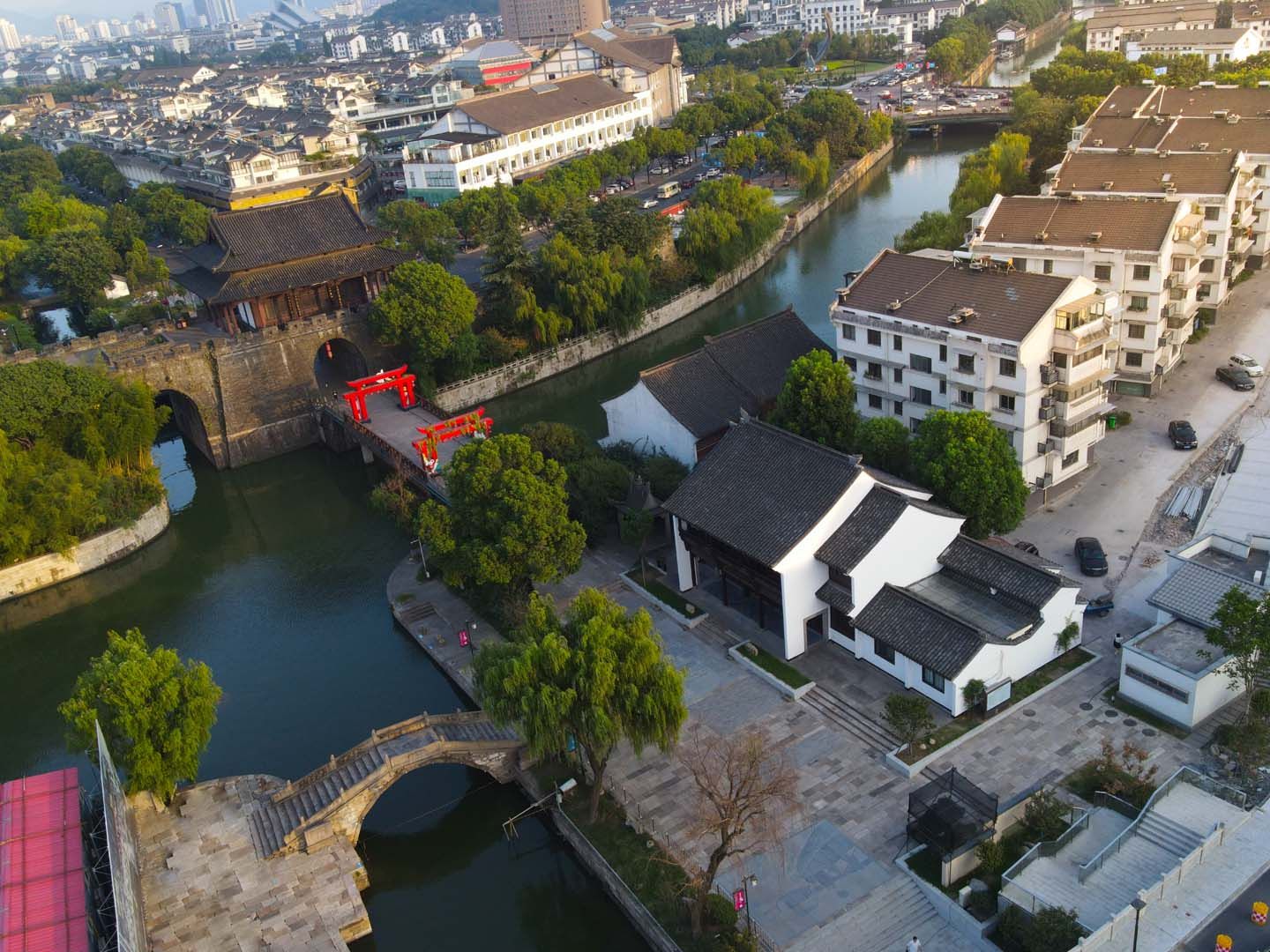


绍兴市(普通话:Shào Xīng;吴语:Zau Shin),简称越,是中华人民共和国浙江省下辖的地级市,浙江第四大城市。旧称会稽、山阴,越文化中心。现在是中华人民共和国纺织业与小电机、节能光电工业的中心。
绍兴是浙江的文化中心之一,首批国家历史文化名城之一,是中国历史最悠久的城市之一,是有名的水乡、酒乡、桥乡,绍兴风景秀丽、人才辈出,著名的文化古迹包括兰亭、禹陵、鲁迅故里(包括鲁迅故居、三味书屋、咸亨酒店、百草园等)、蔡元培故居,周恩来祖居,秋瑾故居,马寅初故居,王羲之故居,贺知章故居等名人故居,东湖、沈园、吼山、新昌大佛寺等,古代越王“卧薪尝胆”的故事更是家喻户晓。
绍兴纺织业、小电机、节能照明、生物酿造业极发达,纺织业出口产品占世界纺织面料交易额的60%,绍兴中国轻纺城是世界最大的纺织品交易市场。另外,绍兴出产的黄酒(又称绍酒)更是闻名遐迩,成为国宴专用酒。根据酿制工艺和口感不同,绍兴黄酒又分加饭酒、花雕酒、善酿酒等。
Die über 2 500 Jahre alte Stadt Shaoxing liegt im Süden des Jangtse-Deltas zwischen den Städten Hangzhou und Ningbo in der Provinz Zhejiang. Sie zählt im Innenstadtbereich 640 000 Einwohner. Zum Verwaltungsgebiet gehören jedoch rund 4,3 Millionen Menschen. Shaoxing ist eine der beliebtesten Touristenstädte Chinas.
Stadt der Brücken und Kanäle
Die Stadt der Brücken und Kanäle zählt im Reich der Mitte zur ersten Liga der bekannten historischen Kulturstädte. Sie hat neben vielen Ruhezonen und einer malerischen Altstadt aber auch überaus belebte Einkaufsstraßen, die alles bieten, was das Herz begehrt. Lebendige Märkte, große Kaufhäuser, unzählige kleine Geschäfte und große Hotels sowie ein Meer an Restaurants und Kneipen prägen das Stadtbild.
Shaoxing ist der wichtigste Produktionsstandort für Reiswein. Die staatliche Shaoxing County Winery China produziert jährlich rund 30 000 Tonnen Reiswein.
(Quelle: http://www.bayreuth.de/partnerstaedte/shaoxing_558.html)
Shaoxing (chinesisch 紹興市 / 绍兴市, Pinyin Shàoxīng Shì, W.-G. Shao-hsing) ist eine bezirksfreie Stadt in der chinesischen Provinz Zhejiang in der Ningshao-Ebene, 65 Kilometer entfernt von der Provinzhauptstadt Hangzhou.
Das Verwaltungsgebiet Shaoxings hat eine Fläche von 8.256 km² und ca. 4,99 Millionen Einwohner (Ende 2016). In dem eigentlichen städtischen Siedlungsgebiet von Shaoxing leben 1.725.726 Menschen (Zensus 2010). Die Durchschnittstemperatur beträgt 16 °C. Im Stadtbezirk Yuecheng gibt es eine Altstadt mit Kanälen und Brücken und verwinkelten Gassen.
紹興市(しょうこうし)は中華人民共和国浙江省に位置する地級市。
旧名は越州。南宋の紹興元年(1131年)、会稽・山陰方面を治める事を目的として越州に府が置かれたために元号に因んで命名された。以後、府・路名として行政区分に用いられて都市名として定着した。
日本では紹興酒の産地としてよく知られており、また近代中国の文豪魯迅の生家がある。魯迅が日本に留学した折の恩師である藤野厳九郎の出身地・福井県あわら市とは友好都市の関係を結んでいる。
Shaoxing ([ʂâuɕíŋ] ( listen); Chinese: 绍兴) is a prefecture-level city on the southern shore of Hangzhou Bay in eastern Zhejiang province, China. It was formerly known as Kuaiji and Shanyin and abbreviated in Chinese as 越 (Yuè) from the area's former inhabitants. Located on the south bank of the Qiantang River estuary, it borders Ningbo to the east, Taizhou to the southeast, Jinhua to the southwest, and Hangzhou to the west. As of 2010, its population was 4,912,339 inhabitants. Among which, 1,914,683 (Keqiao and Yuecheng districts) lived in the built-up metropolitan area of Hangzhou-Shaoxing, with a total of 8,156,154 inhabitants.
Notable residents of Shaoxing include Wang Xizhi, the parents of Zhou Enlai, Lu Xun, and Cai Yuanpei. It is also noted for Shaoxing wine, meigan cai, and stinky tofu, and was recently featured on A Bite of China. Its local variety of Chinese opera sung in the local dialect and known as Yue or Shaoxing opera is second in popularity only to Peking opera. In 2010, Shaoxing celebrated the 2,500th anniversary of the founding of the city.
Economically, the city's driven by manufacturing of textiles, electronics, and energy-efficient lighting. Zhejiang has the fifth highest per capita GDP in the nation, with the city itself at 32nd nationally by GDP per capita.
Shaoxing (chinois simplifié : 绍兴市 ; pinyin : ) est une ville-préfecture du sud-est de la Chine, dans la province du Zhejiang.
Avec ses hutongs et ses canaux, Shaoxing a su garder sa nonchalance malgré ses presque cinq millions d'habitants et la proximité de Shanghai. Les maisonnettes blanches, dépouillées, sont typiques du sud de la Chine. Capitale à la période des Royaumes combattants, la ville se découvre au fil de l'eau, sur des barques noires aux airs de gondoles, les wupeng3.
C'est la ville de naissance de Zeng Peiyan, qui appartient au Bureau politique et au Conseil d'État.
Shaoxing est aussi la ville de naissance de l'écrivain Lu Xun (1881-1936).
Shaoxing (cinese: 绍兴; pinyin: Shàoxīng) è una città-prefettura della Cina nella provincia dello Zhejiang.
Shaoxing (en chino: 绍兴市, pinyin: Shàoxīng shì). Es una ciudad-prefectura en la provincia de Zhejiang, República Popular de China. Limita al norte con el Río Qiantang, al sur con Jinhua, al oeste con Hangzhou y al este con Ningbo. Su área es de 8256 km² y su población es cerca de 5 millones. La ciudad se volvió mundialmente famosa por el Vino de Shaoxing.
Шаосин (кит. упр. 绍兴, пиньинь: Shàoxīng) — городской округ в провинции Чжэцзян КНР.
Одна из достопримечательностей — мавзолей Юя Великого, заложенный в 6 в. н. э. Шаосин — родина выдающегося китайского литератора Лу Синя.