漢德百科全書 | 汉德百科全书
 Performing Arts



朱慧玲,生于上海,女中音歌唱家,现任香港中文大学(深圳)音乐学院教授。毕业于上海音乐学院附中、德国汉堡国立音乐学院和德国斯图加特国立音乐学院,获得艺术歌曲硕士和歌剧演唱家(博士)文凭。
她主演的剧目包括《卡门》《维特》《女人心》《蓝胡子公爵》《原野》等以及德奥轻歌剧。2013 年开始她也频繁在国内舞台上演唱,与国家大剧院、上海交响乐团、中央歌剧院、中央芭蕾舞团等合作《弄臣》(马德莱纳)、《安德烈谢尼埃》(贝尓西)、《汤豪塞》(维纳斯)、《西班牙时光》《卡门》以及马勒《大地之歌》等等。
17/18 演出季开始,她在余隆、张艺、汤沐海、吕绍嘉、吕嘉、张洁敏、M.霍内克、S.马尔采夫等指挥的执棒下,与中国交响乐团、中国爱乐乐团、上海交响乐团、杭州爱乐乐团、广州交响乐团、中央芭蕾舞团交响乐团、上海爱乐乐团等乐团合作马勒的第二&第三&第八交响曲、《大地之歌》和《少年魔角号》、威尔第《安魂曲》、首演叶小纲的交响曲《草原》《鲁迅》和《创世秘符》,上海交响乐团的18 年新年音乐会,中央芭蕾舞团在国家大剧院举行的19 年与20 年跨年音乐会,以及《卡门》等作品。18 年朱慧玲与慕尼黑爱乐合作了谭盾作品《慈悲颂》全球首演,继而在洛杉矶与杜达梅尔合作了该作品,在墨尔本、香港等地巡演。2017 年起,她应邀参加日内瓦联合国“世界人权日”和联合国主办的“丝绸之路”系列Gala 音乐会巡演。
除了演唱以外,她还在公益性组织德国汉堡新生代艺术家基金会任艺术总监,德国蒂门多芙音乐比赛评委,2019 年中国音乐金钟奖美声组评委。
Huiling ZHU is the Professor of School of Music, The Chinese University of Hong Kong, Shenzhen. The Shanghai-born mezzo-soprano, Huiling ZHU graduated from the High School affiliated to the Shanghai Conservatory of Music, Hochschule für Musik und Theater Hamburg, and Musikhochschule Stuttgart, where she made her Bachelor, Master and Soloist (Doctor) degrees of Lieder and Opera.
She made her operatic debut in Offenbach’s La Perichole in Graz (Austria) in 2003. Her repertoires include Carmen, Werther, Così fan Tutte, Barbe-Bleue, Rheingold, The Wilderness etc., as well as the operettas, in different opera houses such as in Stuttgart, Zürich and Hyogo etc.
In 2013, Huiling ZHU made her opera China debut in NCPA with Les Contes d’Hoffmann. As an opera singer, she’s invited by different orchestras and opera houses in China, such as NCPA, Shanghai Symphony Orchestra (SSO), Central Opera House, singing Andrea Chénier (Bersi), Tannhäuser (Venus), L’Heure Espagnole, Carmen, etc.
From the season 17/18, under the direction of Yu Long, Zhang Yi, Tang Muhai, Lv Shaojia, Lv Jia, Zhang Jiemin, Manfred Honeck and etc., she collaborated with China Symphony Orchestra and China Philharmonic Orchestra, Shanghai Symphony Orchestra, Hangzhou Philharmonic Orchestra, Guangzhou Symphony Orchestra, Central Ballet Symphony Orchestra, Shanghai Philharmonic Orchestra and other orchestras to perform Mahler’s No. 2, No. 3 and No. 8 Symphony, Das Liede von der Erde and Des Knaben Wunderhorn, Verdi’s Requiem di Messa, the world premiere of Xiaogang YE’s Symphonies No. 4, No. 5 and No. 6, SSO New Year’s Concert in 2018, Beijing New Year’s Concerts 2019 and 2020, etc. In 2018 Huiling ZHU joined the world premiere of Tan Dun’s The Buddha Passion as the alto solo with Munich Philharmonic, in LA (Gustavo Dudamel) and toured in Melbourne and Hong Kong. Since 2017, she was invited to participate in the Gala concerts tour of “World Human Rights Day” and the “Silk Road” organized by the United Nations in Geneva Switzerland and other countries.
Besides singing, Huiling ZHU is also the art director of the charity association Siftung Chinesische Nachwuchskünstler in Germany, the judge of the Timmendorf Music Competition in Germany, and the judge of the Chinese Music Golden Bell Awards 2019.


Giulio Romano Caccini (* 8. Oktober 1551 in Rom; begraben 10. Dezember 1618 in Florenz) war ein italienischer Komponist, Sänger, Gesangslehrer und Instrumentalist, der an der Schnittstelle der Spätrenaissance zum Frühbarock lebte und an der Entwicklung der Oper beteiligt war.
朱利欧·罗莫洛·卡契尼(意大利语:Giulio Romolo Caccini;1551年10月8日—1618年12月10日),意大利作曲家及演唱家,活跃于巴洛克前期。卡契尼开创美声唱法(bel canto),对意大利歌剧发展有巨大的影响。


Julia Muzychenko studierte in ihrer Heimatstadt St. Petersburg Gesang und debütierte 2015 am Mariinsky Theater in der Titelrolle von Tarnoloskys Aschenputtel. Zahlreiche Erste Preise u.a. beim Concorso Internazionale Voci Verdiane, der Sergey Rachmaninov International Vocal Competition sowie 2018 beim Internationalen Gesangswettbewerb Die Meistersinger von Nürnberg zeichnen die junge Sopranistin aus. Erste internationale Engagements führten Julia Muzychenko als Violetta Valery (La traviata) nach Busseto, Parma und die Ópera de Tenerife sowie als Norina (Don Pasquale) an die Opéra National de Montpellier. In der Spielzeit 2019/20 bis November 2021 war Julia Muzychenko Mitglied des Jungen Ensemble der Semperoper Dresden.
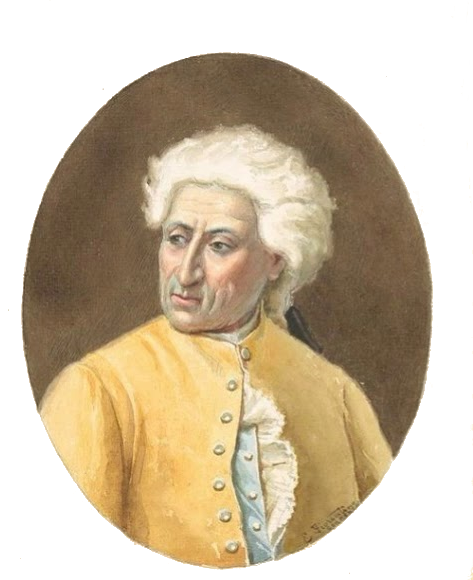
 Giuseppe Verdi
 Music
Music
Music
Music
 Late Classical, Romantic (Early, Middle, Late)
Music
*Art Songs
Music
Gesang
Music
Opera
Music
*Development of music
New Year's Concert of the Vienna Philharmonic
Late Classical, Romantic (Early, Middle, Late)
Music
*Art Songs
Music
Gesang
Music
Opera
Music
*Development of music
New Year's Concert of the Vienna Philharmonic

Giuseppe Fortunino Francesco Verdi (* 9. Oktober oder 10. Oktober 1813 in Le Roncole, Département Taro, Französisches Kaiserreich; † 27. Januar 1901 in Mailand) war ein italienischer Komponist der Romantik, der vor allem durch seine Opern, darunter Rigoletto, Otello und Falstaff, berühmt wurde.
朱塞佩·福图尼诺·弗朗切斯科·威尔第(意大利语:Giuseppe Fortunino Francesco Verdi,1813年10月10日-1901年1月27日),意大利作曲家,出生于帕尔马附近的勒朗科勒,逝世于米兰。
威尔第和理查德·瓦格纳一起被认为是19世纪最有影响力的歌剧创作者[1]。
威尔第从1824年开始学习音乐,他为焦阿基诺·罗西尼的歌剧《塞维利亚的理发师》写了序曲。然后他去米兰,但那里的音乐学院拒绝接受他,他并不灰心,继续自学。
他的处女作是《奥贝尔托》(Oberto),此后他又写了《一日国王》(Un Giorno di Regno),这是他第一部喜剧,但不成功。1842年他创作了他的第一部不朽之作《纳布科》。
其后他的佳作屡出不叠。1872年他的另一部巨著《阿依达》问世。对于这部歌剧的创作目的,坊间有不少传言。实际上这歌剧并不是为开罗总督歌剧院的开幕式,也不是为苏伊士运河开航而作的。
威尔第晚年主要修改他早年的作品。威尔第支持意大利当时的独立运动,他的一些作品中有暗示这个运动的情节。直到今天还有人建议将他为《纳布科》所作的合唱《飞吧,思想,乘着金色的翅膀》(Va' pensiero, sull'ali dorate)作为意大利的国歌。
ジュゼッペ・フォルトゥニーノ・フランチェスコ・ヴェルディ(Giuseppe Fortunino Francesco Verdi、1813年10月10日 - 1901年1月27日)は、19世紀を代表するイタリアのロマン派音楽の作曲家であり、主にオペラを制作した。「オペラ王」の異名を持つ。
代表作は『ナブッコ』、『リゴレット』、『椿姫』、『アイーダ』などがある。彼の作品は世界中のオペラハウスで演じられ、またジャンルを超えた展開を見せつつ大衆文化に広く根付いている。ヴェルディの活動はイタリア・オペラに変革をもたらし、現代に至る最も重要な人物と評される[1]。1962年から1981年まで、1000リレ(リラの複数形)イタリアの紙幣に肖像が採用されていた。
Giuseppe Fortunino Francesco Verdi (Italian: [dʒuˈzɛppe ˈverdi]; 9 or 10 October 1813 – 27 January 1901) was an Italian opera composer. He was born near Busseto to a provincial family of moderate means, receiving a musical education with the help of a local patron. Verdi came to dominate the Italian opera scene after the era of Gioachino Rossini, Gaetano Donizetti, and Vincenzo Bellini, whose works significantly influenced him.
In his early operas, Verdi demonstrated a sympathy with the Risorgimento movement which sought the unification of Italy. He also participated briefly as an elected politician. The chorus "Va, pensiero" from his early opera Nabucco (1842), and similar choruses in later operas, were much in the spirit of the unification movement, and the composer himself became esteemed as a representative of these ideals. An intensely private person, Verdi did not seek to ingratiate himself with popular movements. As he became professionally successful he was able to reduce his operatic workload and sought to establish himself as a landowner in his native region. He surprised the musical world by returning, after his success with the opera Aida (1871), with three late masterpieces: his Requiem (1874), and the operas Otello (1887) and Falstaff (1893).
His operas remain extremely popular, especially the three peaks of his 'middle period': Rigoletto, Il trovatore and La traviata. The bicentenary of his birth in 2013 was widely celebrated in broadcasts and performances.
Giuseppe Fortunino Francesco Verdi (/dʒuˈzɛppe fortuˈniːno franˈt͡ʃesko ˈverdi/1), né Joseph Fortunin François Verdi le 10 octobre 1813 à Roncole et mort le 27 janvier 1901 à Milan, est un compositeur romantique italien. Son œuvre, composée essentiellement d’opéras, unissant le pouvoir mélodique à la profondeur psychologique et légendaire, est l'une des plus importantes de toute l'histoire du théâtre musical.
Verdi est l’un des compositeurs d’opéras italiens les plus influents du XIXe siècle, influence comparable à celle de Bellini, Donizetti, Puccini et Rossini. Ses œuvres sont fréquemment jouées dans les opéras du monde entier et, dépassant les frontières du genre, certains de ses thèmes sont depuis longtemps inscrits dans la culture populaire comme « La donna è mobile » de Rigoletto, le « Brindisi » de La traviata, le « Va, pensiero » de Nabucco ou la « Marche triomphale » d'Aida. Les opéras de Verdi dominent encore le répertoire de l'art lyrique un siècle et demi après leur création.
Peu engagé politiquement, il a cependant autorisé l'utilisation de son image et de ses œuvres dans le processus de réunification de la péninsule italienne et demeure de ce fait, aux côtés de Garibaldi et de Cavour, une figure emblématique du Risorgimento.
Giuseppe Fortunino Francesco Verdi (Le Roncole, 10 ottobre 1813 – Milano, 27 gennaio 1901) è stato un compositore e senatore italiano.
Universalmente riconosciuto come uno dei più grandi operisti di ogni tempo, subentrò ai protagonisti italiani del teatro musicale del primo Ottocento: Gioachino Rossini, Vincenzo Bellini e Gaetano Donizetti; come Richard Wagner, interpretò in modo originale, seppur differente dal tedesco, gli elementi romantici presenti nelle sue opere, proponendo agli spettatori una chiave di lettura patriottica in molte delle sue composizioni.
Simpatizzò con il movimento risorgimentale che perseguiva l'Unità d'Italia e partecipò attivamente per breve tempo anche alla vita politica; nel corso della sua lunga esistenza stabilì una posizione unica tra i suoi connazionali, divenendo un simbolo artistico profondo dell'unità del Paese. Fu perciò che, un mese dopo la sua morte, una solenne e sterminata processione attraversò Milano, accompagnando le sue spoglie con le note del Va', pensiero, il coro degli schiavi ebrei del Nabucco. Il Va' pensiero, da lui scritto circa 60 anni prima, esprimendo di fatto i sentimenti degli italiani verso il loro eroe scomparso, dimostrò fino a che punto la musica di Verdi fosse stata assimilata nella coscienza nazionale.
Le sue opere rimangono ancora tra le più conosciute ed eseguite nei teatri di tutto il mondo, in particolare l'Aida (1871), il già citato Nabucco (1842) e la cosiddetta "triade verdiana": Rigoletto (1851), Il trovatore (1853) e La traviata (1853).
Giuseppe Fortunino Francesco Verdi (Le Roncole, Busseto, 10 de octubre de 1813 - Milán, 27 de enero de 1901) fue un compositor romántico italiano de ópera, uno de los más importantes de todos los tiempos. Su obra sirve de puente entre el bel canto de Rossini, Donizetti y Bellini, y la corriente del verismo y Puccini.
En sus primeras óperas mostró simpatía por el movimiento del Risorgimento, que buscaba la unificación de Italia. También participó brevemente como político elegido. El coro «Va, pensiero» de su tercera ópera, Nabucco (1842) —y coros similares en óperas posteriores—, estaban muy en el espíritu del movimiento de unificación y se llegó a considerar al propio compositor como un representante de estos ideales. Sin embargo, Verdi, una persona intensamente reservada, no trató de congraciarse con los movimientos populares y, a medida que tuvo éxito profesional, redujo su carga de trabajo operístico y buscó establecerse como terrateniente en su región natal. Sorprendió al mundo musical al regresar, después de su éxito con la ópera Aida (1871), con tres obras maestras tardías: su Réquiem (1874) y las óperas Otelo (1887) y Falstaff (1893).
Fue autor de algunos de los títulos más populares del repertorio lírico, como los que componen su trilogía popular o romántica de su período medio: Rigoletto, El trovador y La traviata.
Джузе́ппе Фортуни́но Франче́ско Ве́рди (итал. Giuseppe Fortunino Francesco Verdi, 10 октября 1813, деревня Ле Ронколе, Пармское герцогство, Французская империя — 27 января 1901 года, Милан, Италия[9]) — итальянский композитор.
Его творчество является одним из величайших достижений мирового оперного искусства и кульминацией развития итальянской оперы XIX века. Им созданы 26 опер[10], реквием, струнный квартет и ряд духовных пьес. Лучшие оперы композитора: «Бал-маскарад», «Риголетто», «Трубадур», «Травиата». Вершина творчества — последние оперы: «Аида», «Отелло», «Фальстаф».