
Deutsch-Chinesische Enzyklopädie, 德汉百科
 China
China
 Sport
Sport

Der Internationale Drachenbootverband (engl.: International Dragon Boat Federation/IDBF) ist der Dachverband der nationalen Drachenbootverbände weltweit. Er veranstaltet seit 1995 alle zwei Jahre Weltmeisterschaften im Drachenbootsport.
国际龙舟联合会(英语:International Dragon Boat Federation,缩写:IDBF)是一个国际性龙舟体育组织。该会由中国、香港、中华台北、澳大利亚、英国、印尼、意大利、马来西亚、菲律宾、新加坡和美国等国家和地区代表于1991年6月24日在香港成立。[2]截至2018年。共有73个会员国,和3个有意发展的国家。
 Hand in Hand

International Silk Union (ISU) is an international and specialized non-profit social organization in which enterprises and related organizations from the silk producing and consuming countries participate voluntarily. The secretariat is located in Hangzhou, China. Since its foundation in October 2015, there have been more than 140 enterprises and organizations from 27 countries and regions joining ISU, including China, Italy, France, Switzerland, Brazil, Poland, Japan, Turkiye, Thailand, India, Vietnam, Cambodia, Myanmar, Indonesia, Singapore, the United States, Australia, Uzbekistan, Bangladesh, Laos, Iran, Pakistan, Romania, Spain, the Philippines, Uganda and Hong Kong(China), among which there are 46 executive member units and 11 vice chairman units. Especially China Textile Engineering Society, Ufficio Italiano Seta, INTERSOIE France, Brazilian Silk Association, Vietnam Sericulture Association, Cambodia Silk Sector Promotion and Development Commission, and Iran Silk Research Center have joined as countries or regions, and their influence radiates to the world's major silk enterprises and research institutions. In 2020, ISU was included in the “Yearbook of International Organizations”, Union of International Associations(UIA), becoming the first silk international organization in the UIA with the secretariat being located in China. In 2021, ISU signed a strategic cooperation agreement to establish a dialogue partnership with International Sericulture Commission (ISC), an intergovernmental international organization.
Adhering to the purpose of “Communication & Cooperation, Development with Concerted Efforts”, ISU actively docks international exchanges and cooperation, holds international conferences, organizes international inspections, and establishes the professional committees in silk field including History Culture, Education Research, Technical Innovation, Fashion Design, etc. In order to smooth information exchanges, ISU establishes the official website of “World Silk Website” and Self-Media Matrix, hosts the proceeding of ISU News, co-hosts the professional journal of Journal of Silk, which integrates the journals, official bilingual websites, WeChat, Toutiao, Sohu, Baijia and Tencent, etc., promoting the international integration and development of silk culture and industry. The chairman of ISU is Zhang Guoqiang, chairman of the board of Cathaya group. The secretary-general of ISU is Li Qizheng, director of Hangzhou Oriental Silk Culture and Brand Research Center, and president of Periodicals Agency of Zhejiang Sci-Tech University.
 Exhibition

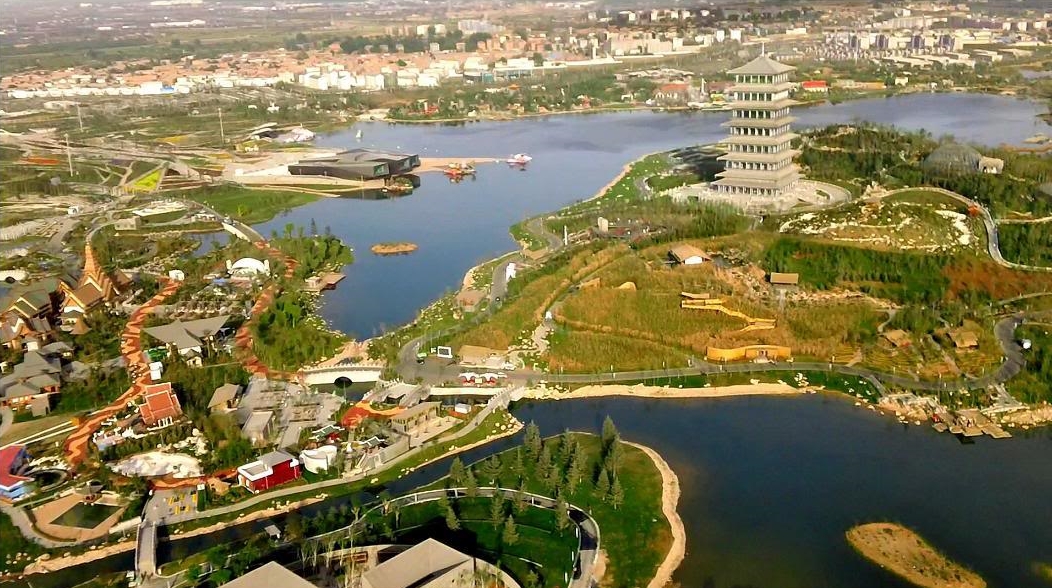
Die „Internationale Gartenbauausstellung Xi’an 2011“ wird in der Zeit vom 28. April bis 22. Oktober 2011 durchgeführt.
Neben den Internationalen Gartenbauausstellungen, die der Kategorie „A1“ entsprechen, und damit den Charakter einer Weltaustellung wie in Shangai haben und so ebenfalls unter die Aufsicht des „Bureau International des Expositions“ (BIE) fallen, gibt es weitere internationale Gartenbauaustellungen, mit einer Kategorie „A2“.
Diese werden nur von der „Association of International Producers of Horticulture”(AIPH) beaufsichtigt und vergeben.(Quelle:http://www.china-entdecken.com/Internationale-Gartenbauausstellung-Xian2011.htm)

 Aerospace
 Military, defense and equipment
 Education and Research
 China
China
 Energy resource
Energy resource
Energy resource
 *Electrical power
 European Union
France
Japan
European Union
France
Japan
 Provence-Alpes-Côte d´Azur
Republic of Korea
Russia
United States
Provence-Alpes-Côte d´Azur
Republic of Korea
Russia
United States
 Important International Organizations
 Science and technology
Technology concepts
Science and technology
Science and technology
Technology concepts

 United Nations
Argentina
Australia
Belgium
Brazil
China
Denmark
Germany
United Nations
Argentina
Australia
Belgium
Brazil
China
Denmark
Germany
 Financial
International Bank for Cooperation
Financial
***Key regulatory authorities
France
India
Indonesia
Internationaler Währungsfonds
Camille Gutt
Internationaler Währungsfonds
Christine Lagarde
Internationaler Währungsfonds
Dominique Strauss-Kahn
Internationaler Währungsfonds
Horst Köhler
Internationaler Währungsfonds
Ivar Rooth
Internationaler Währungsfonds
Jacques de Larosière
Internationaler Währungsfonds
Johan Witteveen
Internationaler Währungsfonds
Michel Camdessus
Internationaler Währungsfonds
Per Jacobsson
Internationaler Währungsfonds
Pierre-Paul Schweitzer
Internationaler Währungsfonds
Rodrigo Rato
Internationaler Währungsfonds
Kristalina Georgiewa
Italy
Japan
Canada
Malaysia
Mexico
Netherlands
Nigeria
Norwegen
Austria
Poland
Republic of Korea
Russia
Saudi Arabia
Sweden
Switzerland
Spain
South Africa
Venezuela
United States
United Kingdom
Financial
International Bank for Cooperation
Financial
***Key regulatory authorities
France
India
Indonesia
Internationaler Währungsfonds
Camille Gutt
Internationaler Währungsfonds
Christine Lagarde
Internationaler Währungsfonds
Dominique Strauss-Kahn
Internationaler Währungsfonds
Horst Köhler
Internationaler Währungsfonds
Ivar Rooth
Internationaler Währungsfonds
Jacques de Larosière
Internationaler Währungsfonds
Johan Witteveen
Internationaler Währungsfonds
Michel Camdessus
Internationaler Währungsfonds
Per Jacobsson
Internationaler Währungsfonds
Pierre-Paul Schweitzer
Internationaler Währungsfonds
Rodrigo Rato
Internationaler Währungsfonds
Kristalina Georgiewa
Italy
Japan
Canada
Malaysia
Mexico
Netherlands
Nigeria
Norwegen
Austria
Poland
Republic of Korea
Russia
Saudi Arabia
Sweden
Switzerland
Spain
South Africa
Venezuela
United States
United Kingdom
 Washington, D.C.
Important International Organizations
Washington, D.C.
Important International Organizations
 Economy and trade
Economic and political research
Economy and trade
Economic and political research

国际货币基金组织(法语:Fonds Monétaire International,缩写:FMI;英语:International Monetary Fund,缩写:IMF)于1945年12月27日成立,与世界银行同为世界两大金融机构,由189个国家组成,致力于促进全球货币合作,确保金融稳定,促进国际贸易。职责是监察货币汇率和各国贸易情况、提供技术和资金协助[3][4][5],确保全球金融制度运作正常;其总部设置于美国华盛顿特区。
Der Internationale Währungsfonds (IWF; englisch International Monetary Fund, IMF; auch bekannt als Weltwährungsfonds) ist eine rechtlich, organisatorisch und finanziell selbständige Sonderorganisation der Vereinten Nationen mit Sitz in Washington, D.C., USA.
Hauptaufgabe des IWF ist die Vergabe von Krediten an Länder ohne ausreichende Währungsreserven, die in Zahlungsbilanzschwierigkeiten geraten sind. Weitere Tätigkeitsfelder sind die Förderung der internationalen Zusammenarbeit in der Währungspolitik, Ausweitung des Welthandels, Stabilisierung von Wechselkursen, Überwachung der Geldpolitik und technische Hilfe.
Der IWF und seine Schwesterorganisation Weltbank haben ihren Ursprung im 1944 geschaffenen Bretton-Woods-System fester Wechselkurse, das auf der damals mit Gold gedeckten Leitwährung US-Dollar beruhte. Sie waren als internationale Steuerungsinstrumente geplant, mit denen eine Wiederholung der Währungsturbulenzen der Zwischenkriegszeit und der Fehler des Goldstandards aus den 1920er Jahren verhindert werden sollte. Beide Organisationen werden daher als Bretton-Woods-Institution bezeichnet. Die Kreditvergabe des IWF ist an wirtschaftspolitische Auflagen geknüpft, die die Rückzahlung der Kredite sichern sollen. Anders als der IWF vergibt die Weltbank auch Kredite für spezielle Projekte.
Der IWF hat zurzeit (Stand April 2020) 189 Mitgliedstaaten, deren Stimmrecht sich an ihrem Kapitalanteil orientiert. Die Mitgliedstaaten mit den größten Stimmanteilen sind: USA 16,51 %, Japan 6,15 %, China 6,08 %, Deutschland 5,32 %, Frankreich 4,03 %, Vereinigtes Königreich 4,03 % und Italien 3,02 %. Von den deutschsprachigen Ländern haben außerdem Luxemburg 0,29 %, Österreich 0,81 % und die Schweiz 1,18 % Stimmenanteile.[4]
Beschlüsse müssen im IWF mit einer Mehrheit von 85 % getroffen werden. Dadurch verfügen jeweils die USA allein und die EU-Staaten gemeinsam de facto über eine Sperrminorität.[5]
国際通貨基金(こくさいつうかききん、英語: International Monetary Fund, IMF)は、国際金融、並びに、為替相場の安定化を目的として設立された国際連合(国連)の専門機関である。本部は、アメリカ合衆国の首都ワシントンD.C.にある。2018年現在、加盟国は189か国である[2]。
加盟国の経常収支が著しく悪化した場合などに融資などを実施することで、国際貿易の促進、加盟国の高水準の雇用と国民所得の増大、為替の安定、などに寄与する事を目的としている。 また、為替相場の安定のために、経常収支が悪化した国への融資や、為替相場と各国の為替政策の監視などを行っている。各国の中央銀行の取りまとめ役のような役割を負う。世界銀行と共に、国際金融秩序の根幹を成す。
The International Monetary Fund (IMF) is an international organization headquartered in Washington, D.C., consisting of 189 countries working to foster global monetary cooperation, secure financial stability, facilitate international trade, promote high employment and sustainable economic growth, and reduce poverty around the world while periodically depending on the World Bank for its resources.[1] Formed in 1944 at the Bretton Woods Conference primarily by the ideas of Harry Dexter White and John Maynard Keynes,[6] it came into formal existence in 1945 with 29 member countries and the goal of reconstructing the international payment system. It now plays a central role in the management of balance of payments difficulties and international financial crises.[7] Countries contribute funds to a pool through a quota system from which countries experiencing balance of payments problems can borrow money. As of 2016, the fund had XDR 477 billion (about US$ 667 billion).[8]
Through the fund and other activities such as the gathering of statistics and analysis, surveillance of its members' economies, and the demand for particular policies,[9] the IMF works to improve the economies of its member countries.[10] The organization's objectives stated in the Articles of Agreement are:[11] to promote international monetary co-operation, international trade, high employment, exchange-rate stability, sustainable economic growth, and making resources available to member countries in financial difficulty.[12] IMF funds come from two major sources: quotas and loans. Quotas, which are pooled funds of member nations, generate most IMF funds. The size of a member's quota depends on its economic and financial importance in the world. Nations with larger economic importance have larger quotas. The quotas are increased periodically as a means of boosting the IMF's resources in the form of special drawing rights.[13]
The current Managing Director (MD) and Chairwoman of the IMF is Bulgarian Economist Kristalina Georgieva, who has held the post since October 1, 2019.[14]
Gita Gopinath was appointed as Chief Economist of IMF from 1 October 2018. She received her PhD in economics from Princeton University. Prior to her IMF appointment she was economic adviser to the Chief Minister of Kerala, India.[15]
Le Fonds monétaire international (FMI) est une institution internationale regroupant 189 pays, dont le but est de promouvoir la coopération monétaire internationale, garantir la stabilité financière, faciliter les échanges internationaux, contribuer à un niveau élevé d’emploi, à la stabilité économique et faire reculer la pauvreté2.
Le FMI a ainsi pour fonction d'assurer la stabilité du système monétaire international (SMI) et la gestion des crises monétaires et financières. Pour cela, il fournit des crédits aux pays qui connaissent des difficultés financières mettant en péril l'organisation gouvernementale du pays, la stabilité de son système financier (banques, marchés financiers) ou les flux d'échanges de commerce international avec les autres pays.
Lors d'une crise financière, pour éviter qu’un pays ne fasse « défaut » (c’est-à-dire que ce pays ne puisse plus rembourser ses créanciers, voire ne plus payer ses dépenses courantes), le FMI lui prête de l’argent le temps que la confiance des agents économiques revienne. Le FMI conditionne l’obtention de prêts à la mise en place de certaines réformes économiques visant en principe à réguler la gestion des finances publiques (ingérence financière) et à établir une croissance économique équilibrée à long terme.
L'institution a été créée le 27 décembre 1945 et devait à l'origine garantir la stabilité du système monétaire international, dont l'écroulement après le krach de 1929 avait eu des effets catastrophiques sur l'économie mondiale. Après 1976 et la disparition d’un système de change fixe, le FMI perd l'essentiel de sa raison d'être et hérite d'un nouveau rôle face aux problèmes d'endettement des pays en développement et à certaines crises financières.
Il Fondo Monetario Internazionale (in sigla FMI; in inglese International Monetary Fund, IMF) è un'organizzazione internazionale pubblica[1] a carattere universale composta dai governi nazionali di 189 Paesi e insieme al gruppo della Banca Mondiale fa parte delle organizzazioni internazionali dette di Bretton Woods, dal nome della località in cui si tenne la famosa conferenza che ne sancì la creazione. L'FMI è stato formalmente istituito il 27 dicembre 1945, quando i primi 44 stati firmarono l'accordo istitutivo e l'organizzazione nacque nel maggio del 1946. Attualmente gli Stati membri sono 189.
El Fondo Monetario Internacional o FMI (en inglés: International Monetary Fund, IMF) es una organización financiera internacional con sede en Washington D. C., Estados Unidos. Nace como idea el 22 de julio de 1944 en los acuerdos de Bretton Woods, una reunión de 730 delegados de 44 países aliados de la Segunda Guerra Mundial, entrando en vigor oficialmente el 27 de diciembre de 1945. Después de 1976 y de la desaparición del sistema de cambio fijo, el FMI toma un papel preponderante ante países en desarrollo y crisis financieras internacionales. En 2010, durante la 14ª revisión general de cuotas los fondos financieros disponibles del FMI se situaban en 755 700 millones de U.S.dólares.1
A través del fondo y otras actividades como la recolección de estadísticas y datos, monitoreo de las actividades económicas de los países miembros, y la demanda de políticas concretas,2 el FMI trabaja para mejorar la economía de sus países miembros.3 Los objetivos proclamados por la organización son:4 promover la cooperación monetaria internacional, comercio internacional, reducir la desocupación, conseguir tasas de cambio sustentables, lograr crecimiento económico, y otorgar razonablemente recursos a países miembros en dificultades económicas.5 El FMI se financia con dos grandes herramientas: cuotas y préstamo. Las cuotas son aportes realizados por los países miembros al fondo común de la organización. Las mayores economías hacen aportes proporcionales mayores que las economías más pequeñas. Además, las obligaciones de cuotas aumentan periódicamente como forma de aumentar los recursos de los que puede disponer el FMI en forma de derechos especiales de giro.6
Esta organización ha sido fuertemente criticada en las últimas décadas. Las principales críticas se centran en el papel dominante que tienen los países desarrollados dentro del organismo, lo que causa que el FMI oriente sus políticas globales al fomento de un capitalismo que suele denominarse neoliberal,7 a causa de haber impuesto a los países en vías de desarrollo —y más recientemente a algunos países europeos— sus programas económicos basados en el Consenso de Washington que consisten en la reducción del déficit y del gasto público y consecuentemente de servicios y prestaciones sociales, con fundamento en las políticas y teorías monetaristas y en el principio de libre mercado,8 que deben llevarse a cabo como condiciones de los préstamos realizados y que según sus críticos ha provocado un aumento de la brecha entre ricos y pobres y un empeoramiento de los servicios públicos, como la sanidad.9 También está acusada por haber apoyado y financiado a las dictaduras militares en Latinoamérica y Africa,10 y se le han criticado puntualmente sus políticas sobre medio ambiente11 y alimentación.12
Международный валютный фонд, (МВФ) (англ. International Monetary Fund, IMF) — специализированное учреждение (валютный фонд) Организации объединённых наций (ООН) с главным офисом в городе Вашингтон, США.
189 стран являются членами МВФ, в его структурах работают 2500 человек из 133 государств мира. МВФ предоставляет кратко- и среднесрочные кредиты при дефиците платёжного баланса государства. Предоставление кредитов обычно сопровождается набором определённых условий и рекомендаций. Политика и рекомендации МВФ в отношении развивающихся стран неоднократно подвергались критике, суть которой состоит в том, что выполнение рекомендаций и условий, в итоге, направлено не на повышение самостоятельности, стабильности и развитие национальной экономики государства, а лишь на привязывание её к международным финансовым потокам.
В отличие от Всемирного банка, деятельность МВФ сосредоточена на относительно кратковременных макроэкономических кризисах. Всемирный банк предоставляет кредиты только бедным странам, МВФ может давать кредиты любой из своих стран-членов, которая испытывает нехватку иностранной валюты для покрытия краткосрочных финансовых обязательств.
 Geography
 *U.S. foreign territories
Australia
China
Germany
France
ITU World Championship Series
Japan
Canada
Kasachstan
Mexico
New Zealand
Netherlands
Austria
Portugal
Republic of Korea
Sweden
Switzerland
Spain
South Africa
Hungary
United Arab Emirates
United States
United Kingdom
United Kingdom
Bermuda
*U.S. foreign territories
Australia
China
Germany
France
ITU World Championship Series
Japan
Canada
Kasachstan
Mexico
New Zealand
Netherlands
Austria
Portugal
Republic of Korea
Sweden
Switzerland
Spain
South Africa
Hungary
United Arab Emirates
United States
United Kingdom
United Kingdom
Bermuda
 Anhui Sheng-AH
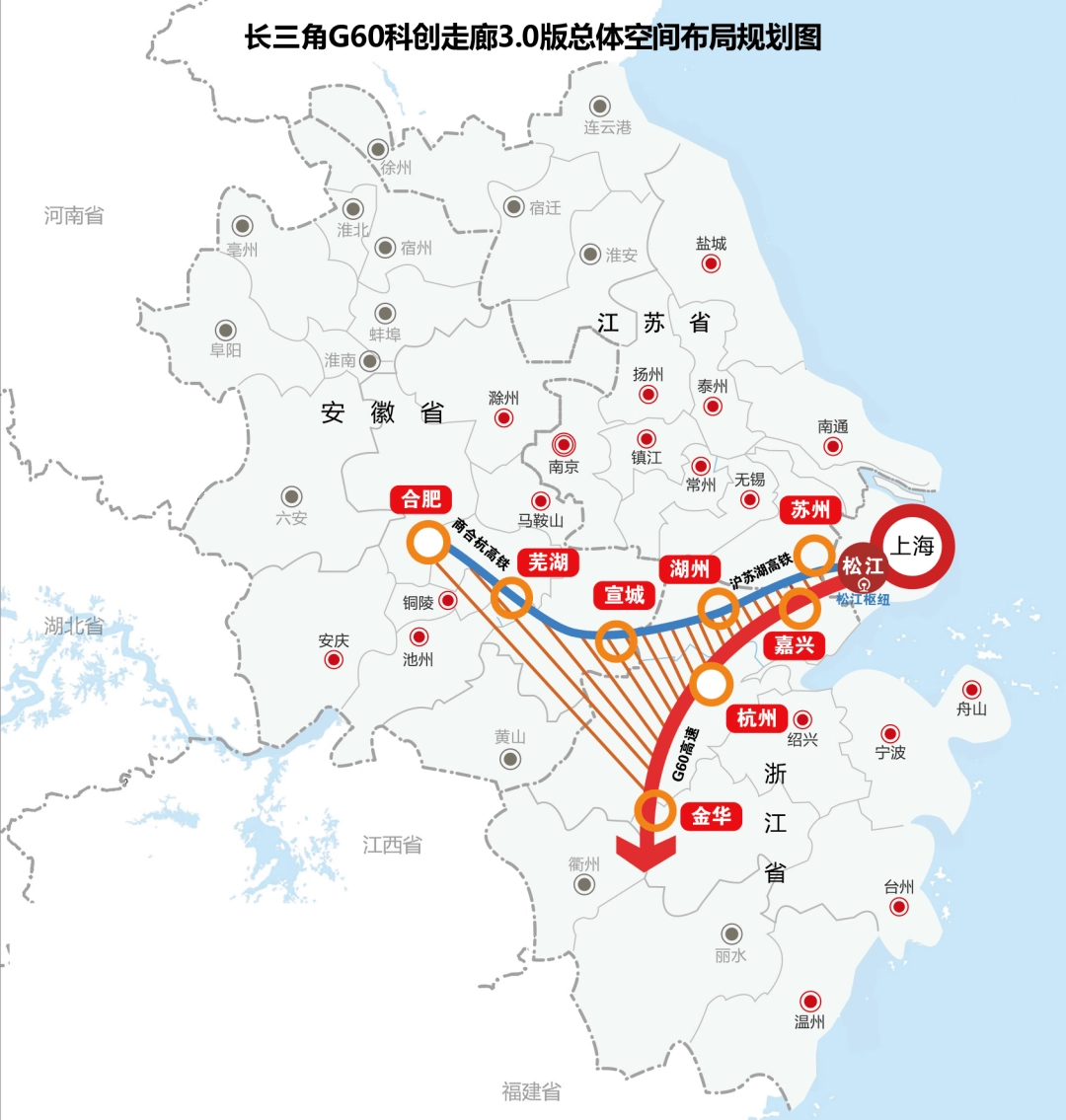
Yangtze River Delta G60 Science and Technology Innovation Corridor
Jiangsu Sheng-JS
Shanghai Shi-SH
Zhejiang Sheng-ZJ
Anhui Sheng-AH
Yangtze River Delta G60 Science and Technology Innovation Corridor
Jiangsu Sheng-JS
Shanghai Shi-SH
Zhejiang Sheng-ZJ
Anhui Sheng-AH
Chongqing Shi-CQ
Guizhou Sheng-GZ
Hubei Sheng-HB
Hunan Sheng-HN
Jiangsu Sheng-JS
Jiangxi Sheng-JX
Shanghai Shi-SH
Sichuan Sheng-SC
Yunnan Sheng-YN
Zhejiang Sheng-ZJ
