
Deutsch-Chinesische Enzyklopädie, 德汉百科
 China
China
 Science and technology
Beijing Shi-BJ
Ministry of Education
China
National Key Laboratory of Science and Technology on Micro/Nano Fabrication
State key laboratory
State Key Joint Laboratory of Environmental Simulation and Pollution Control
State Key Laboratory of Advanced Optical Communication Systems and Networks
State Key Laboratory of Biomembrane and Membrane Biotechnology
State Key Laboratory of Chemical Engineering
State Key Laboratory of Nuclear Physics and Technology
State Key Laboratory of Protein Engineering and Plant Genetic Engineering
Science and technology
Beijing Shi-BJ
Ministry of Education
China
National Key Laboratory of Science and Technology on Micro/Nano Fabrication
State key laboratory
State Key Joint Laboratory of Environmental Simulation and Pollution Control
State Key Laboratory of Advanced Optical Communication Systems and Networks
State Key Laboratory of Biomembrane and Membrane Biotechnology
State Key Laboratory of Chemical Engineering
State Key Laboratory of Nuclear Physics and Technology
State Key Laboratory of Protein Engineering and Plant Genetic Engineering
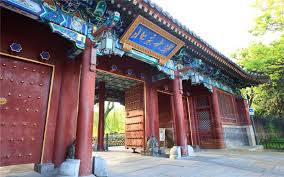
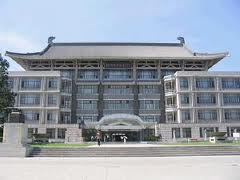
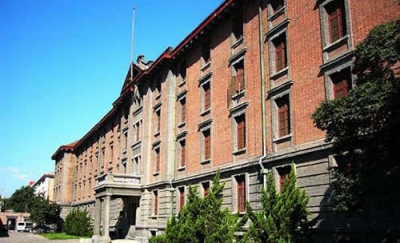
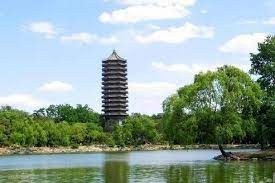
Peking University (Chinese: 北京大学, informally Beida 北大, PKU; lit. "Beijing University"), is a major research university in Beijing, China, and a member of the elite C9 League of Chinese universities.[5] Peking University was established as the Imperial University of Peking in 1898 when it received its first royal charter by the Guangxu Emperor. A successor of the older Guozijian Imperial College,[6] the university's romanized name 'Peking' retains the older transliteration of 'Beijing' that has been superseded in most other contexts.[7] Perennially ranked as one of the top academic institutions in China and the world,[8][9] as of 2021, PKU is ranked 2nd in the Asia-Pacific and emerging countries, and 23rd in the world by Times Higher Education.[10][11][12]
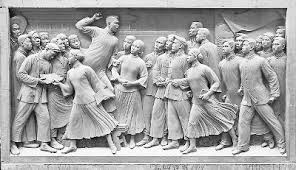
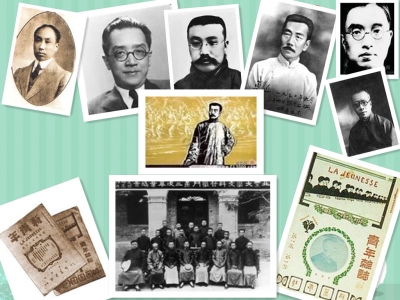
Throughout its history, PKU has had an important role "at the center of major intellectual movements" in China.[13] Abolished of its status as a royal institution after the fall of the Qing dynasty and the Xinhai Revolution; from the early 1920s, the university became a center for China's emerging, progressive, and republican movements. Faculty and students held important roles in originating the New Culture Movement, the May Fourth Movement protests, and other significant cultural and sociopolitical events, to the extent that the university's history has been closely tied to that of modern China. Peking University has educated and hosted many prominent modern Chinese figures, including Mao Zedong, Lu Xun, Gu Hongming, Hu Shih, Mao Dun, Li Dazhao, Chen Duxiu, and current Premier Li Keqiang.[14]
Peking University's library is one of the largest libraries in the world, containing over 8 million volumes.[15] The university also operates the PKU Hall, a professional performing arts center, and the Arthur M. Sackler Museum of Arts and Archaeology. PKU is also renowned for its campus grounds and the beauty of its traditional Chinese architecture.[16][17][18][19] Additionally, it hosts one of the only undergraduate liberal arts colleges in Asia, and is a Class A institution under the Chinese Double First Class University program.[20] Peking University's alumni and staff include 76 members of the Chinese Academy of Sciences, 19 members of the Chinese Academy of Engineering and 25 members of the World Academy of Sciences.[21]
L'université de Pékin (chinois simplifié : 北京大学 ; chinois traditionnel : 北京大學; pinyin : Běijīng Dàxué), est une université chinoise, considérée comme une des plus prestigieuses de la République populaire de Chine, connue dans le langage courant sous le nom de Beida (北大, Běidà), a été fondée à Pékin en 1898.
L'Università di Pechino (Běijīng Dàxué北京大學T, 北京大学S), comunemente conosciuta in cinese come Beida (北大), venne fondata con il nome di Università Imperiale della capitale nel 1898 in sostituzione dell'antica Guozijian (guózǐjiàn, 国子监). È un'importante università di ricerca della capitale cinese ed è la prima moderna e nazionale della Cina.
La Universidad de Pekín1 (abbreviada PKU, conocida coloquialmente en Chino Mandarín como Beida) es una universidad enfocada a la investigación localizada en Pekín, China y es miembro de la liga C9 de universidades de elite Chinas.2 Es la primera institución de educación moderna establecida en China y fue fundada durante los finales de la Dinastía Qing en 1898 con el nombre de Universidad Imperial de Pekín siendo la institución sucesora del Guozijian (Colegio imperial).3
Es una de las universidades más prestigiosas de la República Popular de China y de toda Asia, con un espíritu humanista de la investigación y la educación académica. Se disputa constantemente el sitial de mejor universidad de China con la Universidad de Tsinghua 4 y el 2019 fue nombrada la universidad número 22 de todo el mundo.5 Se encuentra en Pekín, la capital de China, cerca del Palacio de Verano, el campus de la universidad es llamado Yan Yuan, posee una extensión de 3 millones de metros cuadrados y es considerado uno de los más bellos de todo el continente asiático. 6 Actualmente la universidad cuenta con 30.000 estudiantes entre estudiantes de título de grado o licenciatura universitaria, estudiantes de postgrado, doctorado y estudiantes visitantes e internacionales. Todos ellos acuden a las 31 escuelas, 5 facultades y 271 centros de investigación que conforman la universidad, además mantienen relaciones con 200 instituciones internacionales en materia de colaboración e intercambio académico un aspecto importante para la educación china.
A lo largo de la historia, la Universidad de Pekín ha jugado un importante rol como centro de movimientos intelectuales de China. En la década de 1920, la universidad se convirtió en epicentro de los movimientos progresistas del país. Estudiantes, docentes y administrativos tuvieron importantes roles en los orígenes del Movimiento del Cuatro de Mayo, así como en otros eventos sociopolíticos a lo largo del siglo XX. Por estos motivos la historia de esta universidad esta profundamente asociada con la historia de la China moderna. La universidad de Pekín ha educado y acogido en su campus a muchas de las más prominentes personalidades chinas, incluyendo a Mao Zedong, Lu Xun, Gu Hongming, Hu Shih, Mao Dun, Li Dazhao, Chen Duxiu, y el actual premier Li Keqiang.
La Universidad de Pekín cuenta con una destacada biblioteca, la cual se fundó en 1902, pocos años después de la puesta en marcha de la universidad y dispone de más de 4.000.000 de volúmenes, con una capacidad de más de 6.500.000 volúmenes. Su colección de rarezas y libros antiguos es una referencia en toda Asia.
Su longevidad, de 114 años, y su rol predominante en la educación y en la política chinas durante su desarrollo dentro de las primeras décadas del siglo XX han convertido, entre otras razones, a esta universidad en una de las instituciones de educación superior más prestigiosas y exigentes de la República Popular China.
Пеки́нский университе́т (кит. трад. 北京大學, упр. 北京大学, пиньинь Běijīng Dàxué, палл. Бэйцзин дасюэ), известный также под сокращённым названием «Бэйда» 北大 — основанный в 1898 году, крупнейший университет Китая, один из старейших вузов страны.
 Transport and traffic
 Architecture
Beijing Shi-BJ
China
Architecture
Beijing Shi-BJ
China


 Aerospace
 Busiest airports by passenger traffic
Aerospace
Busiest airports by cargo traffic
2022 Winter Olympics
Busiest airports by passenger traffic
Aerospace
Busiest airports by cargo traffic
2022 Winter Olympics

 History

Penglai-Pavillon. Der Penglai-Pavillon befindet sich auf dem Kaiya-Berg und wurde im Jahr 1061 in der Nördlichen Song-Dynastie erbaut. Drei goldfarbige chinesische Schriftzeichen „Peng Lai Ge“an der Stirnwand der Haupthalle über den Namen des Pavillons. Sie sind die eigenhändigen Handschriften von Tie Bao, einem bekannten Kalligraphen aus der Qing-Dynastie. Liu Xiao, ein Literant aus der Qing-Dynastie schilderte den Pavillon in seinem Reisebuch:
Der Penglai-Pavillon ist sehr prächtig gebaut. Westlich des Pavillons sieht man in der Richtung der Stadt zehntausend Familien im Nieselregen und östlich des Pavillons grenzenlose Wellen. Die weißen Changshan-Inselgruppen in der Ferne sind einer Kette von glänzenden Meeresperlen ähnlich. In der Nähe des Pavillons branden weiße Wellen gegen den Himmel. Der Pavillon wurde in der Song-, Ming- und Qing-Dynastie renoviert und ausgebaut. Neben ihm stehen heute noch fünf Bauwerke: die Lüzu-Halle, die Sanqing-Halle, der Tianhou-Palast, der Longwang-Palast und das Mituo-Kloster. Sie bilden eine sehenswürdiges Viertel mit einer Fläche von 32 800 qm. Südöstlich dem Penglai-Pavillion befindet sich noch eine Guanlan-Pavillon, wo der beste Platz ist, den Sonnenaufgang zu beobachten.(Quelle: www.cri.com.cn/germany/2001/Jul/37186.htm)

 Financial
 Insurance
 Economy and trade

 Geography
China
Guangdong Sheng-GD
Guangxi Zhuangzu Zizhiqu-GX
Guizhou Sheng-GZ
Hongkong Tebiexingzhengqu-HK
Macau Tebiexingzhengqu-MO
Yunnan Sheng-YN
Geography
China
Guangdong Sheng-GD
Guangxi Zhuangzu Zizhiqu-GX
Guizhou Sheng-GZ
Hongkong Tebiexingzhengqu-HK
Macau Tebiexingzhengqu-MO
Yunnan Sheng-YN

珠江,旧称粤江,是中国南方的一条河流,原指广州到入海口约96公里长的一段河道,因流经广州市区的海珠石而得名,后成为西江、北江、东江和珠江三角洲诸河等复合水系的总称,地跨中国云南、贵州、广西、广东、湖南、江西六省区及越南部分地区,干流长度2214公里,为中国境内第四长河流,按径流量为中国第二大河流。
Der Perlfluss (auch Perlstrom, chinesisch 珠江, Pinyin Zhū Jiāng, Jyutping Zyu1 Gong1) ist ein 177 Kilometer langes Ästuar in Südchina in der Provinz Guangdong; der Name stammt von der früher im Flussbett gelegenen Insel „Seeperle“ (海珠, Hǎizhū, Jyutping Hoi2zyu1). Historisch ist der Fluss auch als „Yue Jiang“ oder „Yuejiang“ bekannt (粵江 / 粤江, Yuè Jiāng, Jyutping Jyut6 Gong1 – „Guangdong-Fluss, Kanton-Fluss oder Strom der Yue“).
In seinem oberen Teil, der auch die Metropole Guangzhou durchzieht, begegnen sich die Mündungsdeltas von Nordfluss und Ostfluss. Der untere Teil, die Perlflussmündung (珠江口, Zhūjiāng Kǒu, Jyutping Zyu1gong1 Hau2) ist eine bis zu 30 Kilometer breite Bucht des Südchinesischen Meeres, deren Westseite vom großen Delta des Westflusses flankiert wird. Die drei Flussdeltas bilden ein gemeinsames, vielarmiges Geflecht von Wasserläufen und Schären, das Perlflussdelta.

珠江三角洲(英语:Pearl River Delta),由珠江水系的西江、北江和东江及其支流潭江、绥江、增江带来的泥沙堆积而成,是中国南部最大的冲积平原,海拔多在50米以下,地势平缓,有零星小山丘分布。狭义的珠江三角洲由西江、北江三角洲和东江三角洲两部分组成,北至西江、北江汇合点的佛山三水河口,东至东江下游的东莞石龙,南至江门新会崖门,面积近6,000平方公里。广义的珠江三角洲范围则包括珠江干流及其所有支流,西起(西江)肇庆羚羊峡东口及(潭江)新会司前,北起(北江)三水黄塘及宝月、(流溪河)广州及东莞石碣、(绥江)肇庆黄岗,东起(东江)惠州园洲、(增江)广州增城沙塘 ,面积为8,601平方公里。现代珠江三角洲在中国四大河流三角洲中,其流域面积排名第2,仅次于长江三角洲;在亚洲大河三角洲中排名第6,在世界排名第15。
Die Metropolregion Perlflussdelta (chinesisch 珠江三角洲, Pinyin zhūjiāngsānjiǎozhōu, englisch Pearl River Delta, kurz PRD) liegt an der Mündung des Perlflusses in der Bucht Zhujiang Kou (珠江口) am Südchinesischen Meer und umfasst Teile der chinesischen Provinz Guangdong sowie die Sonderverwaltungszonen Hongkong und Macau.[4]
In nur wenigen Jahrzehnten entwickelte sich das Perlflussdelta von einem eher ländlichen Gebiet zur wirtschaftlich stärksten Region Chinas und beinhaltet mit Guangzhou den aktuell größten Ballungsraum der Erde.[5][6][7][8] Weitere bedeutende Städte im Perlflussdelta sind, nach Einwohnerzahl absteigend sortiert, Shenzhen, Dongguan, Foshan, Hongkong, Huizhou, Zhaoqing, Jiangmen, Zhongshan, Zhuhai und Macau. Diese wirtschaftlich bedeutende Metropolregion am Perlflussdelta mit den vorher genannten elf Städten inklusive Guangzhou wird offiziell auch als Guangdong–Hong Kong–Macao Greater Bay Area (粵港澳大灣區 / 粤港澳大湾区), kurz Greater Bay Area (GBA, 大灣區 / 大湾区) bezeichnet.
 Botany

 *China Television
Hongkong Tebiexingzhengqu-HK
Phoenix Television
*China Television
Hongkong Tebiexingzhengqu-HK
Phoenix Television
 Companies
Mainland China,Hong Kong,Macau,Taiwan
Companies
Mainland China,Hong Kong,Macau,Taiwan


