
Deutsch-Chinesische Enzyklopädie, 德汉百科
 巴伐利亚州
巴伐利亚州
 医疗、制药、 康复
 企业
企业

Die Morphosys AG ist ein 1992 gegründetes biopharmazeutisches Unternehmen mit Sitz in Planegg in der Nähe von München. Das Unternehmen verfügt über verschiedene Antikörper-, Protein- und Peptid-Technologien, die es zur Erforschung und Entwicklung sowohl eigener als auch verpartnerter Arzneimittelkandidaten einsetzt. Zur Gesellschaft gehört eine hundertprozentige Tochtergesellschaft in Boston im US-Bundesstaat Massachusetts.
 航空航天
航空航天

 建筑艺术
建筑艺术
 巴伐利亚州
联邦德国
欧洲流行歌曲大赛
2006年世界杯足球赛
欧洲足球锦标赛 2020
巴伐利亚州
联邦德国
欧洲流行歌曲大赛
2006年世界杯足球赛
欧洲足球锦标赛 2020
 欧洲足球锦标赛 2024
 地理
地理
地理
地理
 *全球最宜居城市
 历史
公元 1500 - 2000
历史
公元 1000 - 1500
历史
公元 2000 - 2100
历史
公元 1500 - 2000
历史
公元 1000 - 1500
历史
公元 2000 - 2100
 国际城市
***全球城市经济竞争力
夏季奥林匹克运动会
1972夏季奥林匹克运动会
国际城市
***全球城市经济竞争力
夏季奥林匹克运动会
1972夏季奥林匹克运动会
 假期和旅游
假期和旅游
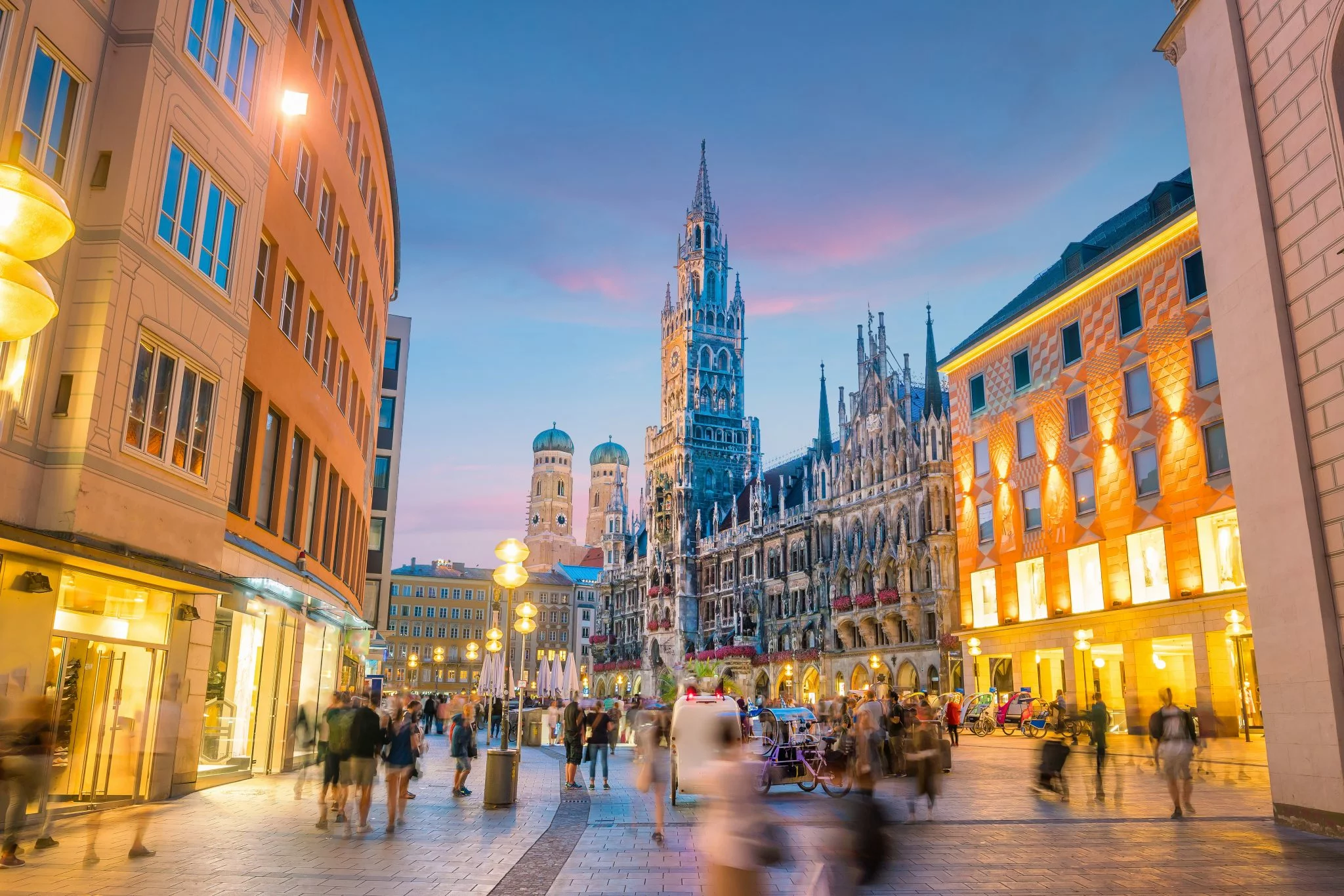

München (hochdeutsch  [ˈmʏnçn̩] oder [ˈmʏnçən̩];[4] bairisch [ˈmɪŋ(:)ɐ]) ist die Landeshauptstadt des Freistaates Bayern. Sie ist mit rund 1,5 Millionen Einwohnern die einwohnerstärkste Stadt Bayerns und (nach Berlin und Hamburg) die nach Einwohnern drittgrößte Gemeinde Deutschlands sowie die viertgrößte Stadt im deutschsprachigen Raum und zwölftgrößte der Europäischen Union. Im Ballungsraum München leben mehr als 2,9 Millionen Menschen,[5][6] die flächengrößere europäische Metropolregion München umfasst rund 5,7 Millionen Einwohner.
Die Landeshauptstadt ist eine kreisfreie Stadt und bayerische Metropole,[7] zudem Verwaltungssitz des die Stadt umgebenden gleichnamigen Landkreises mit dem Landratsamt München als Verwaltung, des Bezirks Oberbayern und des Regierungsbezirks Oberbayern.
München wird zu den Weltstädten gezählt.[8] Die Metropole ist eine der wirtschaftlich erfolgreichsten und am schnellsten wachsenden Europas. Sie ist Sitz zahlreicher Konzerne, darunter fünf DAX-Unternehmen (Allianz, BMW, Linde, Munich Re, Siemens). Hier befindet sich die einzige Börse Bayerns. In der Städteplatzierung des Beratungsunternehmens Mercer belegte München im Jahr 2018 unter 231 Großstädten weltweit den dritten Platz nach Lebensqualität.[9] Laut dem Magazin Monocle war es 2018 sogar die lebenswerteste Stadt der Welt.[10] Andererseits wird die Lebensqualität zunehmend durch Agglomerationsnachteile, wie Verkehrs- und Umweltbelastung sowie sehr hohe Wohneigentumspreise und Mieten[11][12] eingeschränkt, weshalb auch die Wohnfläche pro Einwohner weit unter dem Bundesdurchschnitt liegt.[13] München gilt als sicherste Kommune unter den deutschen Großstädten über 200.000 Einwohnern hinsichtlich der Kriminalitätsrate aller Straftaten.[14]
München wurde 1158 erstmals urkundlich erwähnt.[15] Die Stadt wurde 1255 bayerischer Herzogssitz, war von 1328 bis 1347 kaiserliche Residenzstadt und wurde 1506 alleinige Hauptstadt Bayerns. München ist Sitz zahlreicher nationaler und internationaler Behörden sowie wichtiger Universitäten und Hochschulen, bedeutender Museen und Theater. Durch eine große Anzahl sehenswerter Bauten samt geschützten Baudenkmälern und Ensembles, internationaler Sportveranstaltungen, Messen und Kongresse sowie das weltbekannte Oktoberfest ist München ein Anziehungspunkt für den internationalen Tourismus.
ミュンヘン(ドイツ語: München, ドイツ語発音: [ˈmʏnçən] ( 音声ファイル)[2], バイエルン語: Minga)は、イーザル川河畔にありバイエルンアルプスの北側に位置する都市。ドイツの連邦州であるバイエルン州最大の都市であり、同州の州都でもある。
ミュンヘン(標準ドイツ語:München, バイエルン語:Minga〔ミンガ〕、ミュンヘン方言:Münchn〔ミュンヒン〕)という名は僧院という意味で、ドイツ語で僧を表す「メンヒ」に由来する。漢字表記は「民顕」。"che" の部分の無声硬口蓋摩擦音 [ç] の音写を表すために、[hə]/[xə] の発音を示す「ヘ」ではなく、[çə] の発音を示す「ヒェ」を用い、「ミュンヒェン」とも表記される(こちらのほうがドイツ語の発音に近い)。また "Mü" の発音は正確には「ミュ」ではなく、[mʏ] であり、[ʊ] の形に唇を開き、[ɪ] と発音した音に近い。同じ上部ドイツ語に属するアレマン語では、Münche(ミュンヒェ/ミュンキェ)と発音される。英語やフランス語では Munich(英語:ミューニック[mjú:nik]/仏語:ミュニク[mynik])、イタリア語では Monaco(モナコ公国との区別のために、「バイエルンの」という意味の語をつけてMonaco di Baviera, モナコ・ディ・バヴィエラ)と呼ばれる。
ミュンヘンはベルリン、ハンブルクに次いでドイツでは3番目に大きな都市で、市域人口は140万人近くに達する。1972年にミュンヘンオリンピックが開催された。
ミュンヘンの標語は「ミュンヘンはあなたを愛している。」 "München mag Dich" だが、2006年以前は "Weltstadt mit Herz" 「心を持つ国際都市」であった。ミュンヘンの市章には地名の由来となった僧が表現され、黒と金の配色の市旗は神聖ローマ帝国の色で市の公式の色としてルートヴィヒ4世の時代以来使われている。
今日のミュンヘンは金融、出版の中心都市でたびたび、移住者などが住むのに適した場所として上位に位置付けられる。2011年のマーサー・ヒューマン・リソース・コンサルティングによる世界で最も居住に適した都市では4位を獲得した[3]。2010年のライフスタイルマガジンMonocleの調査では5位に付けており、未だにドイツの都市の中では高い位置にある[4]。経済的、社会的革新に関する162の指標の分析を基にした調査では2thinknowイノベーション都市指数で289都市中、世界では15位、ドイツ国内では5位に付けた[5]。
Munich (/ˈmjuːnɪk/; German: München [ˈmʏnçn̩] ( listen);[2] Austro-Bavarian: Minga [ˈmɪŋ(ː)ɐ]) is the capital and the most populated city in the German state of Bavaria, on the banks of the River Isar north of the Bavarian Alps. Munich is also the third largest city in Germany, after Berlin and Hamburg, and the 12th largest city in the European Union, with a population of around 1.5 million.[3] The Munich Metropolitan Region is home to 6 million people.[4]
The city is a major centre of art, technology, finance, publishing, culture, innovation, education, business, and tourism in Germany and Europe and enjoys a very high standard and quality of living, reaching first in Germany and third worldwide according to the 2018 Mercer survey,[5] and being rated the world's most liveable city by the Monocle's Quality of Life Survey 2018.[6] According to the Globalization and World Rankings Research Institute Munich is considered an alpha-world city, as of 2015.[7]
The name of the city is derived from the Old/Middle High German term Munichen, meaning "by the monks". It derives from the monks of the Benedictine order, who ran a monastery at the place that was later to become the Old Town of Munich; hence the monk depicted on the city's coat of arms. Munich was first mentioned in 1158. Catholic Munich strongly resisted the Counter-Reformation and was a political point of divergence during the resulting Thirty Years' War, but remained physically untouched despite an occupation by the Protestant Swedes.[8][citation needed] Once Bavaria was established as a sovereign kingdom in 1806, it became a major European centre of arts, architecture, culture and science. In 1918, during the German Revolution, the ruling house of Wittelsbach, which had governed Bavaria since 1180, was forced to abdicate in Munich and a short-lived socialist republic was declared.
In the 1920s, Munich became home to several political factions, among them the NSDAP. The first attempt of the Nazi movement to take over the German government in 1923 with the Beer Hall Putsch was stopped by the Bavarian police in Munich with gunfire. After the Nazis' rise to power, Munich was declared their "Capital of the Movement". During World War II, Munich was heavily bombed and more than 50% of the entire city and up to 90% of the historic centre were destroyed. After the end of postwar American occupation in 1949, there was a great increase in population and economic power during the years of Wirtschaftswunder, or "economic miracle". Unlike many other German cities which were heavily bombed, Munich restored most of its traditional cityscape and hosted the 1972 Summer Olympics. The 1980s brought strong economic growth, high-tech industries and scientific institutions, and population growth. The city is home to major corporations like BMW, Siemens, MAN, Linde, Allianz and MunichRE.
Munich is home to many universities, museums and theatres. Its numerous architectural attractions, sports events, exhibitions and its annual Oktoberfest attract considerable tourism.[9] Munich is one of the most prosperous and fastest growing cities in Germany. It is a top-ranked destination for migration and expatriate location, despite being the municipality with the highest population density in Germany (4,500 people per km²) . Munich hosts more than 530,000 people of foreign background, making up 37.7% of its population.[10]
Munich (/my.nik/) (München en allemand, prononcé : [ˈmʏnçən] Écouter ; Minga en bavarois) est une ville du sud de l'Allemagne et la capitale du Land de Bavière. Avec 1 548 319 habitants intra-muros au 30 juin 20171 et 2 351 706 habitants dans son aire urbaine2, elle est la troisième ville d'Allemagne par la population après Berlin et Hambourg. La Région métropolitaine de Munich, qui englobe également Augsbourg et Ingolstadt, compte quant à elle plus de cinq millions d'habitants. Traversée par l'Isar, affluent du Danube, elle se situe dans le district de Haute-Bavière, au pied des Alpes bavaroises.
Le nom de la ville provient du vieux haut-allemand Munichen (« par les moines »), en raison de la présence d'un monastère bénédictin à l'emplacement actuel de la vieille ville ; l'héraldique fait par ailleurs figurer un moine. Mentionnée pour la première fois en 1158, Munich devient la ville de résidence des ducs de Bavière en 1255 et de l'empereur romain germanique Louis IV. En 1506, après deux siècles de division, les principautés s'unifient pour former la Bavière. Ville catholique - ce dont témoigne la cathédrale Notre-Dame, principal édifice religieux de la ville -, elle est l'un des foyers de la Contre-Réforme. Devenue capitale de l'électorat de Bavière (1623) puis du royaume de Bavière (1805), elle devient un des principaux centres culturels, artistiques et scientifiques allemands au XIXe siècle, sous l'impulsion du roi Louis II.
Au cours du XXe siècle, Munich connaît un important développement industriel, devenant le premier pôle économique de la République fédérale allemande (1949-1990) puis de l'Allemagne réunifiée. Elle accueille notamment le siège de grandes sociétés comme Siemens, Allianz, BMW, Münchener Rückversicherung, Linde, Airbus Deutschland et HypoVereinsbank. Selon Eurostat, la zone urbaine élargie de la région métropolitaine de Munich est la plus importante d'Allemagne en termes de PIB avec 117,6 milliards d'euros, devant Hambourg, Berlin et Francfort. Avec un PIB par habitant de 53 073 euros, Munich est également l'une des villes les plus riches de l'Union européenne2.
Deuxième destination touristique d'Allemagne après Berlin, Munich est célèbre pour sa traditionnelle fête de la bière, l'Oktoberfest, qui se déroule chaque année de fin septembre à début octobre. Outre la cathédrale, la ville a également un important patrimoine historique, composé notamment du château de Nymphenbourg, de très nombreux musées richement dotés et de deux vastes jardins, le Hofgarten et le Englischer Garten (jardin anglais). Réputée être l'une des villes les plus agréables à vivre au monde, Munich accueille de nombreux évènements internationaux, dont les Jeux olympiques d'été de 1972, qui furent le théâtre d'une sanglante prise d'otages. Enfin, elle est le lieu de résidence de l'un des principaux clubs de football d'Europe, le Bayern Munich, qui joue dans l'Allianz Arena, au nord du centre-ville.
Monaco di Baviera (/ˈmɔnako di baˈvjɛra/; in tedesco: München, /ˈmʏnçən/, ; in bavarese: Minga) è una città extracircondariale della Germania meridionale, capitale (Landeshauptstadt) della Baviera. Situata sulle rive del fiume Isar, dopo Berlino ed Amburgo è la terza città tedesca per numero di abitanti[2], con una popolazione di circa 1 528 849 (30-04-2016) residenti nel comune,[3] 1 808 550 se si considera anche il circondario di Monaco e circa 2,7 milioni nell'area metropolitana.
È la città più importante della Germania meridionale, grazie alle residenze reali, agli immensi parchi, ai suoi musei, alle sue chiese barocche e rococò, al folclore bavarese ancora molto vissuto, alla vicinanza delle Prealpi e delle Alpi e naturalmente grazie alla birra ed alla sua manifestazione più famosa, l'Oktoberfest. Il santo patrono della città è San Benno di Meißen. Nel 2015[4] uno studio della società di consulenza globale Mercer ha classificato Monaco di Baviera al quarto posto tra le 20 città del mondo con la miglior qualità della vita; nel 2016[5] la città mantiene la sua posizione.
Múnich2 (AFI: ['mu.nitʃ], también [ˈmu.nik];3 en alemán, München, [ˈmʏnçən] (?·i); en austro-bávaro: Minga [ˈmɪŋ(ː)ɐ]) es la capital, la mayor y la más importante ciudad del estado federado de Baviera y,4 después de Berlín y Hamburgo, la tercera ciudad de Alemania por número de habitantes. Se encuentra sobre el río Isar, al norte de los Alpes Bávaros.
El lema de la ciudad es München mag Dich (A Múnich le gustas). Antes de 2006 era Weltstadt mit Herz (Ciudad cosmopolita con corazón). Su nombre, München, deriva de Munichen, del alto alemán antiguo, que significa «en el lugar de los monjes». El nombre de la ciudad viene de los monjes benedictinos que fundaron la ciudad; de ahí que en el escudo de la ciudad haya un monje. Los colores oficiales de la ciudad son el negro y el oro, colores del Sacro Imperio Romano Germánico, desde tiempos de Luis IV de Baviera.
El área metropolitana de Múnich incluye algunas localidades colindantes de esta ciudad. Según un estudio de 2009, Múnich es la ciudad con la mejor calidad de vida de Alemania.5
El Múnich moderno es un centro financiero y editorial. En cuanto a innovación social y económica, la ciudad se encuentra en el 15.º lugar entre 289 ciudades según un estudio de 2010, y es la quinta ciudad alemana para el 2thinknow Innovation Cities Index basado en un análisis de 162 indicadores.6
El exónimo en español de la ciudad, que posee la particularidad de contar con una «ch» final, algo ajeno al sistema fonológico español, nace de los exónimos en francés e inglés. Por tanto, la pronunciación del exónimo es, etimológicamente, [ˈmunik], a través de la pronunciación del exónimo en inglés, o ['munitʃ], siguiendo las normas de pronunciación habituales del español. El gentilicio es «muniqués» y su plural, «muniqueses». El Diccionario Panhispánico de Dudas desaconseja la pronunciación con diptongo [ˈmiunik], propia del inglés.7 Múnich fue sede de los Juegos Olímpicos de 1972.
Мю́нхен (нем. München [ˈmʏnçən], бав. Minga, лат. Monacum, Monachium) — город на реке Изаре, на юге Германии, в федеральной земле Бавария. Внерайонный город (нем. kreisfreie Stadt), одновременно являющийся административным центром Баварии и административного округа Верхняя Бавария.
Название города произошло от древневерхненемецкого Munichen — «у монахов».
Население Мюнхена — 1 542 886 человек (31 октября 2016)[6]. Таким образом, он является крупнейшим городом Баварии и третьим, после Берлина и Гамбурга, городом Германии. В Мюнхене находится правительство Баварии, правительство округа Верхняя Бавария, а также правительство мюнхенского городского округа.
Мюнхен славится своими пивоваренными традициями. В городе находятся шесть крупных пивоварен, которые снабжают пивом знаменитый на весь мир Октоберфест — праздник пива, кренделей, жареных курочек и каруселей, ежегодно проводящийся в конце сентября — начале октября на Терезином лугу.
Современный Мюнхен — не только сосредоточие культурных и музейных ценностей, но и крупный промышленный и исследовательский центр. Благодаря знаменитым университетам, одной из крупнейших в Европе Баварской государственной библиотеке, насчитывающей шесть миллионов томов, институтам имени Макса Планка и имени Хайнца Майера-Лейбница, ядерному научно-исследовательскому реактору и многим другим учреждениям Мюнхен удерживает прочные позиции в европейской науке. Также Мюнхен по праву считается ИТ-столицей Германии. Недвижимость в Мюнхене самая дорогая в Германии.[7]
 美食家
美食家
 财政金融
财政金融
 保险
保险
 经济和贸易
经济和贸易
慕尼黑再多年来连续被美国标准及普尔评级公司评定的等级为AAA级 。同样,另一家美国的评级公司(A. M. Best公司)多年来也一直给予本公司以最高的赔偿能力评级“A++(优秀)” 。上述两个公司的优秀评级均分别在1997年8月和12月和1998年及1999年再次得到确认。2006年,慕尼黑再保险公司名列世界500强企业第 74位。
继1997年之后,慕尼黑再保险连续第二次被亚洲最具权威的保险专业杂志---“亚洲保险观察”评为1998年来亚洲最佳再保险公司。慕尼黑再保险为亚洲保险市场提供的强大的承保能力和精深的专业服务 , 尤其是以繁荣当地保险市场为已任,是我们获得此项荣誉的主要原因。(Quelle:http://wiki.mbalib.com)


 圣诞市场
圣诞市场


 政党和政府组织
阿列克西斯·齐普拉斯
安格娜·默克尔
安东尼奥·古特雷斯
潘基文
巴伐利亚州
鲍里斯·约翰逊
戴维·卡梅伦
联邦德国
唐纳德·图斯克
埃马纽埃尔·马克龙
赫尔穆特·施密特
哈维尔·索拉纳
延斯·斯托尔滕贝格
约阿希姆·高克
乔·拜登
科菲·安南
政党和政府组织
阿列克西斯·齐普拉斯
安格娜·默克尔
安东尼奥·古特雷斯
潘基文
巴伐利亚州
鲍里斯·约翰逊
戴维·卡梅伦
联邦德国
唐纳德·图斯克
埃马纽埃尔·马克龙
赫尔穆特·施密特
哈维尔·索拉纳
延斯·斯托尔滕贝格
约阿希姆·高克
乔·拜登
科菲·安南


 军事、国防和装备
尼古拉·萨科齐
奥拉夫·绍尔茨
欧洲安全与合作组织
乌尔苏拉·冯·德·莱恩
瓦勒里·季斯卡·德斯坦
弗拉基米尔·弗拉基米罗维奇·普京
弗拉基米尔·泽连斯基
军事、国防和装备
尼古拉·萨科齐
奥拉夫·绍尔茨
欧洲安全与合作组织
乌尔苏拉·冯·德·莱恩
瓦勒里·季斯卡·德斯坦
弗拉基米尔·弗拉基米罗维奇·普京
弗拉基米尔·泽连斯基

慕尼黑安全会议(英語:Munich Security Conference, MSC)自1963年以来召开至今,是有关国际安全政策的年度会议。该会议以前的名称是防御安全会议(德語:Wehrkundetagung)和慕尼黑安全政策会议(德語:Münchner Konferenz für Sicherheitspolitik)。[1] 它是国际上同类会议中规模最大的聚会。
在过去的四十年中,慕尼黑安全会议已成为国际安全政策决策者交换意见的最为重要的独立论坛。每年都有来自70多个国家的约350位高层人士参加会议,就当前和未来的安全挑战展开激烈的辩论。 与会者包括国家、政府和国际组织首脑,部長,国会议员以及武装部队、科学界、公民社团、商界和媒体的高层代表。
La Conférence de Munich sur la sécurité (allemand: Münchner Sicherheitskonferenz; anciennement connue sous le nom de Wehrkundetagung ou Forum de Munich sur les politiques de défense) est un forum annuel consacré aux questions de sécurité internationale. Il se tient à l'hôtel Bayerischer Hof à Munich (Allemagne).
Le Forum est fondé en 1963 par l'éditeur allemand Ewald-Heinrich von Kleist-Schmenzin sous le nom de Wehrkundetagung (la conférence sur le savoir de la défense)1.
De 1999 à 2008, Horst Teltschik dirige la conférence, suivi par l'ambassadeur Wolfgang Ischinger et, à partir de 2022, par l'ambassadeur Christoph Heusgen.
Cette plate-forme de dialogue permet à des ministres, députés, hauts responsables militaires, scientifiques et représentants des médias d'avoir des échanges informels sur les questions de politique étrangère et de sécurité à laquelle le monde est confronté. Chaque année, les invités des pays membres de l'OTAN, de l'Union européenne et des pays du monde entier débattent en profondeur de leurs positions sur les relations transatlantiques (en) comme sur la sécurité en Europe et dans le monde2.
La 58e conférence sur la sécurité de Munich s'est tenue du 18 au 20 février 2022 à l'hôtel Bayerischer Hof. En raison de la pandémie COVID-19, la conférence a été organisée avec des mesures d'hygiène strictes. Le nombre de participants a notamment été fortement réduit. Parmi les personnes présentes figuraient Olaf Scholz, Volodymyr Zelensky, Kamala Harris, António Guterres et Ursula von der Leyen3. Quelques jours avant le début de l'invasion russe de l'Ukraine, le conflit naissant a dominé de nombreuses discussions lors de la conférence. En outre, un large éventail d'événements ont mis en lumière différents conflits régionaux et ont abordé, entre autres, les domaines de la sécurité humaine; des thèmes tels que la santé mondiale, l'insécurité alimentaire et une perspective de genre dans la politique de sécurité ont été traités.4 À la fin de la manifestation, Wolfgang Ischinger a transmis la présidence de la Conférence de Munich sur la sécurité à son successeur, l'ambassadeur Christoph Heusgen5.
La Conferencia de Seguridad de Múnich (MSC, en inglés: Munich Security Conference, en alemán: Münchner Sicherheitskonferenz) es una conferencia anual sobre política de seguridad internacional que ha tenido lugar en la ciudad alemana de Múnich desde 1963. Su objetivo es debatir los temas de actualidad de la política exterior, de seguridad y de defensa1. Es la reunión de este tipo más grande del mundo, cuyo eslogan es "Peace through Dialog" (paz a través del diálogo).
Durante las últimas décadas, la Conferencia de Seguridad de Múnich se ha convertido en el foro independiente más importante para el intercambio de puntos de vista por parte de los encargados de la toma de decisiones de políticas de seguridad internacional. Cada año reúne a unas 350 figuras de alto nivel de más de 70 países para participar en un intenso debate sobre los desafíos de seguridad actuales y futuros. Políticos, representantes militares y empresariales, organizaciones no gubernamentales y expertos en temas relacionados con la seguridad mantienen debates al margen de las directrices diplomáticas y protocolarias2.
La lista de asistentes incluye jefes de estado, gobiernos y organizaciones internacionales, ministros, parlamentarios, representantes de alto rango de las fuerzas armadas y representantes de organismos científicos y de la sociedad civil, así como empresas y medios de comunicación.
Over the past four decades the Munich Security Conference has become the most important independent forum for the exchange of views by international security policy decision-makers. Each year it brings together about 350 senior figures from more than 70 countries around the world to engage in an intensive debate on current and future security challenges. The list of attendees includes heads of states, governments and international organizations, ministers, members of parliament, high-ranking representatives of armed forces, science, civil society, as well as business and media.
The conference is held annually in February. The venue is the Hotel Bayerischer Hof in Munich, Bavaria, Germany.
Мюнхенская конференция по безопасности (нем. Münchener Sicherheitskonferenz, англ. Munich Security Conference) — ежегодная международная конференция, которая проводится в Мюнхене (Германия) с февраля 1963 года, на которой политики, военные и представители бизнеса, неправительственные организации и эксперты по вопросам безопасности проводят переговоры вне дипломатических и протокольных требований. Главной целью конференции является обсуждение актуальных вопросов внешней политики, политики безопасности и обороны. Это самая большая в мире конференция по такого рода вопросам. Ранее она называлась Конференцией по военным вопросам (нем. Wehrkundetagung) и Мюнхенская конференция по политике безопасности. Конференция проводится в отеле Байришер Хоф (нем. Hotel Bayerischer Hof). Организатором является Фонд Мюнхенской конференции по безопасности (некоммерческая организация) (нем. die Stiftung Münchner Sicherheitskonferenz (gemeinnützige) GmbH).
Основатель и руководитель до 1998 года — немецкий издатель Эвальд-Генрих фон Клейст-Шменцин. С 1999 года эту роль исполнял бывший советник канцлера Германии Гельмута Коля по внешним и оборонным вопросам Хорст Тельчик. С 2009 года руководство взял на себя Вольфганг Ишингер, а в 2022 году - Кристоф Хойсген.
Участниками форума в первые 30 лет были военные и политические лидеры государств НАТО, политологи и представители СМИ. С 1990-х годов в конференции участвуют представители России и других стран Восточной Европы (с 1995), Китая, Индии, Японии.
 音乐
音乐
 表演艺术
表演艺术
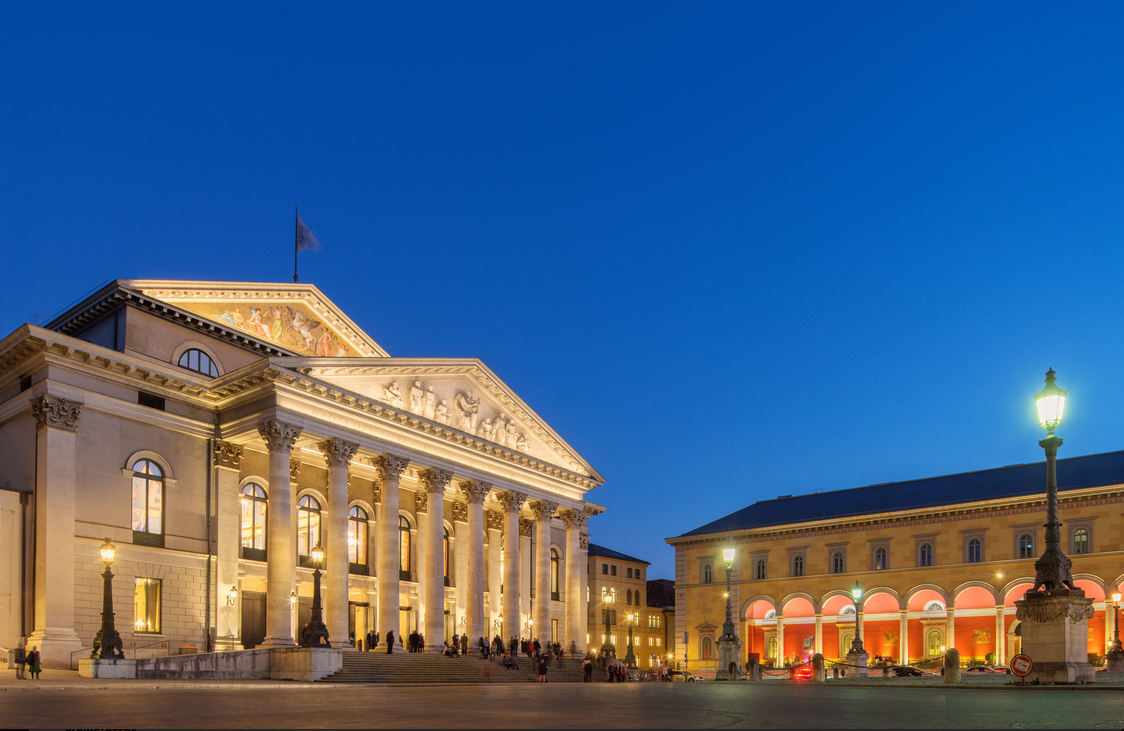


慕尼黑王宫(Münchner Residenz)为昔日巴伐利亚君主的王宫,位于德国慕尼黑市中心。这座宫殿是德国最大的市内宫殿,目前向游客开放,展示其建筑、室内装饰和皇家收藏。
建筑群包括十个庭院和博物馆,有130个展室。三个主要部分分别是靠近马克斯-约瑟夫广场的国王殿(Königsbau)、朝向王宫大街的老宫殿(Alte Residenz),以及面临王宫花园的宴会厅(Festsaalbau)。二战后重建王宫,屈维利埃剧院(Cuvilliés Theatre)就设于宴会厅的一翼。王宫内的赫拉克勒斯厅(Herkulessaal)为巴伐利亚广播交响乐团主要的表演场地。
Die Münchner Residenz ist ein Baudenkmal im Bezirk Altstadt-Lehel der bayerischen Landeshauptstadt München. Sie war von 1508 bis 1918 Sitz der Herzöge, Kurfürsten und Könige von Bayern aus dem Haus Wittelsbach. In vier Jahrhunderten wurde sie von den Architekten Friedrich Sustris, Joseph Effner, François de Cuvilliés d. Ä. und Leo von Klenze in den Stilen Renaissance, Barock, Rokoko und Klassizismus von der kleinen Wehrburg zur monumentalen Vierflügelanlage ausgebaut. Sie besteht aus dem Festsaalbau an der Hofgartenstraße, dem Apothekenbau am Marstallplatz, dem Königsbau am Max-Joseph-Platz und dem Maximiliansbau an der Residenzstraße. Neben dem Cuvilliés-Theater und der Allerheiligen-Hofkirche gehören auch der Hofgarten und der Marstall zum Bauensemble, das im Zweiten Weltkrieg zerstört und danach unter der Leitung von Otto Meitinger wiederaufgebaut wurde. Die Münchner Residenz ist mit mehr als 40.000 Quadratmetern Grundfläche das größte Stadtschloss Deutschlands und mit mehr als 150 Schauräumen eines der bedeutendsten Schlossmuseen Europas.